Best Braided Line Pound Test for Catfish
If you've ever spent a frustrating day on the water, feeling tugs but never a solid hookset, or worse, snapping off a trophy cat because your line just couldn't handle the fight, you know the pain. Choosing the right fishing line, especially for powerful species like North Dakota's catfish, can feel like a guessing game. This guide is here to untangle the confusion, helping you understand the best braided line pound tests for targeting channel and flathead catfish across our diverse North Dakota waterways.
Why Braided Line is a Game Changer for North Dakota Catfish
Catfishing in North Dakota offers incredible excitement, whether you're battling a hard-fighting channel cat on the Red River of the North Fishing Guide or hoping to tangle with a behemoth flathead in one of the deeper holes of the Missouri. But to truly succeed, your gear needs to be up to the task, and that often starts with your line. For many experienced anglers, braided line has become the undisputed champion for chasing these whiskered warriors.
The Unmatched Strength and Sensitivity Advantage
One of the biggest frustrations when catfishing is missing those subtle bites, or feeling a strong run only to have your line break against heavy cover. Braided line practically eliminates these issues thanks to its incredible properties. Unlike monofilament or fluorocarbon, braided line has virtually zero stretch. This means that every little bump, every tentative nibble, and every serious take is transmitted directly from your bait to your rod tip, and right into your hands. Imagine feeling a wary channel cat mouth your bait in 20 feet of water with a strong current – that's the kind of sensitivity braided line provides. It's a game-changer for detecting those shy bites that often go unnoticed with other line types, especially when you're using heavy sinkers in rivers like the Red.
Beyond sensitivity, braided line offers astounding strength for its diameter. This isn't just about breaking strength; it's about the confidence it instills when you're hooked into a large, angry catfish that's determined to dive into a log jam or bolt downstream. That raw power is essential when dealing with powerful fish in unpredictable environments. You can pull harder, apply more pressure, and wrestle those bigger cats away from snags without constant worry about your line failing. This strength is paramount when fishing in North Dakota's big rivers, where snags and current can put immense stress on your tackle.
Durability and Line Capacity Benefits
Catfishing often means fishing around some pretty unforgiving environments: rocky bottoms, submerged timber, sharp clam shells, and brush piles are all common haunts for catfish. These elements are notorious for abrading and weakening traditional fishing lines. Braided line, with its woven construction, offers superior abrasion resistance, standing up much better to these punishing conditions. While no line is completely invincible, braid gives you a significant edge in these snag-filled arenas, reducing frustrating break-offs and helping you retrieve your expensive rigs. Think about all those times you've lost a heavy sinker and bait to a snag – braided line can often help you "saw" through lighter snags or simply pull free from cover that would instantly snap monofilament.
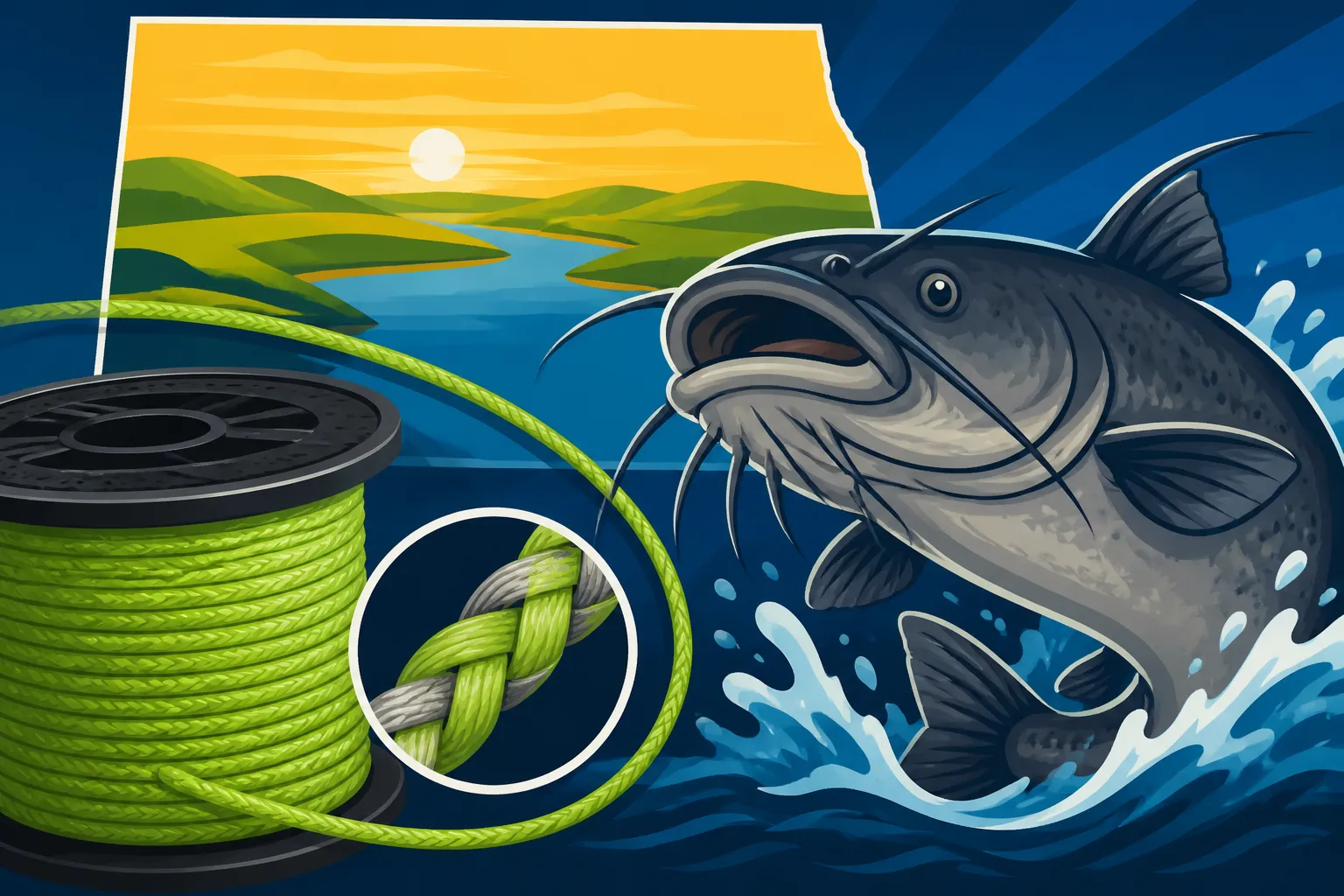
Another fantastic benefit of braided line is its incredibly thin diameter relative to its breaking strength. What does this mean for you, the angler? It means you can spool significantly more line onto your reel compared to monofilament of the same pound test. For example, a 30 lb braided line might have the diameter of 8-10 lb monofilament. This extra line capacity is a huge advantage when you hook a big fish that decides to make a long, powerful run, especially in vast waters like Lake Oahe or the lower Missouri River. You'll have the reserves to let that fish tire itself out without getting spooled. The thinner diameter also cuts through water and wind better, allowing for longer casts and less line drag in strong currents, which is invaluable when targeting Channel Catfish Identification in North Dakota.
Deciphering Pound Test: What Does it Really Mean for Catfishing?
When you look at a spool of fishing line, the "pound test" rating is probably the first thing that catches your eye. It's a critical piece of information, but for braided line, it needs a little more understanding than for monofilament or fluorocarbon. It's not just a number; it's a key to unlocking successful catfishing adventures.
The Basics of Pound Test Ratings
Simply put, the pound test rating indicates the amount of static force, measured in pounds, that the line can withstand before breaking. So, a 30 lb test line should, in theory, break when 30 pounds of pressure is applied. However, here's where braided line gets interesting: most high-quality braided lines actually "break" at a higher poundage than their stated rating. This over-spec strength is a built-in safety margin from manufacturers, meaning that 30 lb braid might actually hold 40 or even 50 pounds of pressure. This is a huge confidence booster when you're fighting a stubborn catfish that suddenly decides to make a powerful dive.
It's important to remember that this rating is a guideline, not an absolute. Real-world conditions, such as knot strength, line abrasion, and sudden shock loads (like a quick jerk or a fish hitting your line hard), can all affect the actual breaking point. However, the fundamental principle remains: a higher pound test means a stronger line. When choosing braided line for North Dakota catfishing, you're not just picking a number; you're selecting a level of resilience that will determine your ability to land those big, powerful fish without losing them to line failure.
Balancing Strength with Practicality
While it might be tempting to just spool up the heaviest braided line you can find, there's a delicate balance to strike. A higher pound test line will certainly be stronger, but it will also be thicker in diameter. A thicker line can have a few practical downsides. For one, it might reduce your casting distance. While catfish aren't typically known for being line-shy, especially in the often-murky waters of the Red River or after a good rain on the Missouri, a visibly thicker line could potentially be a factor in extremely clear conditions.
More significantly, a super heavy line can be overkill and make your fishing less enjoyable. It can be harder to manage on your reel, create more drag in the water (which can be a nuisance in heavy current), and simply be more cumbersome to tie knots with. The goal is to choose a pound test that offers ample strength for the fish you're targeting and the conditions you're fishing in, without going so heavy that it compromises your casting, presentation, or overall fishing experience. For North Dakota catfishing, it's about finding that sweet spot where you have maximum pulling power and abrasion resistance, but still enjoy the feel and castability of your setup.
Recommended Braided Line Pound Tests for North Dakota Catfish
Now that we understand the benefits of braided line and the nuances of pound test, let's get down to the brass tacks: what specific pound tests should you be considering for catfishing in North Dakota? The answer often depends on where you're fishing and what size of catfish you anticipate encountering.
Channel Catfish in Rivers (Red River, Missouri River)
When you're chasing channel catfish in the formidable currents of the Red River or the vast stretches of the Missouri River, you're dealing with some serious contenders. These river cats are built for power and often inhabit areas with abundant snags like submerged trees, rock piles, and even old tires. For these scenarios, you want a braided line that can withstand the immense pressure of strong currents, heavy sinkers, and a powerful fish trying to bury itself in cover.
For channel catfish in these river systems, a braided line in the 30-50 lb test range is generally considered ideal. This gives you plenty of backbone to muscle fish away from snags and to handle the large weights often needed to hold bottom in swift current. Imagine hooking into a 20-pound channel cat on the Red River Catfish Fishing Spots in North Dakota near Grand Forks; you'll be thankful for that 40 lb braid when it tries to run under a dock or into a snag. The thin diameter of this pound test still allows for good casting distance with heavy baits and minimal drag from the current, which helps keep your bait where you want it. You can easily find quality braids in this range from brands like PowerPro or Spiderwire at your local Bass Pro Shops or even online through Amazon.
| Water Body / Species | Recommended Braid (Pound Test) | Key Considerations |
|---|---|---|
| Red River Channel Catfish | 30-50 lb | Strong current, heavy snags, large fish |
| Missouri River Channel Catfish | 30-50 lb | Strong current, diverse structure, potential for bigger fish |
| Lake Oahe Channel Catfish | 20-40 lb | Open water, submerged timber, lighter current |
| Jamestown Reservoir Channel Catfish | 20-40 lb | General reservoir fishing, moderate cover |
| Flathead Catfish (where present) | 50-80+ lb | Extremely large fish, heavy cover, maximum stopping power |
Channel Catfish in Lakes and Reservoirs (Lake Oahe, Jamestown Reservoir)
While river environments demand heavier gear due to current and snags, catfishing in North Dakota's lakes and reservoirs, such as Lake Oahe Catfish Fishing Spots or the Jamestown Reservoir Fishing Guide, presents a slightly different set of challenges. Here, you might find less extreme current, but still plenty of submerged structure like old roadbeds, rock humps, and drowned timber. The channel catfish in these waters can still grow to impressive sizes, so you don't want to skimp on strength.
For lake and reservoir channel catfishing, a braided line in the 20-40 lb test range is usually a fantastic choice. This offers a good balance of strength for fighting strong fish and pulling through moderate snags, while also providing excellent castability, especially when you're trying to reach those distant drop-offs or underwater points. The slightly lighter line can sometimes be a bit more manageable for casting all day long, especially if you're using medium-heavy rods and baits that aren't excessively heavy. You still get that phenomenal sensitivity to detect bites, which can be crucial when catfish are less aggressive in calmer waters. When you're fishing a spot like the bays of Lake Oahe, where submerged brush piles are common, having 30 lb or 40 lb braid will allow you to confidently fish those areas and get your fish out.
Flathead Catfish Considerations
While not as widespread or commonly targeted as channel catfish in North Dakota, flathead catfish are truly the apex predators of our freshwater systems. They are known for their massive size, incredible power, and their tendency to live in the heaviest, nastiest cover imaginable – think deep log jams, undercut banks, and rocky caves. If you're specifically targeting these colossal bottom dwellers, you need to step up your line game significantly.
For serious flathead catfishing, a braided line in the 50-80+ lb test range is absolutely essential. This isn't overkill; it's a necessity. Flatheads can easily weigh 40, 50, or even 70 pounds in some waters, and they fight dirty. They will immediately try to "log you" or rub your line against anything abrasive to break free. This heavy braid provides the raw stopping power needed to turn their heads and pull them out of thick cover. While these heavier lines will be thicker and might not cast quite as far, the trade-off for the sheer power and abrasion resistance is well worth it when a true monster flathead is on the line. Remember, it's better to be over-gunned than under-gunned when pursuing these giants.
Beyond Pound Test: Other Essential Braided Line Attributes
While pound test is a critical factor, it's not the only thing to consider when selecting braided line for your North Dakota catfishing adventures. Several other attributes can significantly impact your success and enjoyment on the water. Paying attention to these details will ensure you're getting the best possible performance from your fishing line.
Diameter and Knot Strength
We've already touched on it, but the thin diameter of braided line for its given strength is truly a superpower. This allows you to pack more line onto your reel, reduce drag in current, and achieve longer casts. However, this thin, slick nature also means that braided line requires specific knots to hold its full strength. Traditional knots that work perfectly for monofilament might slip or fail prematurely with braid. It's vital to learn and use knots specifically designed for braided line, such as the Palomar knot, the Uni knot, or a double Uni knot. Practicing these knots at home until they become second nature will prevent frustrating break-offs and ensure that the line's stated pound test is actually achieved at the point of connection. A perfectly tied knot is just as important as the line's strength itself.
Another aspect of diameter is consistency. High-quality braided lines, often found through reputable retailers like Bass Pro Shops or on Amazon, will have a very consistent diameter throughout the spool. This translates to smoother casting and reeling, less tangling, and more reliable performance. Inconsistent diameter can lead to weaknesses and affect how the line lays on your spool.
Color and Coating
When it comes to braided line color, catfishing offers a bit more flexibility than some other species. Catfish, especially in the often-turbid waters they inhabit, are generally not considered to be line-shy. This means you have options. Many anglers prefer a low-visibility color like moss green, brown, or even clear braid, just in case. Others swear by high-visibility colors like yellow or orange. Why high-vis? Because it makes it incredibly easy to see your line and detect subtle bites, especially when fishing multiple rods, watching for slight twitches, or when trying to navigate around snags. If you can see your line moving, you know something's happening down below, even if you don't feel it through the rod.
Beyond color, many braided lines come with various coatings. These coatings serve several purposes. Some make the line smoother and rounder, which can reduce friction during casting, leading to longer and more effortless throws. Others are designed to reduce water absorption, which prevents the line from becoming heavy and limp. Coatings can also enhance abrasion resistance, giving you an extra layer of protection against sharp objects. It's worth exploring different brands and their coating technologies to see what feels best for your specific fishing style and conditions. For example, some anglers swear by specific coated braids for their durability when Catfishing at Night in North Dakota.
Leader Material for Added Protection
Even with the impressive abrasion resistance of braided line, many experienced North Dakota catfishermen opt to tie on a leader. A leader is a shorter section of line, usually monofilament or fluorocarbon, tied to the end of your braided mainline. There are a couple of key reasons for this practice. First, a leader made of monofilament or fluorocarbon can provide an extra buffer against the sharp teeth of a large catfish or the abrasive structure of a river or lake bottom. These materials often have better knot strength than braid when tied directly to a swivel or hook, and they can be more resistant to nicks and cuts right at the business end of your rig.
Second, a fluorocarbon leader, in particular, is virtually invisible underwater, which can be an advantage in clearer water conditions, though less critical for catfish. Finally, a leader provides a little bit of stretch. While braided line's zero stretch is great for sensitivity, a short mono or fluoro leader can absorb some of the shock from a powerful head shake or a sudden lunge, preventing the hook from tearing out of the fish's mouth. The ideal leader pound test should generally be slightly less than or equal to your braided mainline, ensuring that if you get snagged, you'll break off the leader and save your more expensive braid. This is a smart strategy to employ when fishing in areas known for snags, saving you from losing entire spools of expensive line. Remember, How Many Lines Can You Fish With in North Dakota? regulations might impact your specific setup, so always be aware of the rules. For more details on specific bait and rigging, check out Best Live Bait for Early Season Walleye and Best Slip Sinker Rig for Catfish for related insights.
Disclaimer
This article is for general informational purposes only and does not constitute professional advice. Laws, prices and regulations vary by location and change over time. Consult a qualified professional for guidance on your specific situation.