Summer Walleye Trolling Techniques
When the long, hot days of summer really settle in, many North Dakota anglers find themselves scratching their heads, wondering where those spring walleye went. That early season bite, often in shallower water, can disappear faster than a minnow in a walleye school. This guide is all about tackling that common frustration, diving deep into proven summer walleye trolling techniques to help you consistently find and catch those elusive fish, even when they're scattered across vast, deep waters.
Understanding Summer Walleye Behavior in North Dakota
Summer walleye fishing in North Dakota is a completely different ballgame than spring or fall. As water temperatures climb, walleye change their habits dramatically, moving to deeper, cooler areas and often becoming more active during specific periods. Understanding these shifts is the first step to successful summer trolling.
The Deep Water Migration
Once the surface water warms up significantly, typically reaching into the high 60s or even 70s Fahrenheit, walleye seek refuge in deeper, cooler water. This isn't just about comfort; it's about oxygen levels and access to their preferred forage. On massive bodies of water like Lake Sakakawea or Lake Oahe, this means they'll often relate to main lake points, submerged humps, deep rock piles, and the edges of vast flats. They're not always glued to the bottom; sometimes they suspend over deep water, following schools of baitfish in the thermocline—that critical layer where warm surface water meets cooler, deeper water. This migration can make them harder to locate, especially if you're still fishing the shallow bays where they were biting weeks ago. The sheer size of these lakes means you're often looking for a needle in a haystack, but trolling allows you to cover vast amounts of water efficiently to find those concentrations.
Daytime vs. Low-Light Feeding
While walleye are notorious for their low-light feeding tendencies, especially around sunrise and sunset, summer can bring some variations. In the scorching heat of midday, they often retreat to the darkest, coolest depths, becoming less active. However, a well-presented lure trolled through their comfort zone can still trigger a reaction strike, even if they're not aggressively feeding. As the sun begins to dip towards the horizon, or on overcast days with chop on the water, you'll often find them moving shallower, sometimes to the edges of flats or the tops of humps, to hunt for baitfish. This is often when a more aggressive bite can ignite. Knowing these patterns helps you adjust your trolling depth and location throughout the day, maximizing your chances. For a broader perspective on their habits, you might want to check out our detailed guide on North Dakota Walleye Fishing Guide.
Forage and Preferred Habitat
North Dakota's lakes and rivers offer a diverse buffet for walleye, and their summer diet heavily influences where they'll be. In Lake Sakakawea, for instance, smelt are a primary forage, and walleye will follow these baitfish wherever they go, often suspending in open water. On Devils Lake, they might be keying in on yellow perch, shiners, or even young-of-the-year white bass, which could mean relating more closely to submerged timber or rock reefs. Understanding what they're eating helps you choose the right lure size, color, and action to imitate that prey. Moreover, different habitats provide different advantages. Deep points offer ambush opportunities, while expansive flats might hold scattered schools of feeding fish. The ability to identify these forage patterns and habitats on your electronics and maps is absolutely critical for trolling success.
Essential Trolling Gear for North Dakota Walleye
Effective summer walleye trolling isn't just about putting a lure in the water and driving around; it's about having the right tools for the job. From your rod and reel setup to your line choice and sophisticated electronics, each piece of gear plays a vital role in presenting your bait effectively and bringing those walleye to the net.
Rod and Reel Setups
For trolling walleye in North Dakota, you'll typically want a rod that's specifically designed for the task. Generally, a medium to medium-heavy power rod, around 7 to 9 feet in length, with a moderate to fast action, is ideal. The longer length helps spread out your lines if you're running multiple rods, and the moderate action provides enough give to absorb the shock of a strike without pulling the hooks, while still having enough backbone to handle a decent walleye. Popular choices often include fiberglass or composite rods, which offer durability and a parabolic bend under load. For reels, a baitcasting reel with a good line counter is almost a must-have. Brands like Daiwa or Shimano make excellent line counter reels that allow you to precisely track how much line you have out, which is crucial for replicating successful trolling passes. These reels can be found readily on platforms like Amazon, offering a wide range of options to fit any budget and preference. Having multiple identical setups is a huge advantage, as it allows you to run different presentations or quickly replace a fouled line with minimal downtime.
Line Choices and Considerations
The fishing line you choose has a direct impact on how your lure performs at depth and how sensitive your setup feels. For many trolling applications, a good quality monofilament line in the 10-14 pound test range is a solid choice. It offers some stretch, which can be forgiving, and is generally easy to work with. However, if you're running deep-diving crankbaits or trying to get down with minimal weight, braided line in a lighter diameter (say, 10-20 pound test with a breaking strength of 20-30 pounds) can be incredibly effective due to its lack of stretch and thin diameter, which reduces water resistance. You'll want to add a fluorocarbon or monofilament leader of 8-12 feet to braided lines for stealth and abrasion resistance, especially in areas with zebra mussels. Lead core line is another specialized option, where specific colors indicate depth, allowing you to reach extreme depths with relatively light lures without additional weights. Each color section (usually 10 yards) can roughly take your lure down about 5 feet at a trolling speed of 2 mph, though this varies greatly by lure and line. Understanding how different lines affect your lure's diving curve is essential for precise depth control. For more on selecting the right string, check out Best Fishing Line for North Dakota Lakes.
Trolling Motors and Electronics
Modern trolling motors and fish finders have revolutionized walleye trolling. A bow-mount electric trolling motor with GPS capabilities, like those from Minn Kota (Terrova, Ultrex) or Lowrance (Ghost), is practically non-negotiable for serious walleye anglers. These motors allow you to maintain precise speeds, hold your boat on a specific contour or heading, and even track a route automatically, freeing you up to focus on your rods. The Spot-Lock feature is a game-changer for holding over active fish or while netting. Complementing this, a high-quality fish finder with side imaging and down imaging is your eyes underwater. Units from Humminbird (Helix, Solix) or Garmin (Echomap) allow you to scan vast areas for structure, baitfish schools, and even individual walleye. Being able to mark a productive depth or specific piece of cover and then troll directly over it is what separates consistently successful anglers from those just hoping for a bite. Learning to interpret the sonar returns and effectively use your chartplotter to navigate known hotspots is a critical skill. For optimizing your view, our guide on Best Fish Finder Settings for Walleye can be incredibly helpful.
Mastering Trolling Techniques for Summer Walleye
Once you've got your gear dialed in, it's time to put it to work with a variety of proven trolling techniques. Summer walleye often respond to different presentations depending on their mood, depth, and the specific forage they're targeting. Having a repertoire of methods will allow you to adapt to changing conditions and consistently put fish in the boat.
Crankbait Trolling Strategies
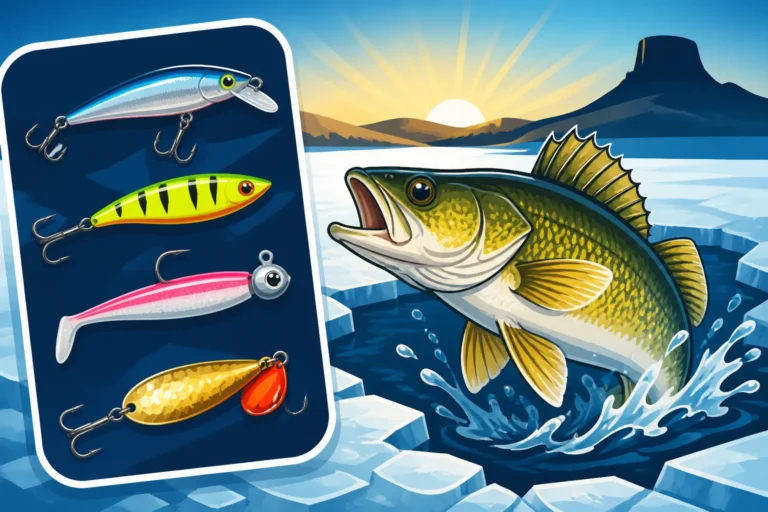
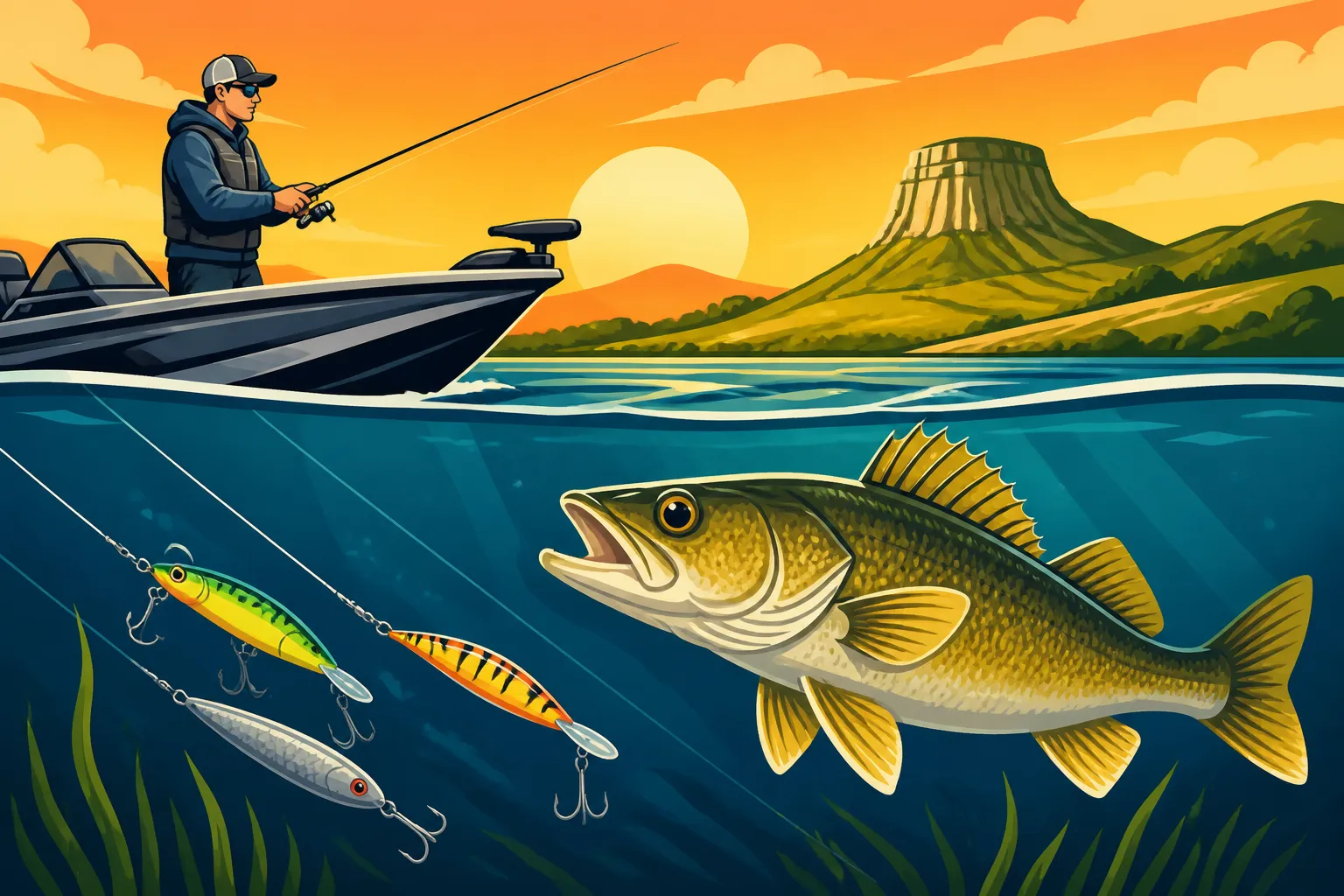
Crankbait trolling is arguably one of the most popular and effective methods for summer walleye, especially on large, open bodies of water like Lake Sakakawea. The key is to match the crankbait's size, color, and diving depth to the conditions and the fish you're targeting. Deep-diving crankbaits, like Berkley Flicker Shads, Rapala Shad Raps, or Salmo Hornets, are staples in many North Dakota anglers' tackle boxes. These lures are designed to get down to significant depths on their own, often reaching 15-30 feet or more depending on line diameter and trolling speed.
When trolling crankbaits, pay close attention to your speed, which is typically between 1.5 to 2.5 mph, but always experiment. Varying your speed and making subtle S-turns can cause your crankbaits to speed up and slow down, creating an erratic action that often triggers strikes. Use your line counter reels to precisely control the amount of line out, allowing you to replicate successful passes. If you're finding fish suspending in the middle of the water column, you might need to adjust your line length or even add snap weights to get your crankbaits to the exact depth of the fish. Remember, even a small difference in depth can mean the difference between catching fish and getting skunked. For selecting the perfect lure, be sure to read our guide on Best Crankbaits for North Dakota Walleye.
Bottom Bouncer and Spinner Rigs
When walleye are holding tight to the bottom, especially over softer substrates or subtle transitions, a bottom bouncer and spinner rig can be deadly. This setup allows you to present live bait (like a large nightcrawler or a minnow) or artificial worms (like Berkley Gulp! Crawlers) right in the walleye's strike zone without snagging excessively. The bottom bouncer is a lead weight with a wire arm that keeps your bait elevated slightly off the bottom, preventing snags and allowing the spinner blade to provide attractive flash and vibration.
Typical bottom bouncer weights range from 1/2 ounce to 3 ounces, depending on your trolling speed (usually 0.8 to 1.5 mph) and depth. You want just enough weight to maintain a 45-degree angle on your line back to the water. The spinner rig, or "worm harness," consists of a clevis, beads, a spinner blade (Colorado, Indiana, or Willowleaf styles), and two snelled hooks. Color choices for spinner blades and beads can be critical; chartreuse, orange, and metallic colors are often popular in North Dakota waters. Experiment with snell lengths – a longer snell (3-6 feet) gives the bait more natural movement, while a shorter one (1-2 feet) keeps it closer to the bottom bouncer and can be better in current. This versatile presentation is a go-to for many anglers, especially when fish are less aggressive.
Lead Core and Snap Weight Systems
Sometimes, deep-diving crankbaits just don't go deep enough, or you want to present smaller, shallower-running lures at significant depths. This is where lead core line and snap weight systems come into play, offering precise depth control for challenging situations.
Lead core line is a specialized trolling line with a lead filament woven into its core, designed to sink. It's typically spooled onto a conventional reel, often with a monofilament or fluorocarbon backing and a leader. The beauty of lead core is its depth-to-color ratio; each 10-yard segment is a different color, and as a rule of thumb, each color takes your lure down about 5 feet at 2 mph. So, letting out five colors would get your lure down around 25 feet. This allows you to precisely target specific depths, regardless of the lure's natural diving capabilities. It's especially effective for running smaller crankbaits or even spinner rigs deeper than they'd normally go.
Snap weights, on the other hand, offer a more flexible approach. These are pinch-on weights that can be attached to your main fishing line at a specific distance in front of your lure. They allow you to add weight to any setup – crankbait, spinner rig, or even a jig – without having to re-rig an entire rod. Popular snap weight sizes range from 1/2 ounce to 3 ounces. The amount of weight and the distance it's placed from the lure will determine your diving depth. For example, placing a 1-ounce snap weight 50 feet in front of a shallow-running crankbait can take it down significantly deeper. Using snap weights is often preferred when you need to quickly adjust depth or if you only have a few trolling rods and need them to be versatile. You can find a wide selection of snap weights and lead core line on sites like Amazon, making it easy to experiment with different setups. When figuring out your depth curves, consulting resources like How to Troll Crankbaits Without Snagging Bottom can help you refine your technique and avoid frustrating hang-ups.
Locating Summer Walleye Hotspots
Finding walleye in the vast waters of North Dakota during summer can feel like an impossible task without the right tools and understanding of their movements. Successfully locating these fish is more than half the battle, and it relies heavily on interpreting your electronics and knowing what structures and conditions walleye prefer.
Interpreting Sonar and Lake Maps
Your fish finder is your most valuable asset when searching for summer walleye. Learning to interpret the sonar returns from your Humminbird, Lowrance, or Garmin unit is critical. Start by looking for baitfish schools; walleye are predators, and they'll never be far from their food source. Baitfish will often appear as dense clouds or arches on your screen. Walleye themselves will show up as distinct arches, or sometimes as strong lines if they're holding tight to the bottom. Pay close attention to the depth at which you're seeing these marks – that's your target depth for your lures.
Beyond fish, your sonar also reveals crucial structure. Side imaging and down imaging are invaluable for identifying submerged humps, rock piles, old river channels, and even flooded timber that classic 2D sonar might miss. Imagine being able to scan hundreds of feet to either side of your boat, pinpointing a hidden rock reef, then using your GPS to mark it and make a precise trolling pass. This greatly reduces the guesswork and allows you to quickly eliminate unproductive water. Combine your sonar observations with detailed lake maps, either on your unit's chartplotter or physical maps. These maps highlight contour lines, depth changes, and known structural features, giving you a roadmap to potential walleye haunts. Understanding the nuances of your sonar is key, and our guide on Best Fish Finder Settings for Walleye can help you fine-tune your display for optimal viewing.
Targeting Structure and Transitions
Summer walleye love structure, but they also love the transitions between different types of structure or depth. Think about main lake points that extend into deep water, the edges of submerged islands, or deep-water humps that rise up from the main basin. These features create current breaks, ambush points, and offer access to both deep, cool water and shallower feeding areas.
Beyond obvious structure, look for subtle transitions. This could be a change from a hard, rocky bottom to a soft, muddy bottom, or a slight break in depth along a flat. Walleye will often cruise these transition zones, waiting to ambush unsuspecting baitfish. On lakes like Devils Lake, finding the edges of flooded timber or old roadbeds can be incredibly productive, as these areas provide cover and concentrate bait. Don't overlook creek channels or old riverbeds that run through deeper basins; these can act as highways for walleye moving between different feeding grounds. The key is to systematically cover these areas, making multiple passes from different angles to determine where the fish are holding.
Understanding Water Temperature and Currents
Water temperature is a major driver of walleye behavior in summer. As mentioned earlier, walleye will seek out their preferred temperature range, often around 60-70 degrees Fahrenheit. On larger lakes, this often means finding the thermocline – the layer of water where the temperature changes rapidly. Walleye will frequently suspend in or just above the thermocline, especially if baitfish are present there. Your fish finder may show the thermocline as a distinct band on the screen, or you can use a temperature probe to locate it. Trolling your lures at this depth can be incredibly effective.
Current also plays a significant role, particularly on river systems like the Missouri River below Garrison Dam or areas within Lake Sakakawea where current is present, even subtly. Walleye will use current breaks as ambush points, conserving energy while waiting for food to be delivered to them. This might mean positioning your boat slightly upstream or downstream of a point, or along a current seam. Pay attention to how the current affects your lure's action and depth. Trolling both with and against the current, or perpendicular to it, can help you determine the most productive approach. For anglers specifically targeting deeper summer fish, understanding Best Depth for Summer Walleye on Sakakawea will be invaluable.
Advanced Tips for Consistent Summer Walleye Success
Once you've grasped the fundamentals of summer walleye trolling, it's time to refine your approach with some advanced tactics. These subtle adjustments can often be the difference between a decent day on the water and one where you truly unlock the bite.
Speed Control and Directional Changes
Precision in speed control is paramount for successful trolling. While a general speed range of 1.5 to 2.5 mph is common for crankbaits, and 0.8 to 1.5 mph for bottom bouncers, the optimal speed can vary by the minute. Factors like water temperature, fish activity level, and bait profile all play a role. Using a GPS-enabled trolling motor is a huge advantage here, allowing you to hold a consistent speed even in windy conditions. However, don't be afraid to experiment. Try speeding up or slowing down by just 0.1 to 0.2 mph increments to see if it triggers a response.
Beyond steady speed, incorporating directional changes can be a game-changer. Instead of trolling in a straight line, make subtle S-turns or gentle curves. When your boat turns, the lures on the inside of the turn slow down and drop, while the lures on the outside speed up and rise. This varying action often triggers strikes from otherwise lethargic walleye. It presents the lure in a different way, mimicking an injured baitfish or simply catching a walleye's eye that a consistent retrieve might not. Pay close attention to which side of the boat gets hit during a turn, as this can tell you whether fish prefer a faster or slower presentation on that particular day.
Color Selection and Bait Modifications
Walleye can be incredibly finicky about lure color, and what works one day might be completely ignored the next. It's crucial to have a diverse selection of crankbait colors, spinner blade patterns, and bead combinations in your tackle box. General rules of thumb include using natural colors (perch, shiner, smelt imitations) in clear water or sunny conditions, and brighter, more aggressive colors (chartreuse, firetiger, hot pink) in stained or turbid water, or on overcast days. However, sometimes walleye will surprise you, hitting a bright color in clear water or a subtle one in murky conditions. The best approach is to start with a couple of different colors and let the fish tell you what they prefer. If one rod starts producing, switch other rods to that same color.
Bait modifications can also make a difference. For spinner rigs, try tipping your hooks with a half nightcrawler, a piece of gulp, or even a small minnow. For crankbaits, some anglers will "doctor" their lures by adding a touch of scent (like Berkley Gulp! Alive! spray) or by changing out the treble hooks for sharper, stronger ones, perhaps even adding a small tuft of bucktail to the rear hook for extra appeal. These small tweaks can sometimes provide just enough extra attraction to entice a strike.
Dealing with North Dakota's Challenging Conditions
North Dakota fishing often comes with a side of challenging weather, particularly wind. Trolling in windy conditions can be tough, making boat control difficult and affecting lure presentation. However, walleye often become more active when there's a good chop on the water, as it breaks up light penetration and disorients baitfish. To manage the wind, utilize your bow-mount trolling motor's GPS features, like Spot-Lock or i-Pilot's "jog" function, to maintain your course and speed. Trolling with the wind can be easier for boat control but might require running different lure depths or weights. Trolling into the wind provides maximum boat control but burns more battery and can be a rougher ride. Sometimes, angling across the wind (quartering) is the best compromise. For comprehensive advice on this, you should definitely read up on How to Fish in 20 Mph Wind.
Another consideration is fishing after a cold front. Walleye can become lethargic and less willing to chase. In these situations, slow down your trolling speed considerably and consider switching to more subtle presentations, like a bottom bouncer with a live nightcrawler, or smaller crankbaits. Focus on deeper breaks and structure where walleye might be hunkering down. Persistence and adaptability are your greatest allies when dealing with North Dakota's unpredictable summer weather.
North Dakota Summer Walleye Trolling Comparison
Here's a quick comparison of the most common summer walleye trolling techniques in North Dakota to help you choose the right approach for your day on the water.
| Technique | Primary Lure Type | Typical Speed (MPH) | Depth Range (Approx.) | Advantages | Considerations |
|---|---|---|---|---|---|
| Crankbait Trolling | Deep-diving crankbaits | 1.5 – 2.5 | 10 – 35 feet+ | Covers vast water, triggers aggressive strikes, good for suspending fish | Depth control can be tricky, more prone to snags in heavy cover |
| Bottom Bouncer/Spinner | Live bait (nightcrawlers, minnows), artificial worms, spinner blades | 0.8 – 1.5 | 5 – 30 feet | Excellent for bottom-hugging fish, highly versatile, scent trail | Slower pace, requires more frequent checking for bait/snags |
| Lead Core Trolling | Shallow to deep crankbaits, spinner rigs | 1.8 – 2.5 | 20 – 50 feet+ | Achieves extreme depths with light lures, precise depth control | Requires specialized line and reels, slower retrieve |
| Snap Weight Trolling | Any lure type | 1.5 – 2.5 | Varies greatly | Highly adaptable, allows deep presentation of any lure, quick depth adjustment | Can be cumbersome to deploy/retrieve, potential for tangles if not set correctly |
These techniques, when combined with your understanding of walleye behavior and effective use of your electronics, will set you up for success on North Dakota's magnificent waters. Whether you're targeting the depths of Lake Sakakawea or the sprawling structure of Devils Lake, mastering these trolling strategies will help you put more walleye in your net. Remember, consistent effort and a willingness to adapt are the hallmarks of a truly successful summer walleye angler. If you're hoping to land a true trophy, understanding seasonal patterns like those in Best Time of Year for Trophy Walleye can further improve your odds.
Disclaimer
The information provided in this guide is for general informational purposes only. Fishing regulations, conditions, and fish behavior can change rapidly. Always consult the latest North Dakota Game and Fish Department regulations before heading out on the water. Fishing involves inherent risks; always prioritize safety and wear appropriate personal flotation devices.