Chinook Salmon Trolling on Lake Sakakawea
There's nothing quite like the thrill of chasing big, powerful fish in the vast waters of Lake Sakakawea, and for many North Dakota anglers, that means targeting Chinook salmon. These "kings" offer an exciting challenge, often requiring specialized gear and techniques, and if you've ever felt overwhelmed by where to start or how to consistently put salmon in the boat, this comprehensive guide is for you. We'll dive deep into the world of Chinook salmon trolling, covering everything from understanding their habits to mastering the methods that will lead to more successful outings on this incredible fishery.
Understanding Chinook Salmon in Lake Sakakawea
Before you even think about dropping a line, it's crucial to understand the fish you're pursuing. Chinook salmon are not native to North Dakota; they are an introduced species, specifically stocked to create a unique and exciting trophy fishery in Lake Sakakawea. This massive reservoir, formed by the Garrison Dam on the Missouri River, provides the deep, cold water habitat these anadromous fish (though landlocked here) need to thrive.
The Lifecycle and Habits of Sakakawea Kings
Chinook salmon in Lake Sakakawea typically live for three to four years, growing rapidly to impressive sizes. They are voracious predators, primarily feeding on rainbow smelt, which are also stocked in the lake and form the backbone of the salmon's diet. Understanding this predator-prey relationship is fundamental to successful trolling. When you're out on the water, you're not just looking for salmon; you're often looking for schools of smelt, as the salmon will be close by.
These fish spend their lives in the cooler, deeper parts of the lake, especially during the warmer months. As temperatures rise in summer, salmon will seek out the thermocline – the layer of water where temperature changes most rapidly – as this often concentrates their prey and provides optimal oxygen levels. Knowing how to locate this thermal layer with your electronics is a game-changer. You can learn more about the specifics of their journey by checking out our guide on the Chinook Salmon Life Cycle in Lake Sakakawea.
Prime Seasons and Conditions for Trolling Success
While salmon can be caught throughout the open water season, there are definitely periods when your chances for success are significantly higher. Early spring, shortly after ice-out, and the fall months leading up to the spawn, are generally considered peak times.
In the spring, as the ice recedes, salmon often move into shallower water, particularly near inflowing rivers or areas where the water warms up faster, congregating to feed on emerging baitfish. This can be a great time for shallower trolling passes, sometimes even without the need for downriggers. As summer progresses, the salmon retreat to the cooler, deeper waters, making them a bit more challenging to locate but still very catchable with the right gear and techniques. Fall, however, is arguably the most exciting time for trophy salmon. As their spawning urge kicks in, they become more aggressive and move towards the western end of the lake, often concentrating near river mouths. This is when some of the biggest "kings" are caught. If you're wondering When Do Chinook Salmon Bite on Lake Sakakawea, the answer is often tied directly to these seasonal movements and water temperatures.
Conditions also play a significant role. Overcast days, or low light periods like dawn and dusk, are often more productive than bright, sunny afternoons. A light chop on the water can also be beneficial, as it breaks up the surface and makes your lures appear more natural, reducing the visibility of your boat to wary fish.
Essential Gear for Chinook Salmon Trolling
Trolling for Chinook salmon is a specialized pursuit, and having the right equipment is absolutely non-negotiable. You can't just head out with your walleye gear and expect the same results. These fish are powerful, and they hit hard, requiring robust rods, reels, and advanced depth-control systems.
Rods, Reels, and Line Selection
Let's break down the core components of your trolling setup.
Rods: You'll want rods specifically designed for trolling, ideally in the 8 to 10-foot range. Longer rods help spread your lines out, reducing tangles, and provide a softer action to absorb the shock of a salmon's powerful strike, preventing hooks from tearing out. Look for medium-heavy power with a moderate to fast action. Fiberglass or composite rods are often preferred for their durability and forgiveness. Brands like Ugly Stik or Daiwa offer reliable and affordable options that are widely available, including on platforms like Amazon.
Reels: Levelwind baitcasting reels are the standard for salmon trolling. You need something with a strong drag system, a high line capacity, and a line counter. The line counter is absolutely critical for replicating successful depths and patterns. Reels in the 20 to 30 size range are popular, capable of holding hundreds of yards of line. Shimano Tekota, Daiwa Sealine, or Penn Fathom are excellent choices known for their durability and smooth performance.
Line: The debate over monofilament, fluorocarbon, or braided line often comes down to personal preference and specific applications, but for trolling for Chinook salmon, a combination is often best.
- Main Line (on reel): 20-30 lb monofilament is a popular choice for its stretch, which acts as a shock absorber. However, many anglers prefer 30-50 lb braided line for its no-stretch properties, allowing for better feel and direct hooksets, especially when fishing deep or with long leads.
- Leader: Regardless of your main line, a 20-25 lb fluorocarbon leader is almost always used. Fluorocarbon is nearly invisible underwater, which is a huge advantage with line-shy salmon, and its abrasion resistance is beneficial when fighting fish. Your leaders should be at least 6-8 feet long, connecting your main line to your lure.
If you need guidance on selecting the perfect spool for different conditions, our article on the Best Fishing Line for North Dakota Lakes offers more detailed insights.
Downriggers, Dipsy Divers, and Lead Core Systems
This is where salmon trolling gets truly specialized – controlling your lure's depth precisely.
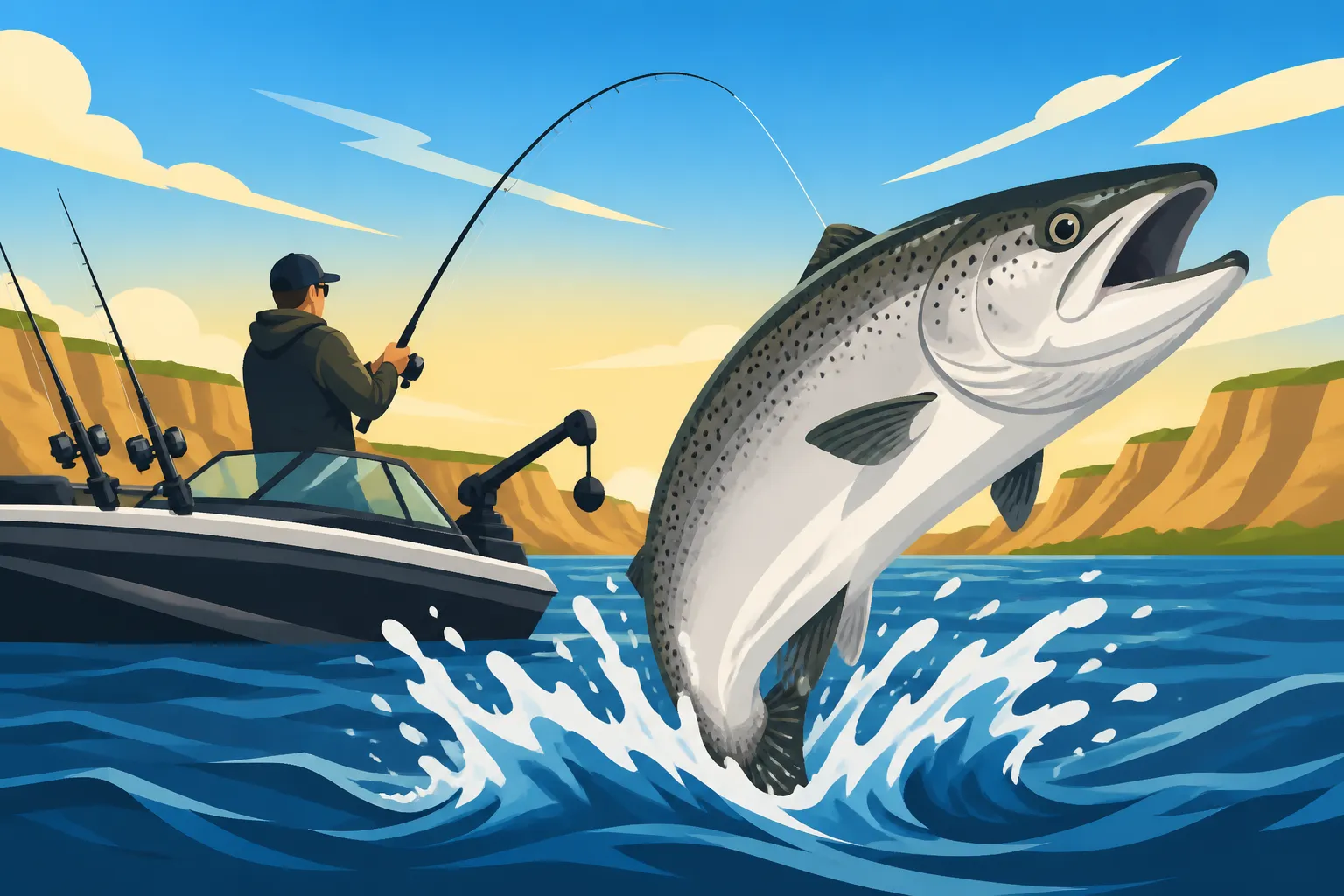
Downriggers: These are the ultimate depth control tools. A downrigger consists of a boom, a heavy cannonball weight (often 8-12 lbs), a cable, and a release clip. Your fishing line is clipped into the release, allowing the cannonball to carry your lure down to a precise depth. When a fish strikes, the line pops free from the clip, and you fight the fish directly on your rod and reel, without the weight. Most serious salmon anglers run at least two downriggers, often more, on their boat. Consider brands like Scotty or Cannon for reliable downrigger setups.
Dipsy Divers (and similar planers): These are disc-shaped diving devices that use water resistance and an adjustable directional keel to take your lure out to the side of the boat and down to a certain depth. They are great for spreading out your lines and covering a wider swath of water. Dipsy Divers come in various sizes and often have adjustable settings to control how far they dive and to which side of the boat they run. You typically run them on stout rods (10-12 feet, heavy power) to handle the significant pull.
Lead Core Systems: Lead core line is a specialized fishing line with a lead filament woven into its core, designed to sink. Each "color" (usually 10 yards) of lead core sinks your lure to a predictable depth, allowing you to achieve specific depths by letting out a certain number of colors. For example, 5 colors might get you down 25-30 feet, depending on line speed and lure. Lead core is often spooled onto a conventional reel with a backing of braided or monofilament line and finished with a fluorocarbon leader. It's a simpler, more portable way to fish deeper water without the investment in downriggers, though less precise.
Other Essentials:
- Net: A large, salmon-specific landing net is crucial. These fish are big and powerful, and a small walleye net just won't cut it.
- Cooler: You'll need a big, well-insulated cooler with plenty of ice to keep your catch fresh. Remember, Lake Sakakawea is vast, and a day's fishing can mean hours on the water. A good cooler, easily found on Amazon, is critical for preserving quality. You might even want to check out our tips on the Best Cooler for Keeping Fish Fresh for some recommendations.
- Electronics: A quality fish finder/chartplotter is non-negotiable. More on this in the next section, but think about units from Humminbird, Lowrance, or Garmin. Our guide on Best Fish Finders for Boat Fishing can help you pick the right model.
Mastering Trolling Techniques and Strategies
Trolling for Chinook salmon is an art form, a constant dance of adjustments and observations. It's not just about dragging a lure; it's about presenting that lure at the right depth, speed, and in a way that perfectly mimics their natural prey.
Speed, Depth, and Pattern Planning
These three elements are the pillars of successful salmon trolling. Get them right, and you're in the fish.
Speed: Chinook salmon are often active, fast-moving predators, and your trolling speed needs to reflect that. Generally, speeds between 2.0 to 3.5 miles per hour (MPH) are productive. However, the optimal speed can vary significantly based on water temperature, lure type, and the salmon's mood. Sometimes, a subtle change of 0.1 or 0.2 MPH can be the difference between an empty net and a full livewell. Pay close attention to your rod tips and the action of your lures – they should be working effectively. Vary your speed throughout the day, sometimes speeding up for a few minutes, then slowing down, to trigger strikes from hesitant fish. Our article on the Best Trolling Speed for Chinook Salmon offers more advanced insights into this critical factor.
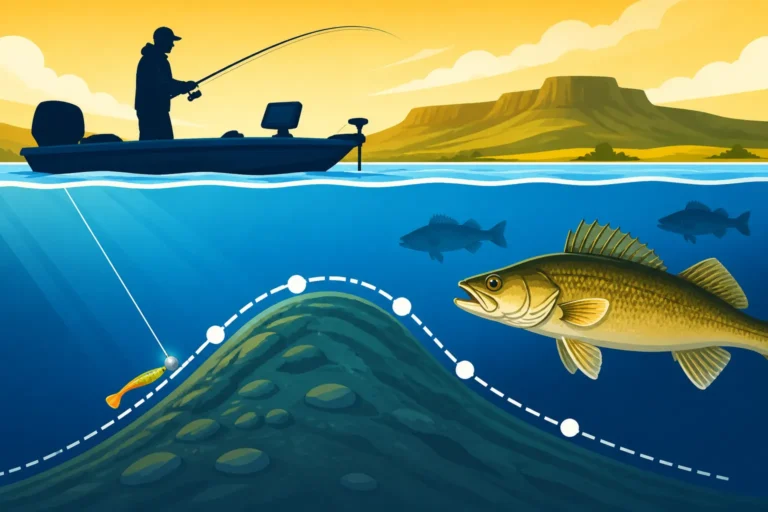
Depth: This is arguably the most critical factor. Salmon are highly sensitive to temperature and light, and they will follow their prey wherever those conditions are optimal. As mentioned, the thermocline is often a key area. Your fish finder will help you identify this, as well as baitfish schools. Downriggers offer the most precise depth control, allowing you to set your lure exactly where you see fish or bait. Lead core and Dipsy Divers provide less precise but still effective depth control, with different "colors" or settings corresponding to approximate depths. Don't be afraid to run multiple lines at different depths until you find the "zone." If you have multiple rods, stagger them: one at 30 feet, one at 40, one at 50, and so on.
Pattern Planning: The vastness of Lake Sakakawea can be intimidating. Just as our comprehensive Lake Sakakawea Fishing Guide for North Dakota Anglers details, you can't just troll aimlessly. You need a plan. When you find fish or bait, don't just troll straight through. Make turns, S-curves, and circles. Turns often trigger strikes because your lures on the inside turn will slow down and drop, while those on the outside turn speed up and rise, creating a dynamic action that can entice a follower to strike. Mark every strike on your GPS. Look for patterns in terms of depth, speed, and location. Are they hitting on the inside turn? At 35 feet? Over a specific depth contour? This data is invaluable for replicating success.
Lure Selection and Presentation
Chinook salmon are sight feeders, and their lures need to be enticing both in action and color.
Spoons: Metal spoons are a perennial favorite for salmon trolling. Their erratic, wobbling action perfectly mimics a distressed baitfish. Popular brands include Dreamweaver, Michigan Stinger, and Warrior. Color choices can be overwhelming, but generally, bright colors (chartreuse, orange, pink) work well on cloudy days or in stained water, while natural baitfish patterns (silver, blue/silver, green/silver) are effective in clear water or on sunny days. Experiment with different sizes; larger spoons often tempt larger fish.
Flashers and Dodgers: These aren't lures themselves, but rather attractors. Flashers and dodgers are designed to create a flash and vibration in the water, mimicking a school of baitfish and drawing salmon to your trailing lure. A flasher has a rotating action, while a dodger has a side-to-side wobble. You typically run a leader of 18-36 inches behind a flasher or dodger, with your spoon or fly attached to the end. The choice between a flasher and dodger, and the length of your leader, can significantly impact the action of your trailing lure, so experiment!
Flies: Specifically, tied "salmon flies" or "squid" often run behind a flasher or dodger. These are typically small, brightly colored dressings that, when pulled through the water behind an attractor, mimic small squid or baitfish. Popular colors include green, blue, and chartreuse. Flies are incredibly effective, especially when salmon are feeding aggressively.
Presentation: No matter the lure, presentation is key. Your lure needs to be running clean and true. Periodically check your lines to ensure there's no weed or debris on your lure. Pay attention to how the lure looks in the water next to the boat before deploying it. When using downriggers, ensure your release clips are set correctly – tight enough to hold your line at trolling speed, but light enough to release on a strike.
Reading Your Electronics for Salmon Success
Your fish finder is your eyes underwater, and mastering its use is vital for salmon trolling.
Sonar: Learn to interpret your sonar screen. You're looking for arches (individual fish), schools of baitfish (often appearing as dense clouds or blobs), and the thermocline (a distinct line where the water temperature changes abruptly). Salmon will often be found just above, within, or just below the thermocline, feeding on smelt. Some of the Best Fish Finders for Boat Fishing have advanced features like side-imaging or down-imaging that can reveal even more about the underwater world.
GPS and Chartplotter: Lake Sakakawea is immense, spanning over 178 miles long with a staggering How Many Miles of Shoreline Does Lake Sakakawea Have? Navigation is key. Use your GPS to mark waypoints where you catch fish, observe bait schools, or find interesting structure. Create trolling tracks that you can follow and refine. A chartplotter loaded with detailed lake maps will show you contours, submerged structures, and old river channels – all prime areas where salmon might be holding. When you get a strike, immediately mark that spot. This helps you build a mental map of productive areas and allows you to return to them later.
Water Temperature Gauge: Many modern fish finders include a water temperature reading, or you can use a separate thermometer. Water temperature is one of the most significant factors influencing salmon location. Pay attention to surface temperatures and, if your unit has a through-hull transducer or a probe, subsurface temperatures to locate that ideal thermal band.
Locating Chinook Salmon on Lake Sakakawea
Finding the fish in a reservoir as vast as Lake Sakakawea is often the biggest challenge. It's not just about randomly trolling; it's about understanding where salmon are likely to be based on season, forage, and structure.
Key Structures and Forage Concentrations
Like many predator fish, Chinook salmon relate heavily to structure and, more importantly, to the presence of their primary food source: rainbow smelt.
Old River Channels and Deep Basins: Lake Sakakawea was formed by flooding the Missouri River valley. The old river channel and its associated deep basins are critical holding areas for salmon, especially during the warmer months when they seek cooler water. Your chartplotter will show these submerged channels and contours clearly. Trolling along the edges of these channels or across the tops of submerged humps and points adjacent to deep water can be highly productive. Salmon will often stage on these structures, waiting to ambush passing baitfish.
Main Lake Points and Submerged Islands: These features act as natural current breaks or congregation points for baitfish. Salmon will patrol these areas, particularly where they drop off into deeper water. Think about how a point extends underwater; these extensions provide a corridor for fish movement and ambush points.
Forage Concentrations (Rainbow Smelt): As mentioned, smelt are the lifeblood of Sakakawea's salmon. If you find the bait, you're likely to find the salmon. Your sonar will be your best friend here. Look for dense schools of baitfish, often appearing as "clouds" or tightly packed arches. Salmon will often be seen as larger, distinct arches just above, below, or within these bait balls. Don't waste time trolling areas devoid of bait; move until your electronics light up. The western part of the lake, particularly towards the Little Missouri Arm, is often a prime area for both smelt and salmon, especially in the fall.
Seasonal Migration Patterns
Chinook salmon aren't static; they move throughout the year in response to water temperature, light, and spawning instincts.
Spring (Ice-Out to Early Summer): In the spring, after the ice clears, salmon can often be found shallower than any other time of year. They might be in depths of 20-40 feet, sometimes even less, often relating to areas where water is warming first or near river inlets where nutrients and baitfish are abundant. The main lake body, particularly the eastern and central sections, can be good during this time.
Summer (Late June to August): As surface water temperatures climb, salmon retreat to the cooler, deeper parts of the lake. They will typically hold around the thermocline, which can be anywhere from 40 to 80 feet deep, depending on the year and conditions. This is when downriggers become absolutely essential for precise depth control. They can be anywhere in the main body of the lake, often suspended over deep water. This is a time when widespread trolling is key to locating active schools.
Fall (September to Ice-Up): This is the trophy season. As water temperatures begin to cool, salmon initiate their spawning run. Although they are landlocked and cannot reproduce successfully in the lake's freshwater conditions, their biological imperative drives them westward toward the old river channels and the upper reaches of the lake, particularly near the Little Missouri River arm. They become incredibly aggressive, fattening up for the "spawn" and hitting lures hard. Trolling in these western areas, especially near the old river mouth, can be incredibly productive for larger fish.
Safety and Best Practices for Trolling
Lake Sakakawea is a fantastic fishery, but it's also a massive, unpredictable body of water. Safety should always be your top priority, and responsible angling practices ensure the health of the fishery for years to come.
Navigating Lake Sakakawea's Big Water
This reservoir lives up to its "big water" reputation. It can go from calm to dangerous swells in a matter of minutes, especially when North Dakota's infamous winds kick up. Our guide to the Best Boats for Lake Sakakawea's Big Water emphasizes that you need a capable vessel for this lake.
Weather Monitoring: Always check the forecast before you go, and keep an eye on rapidly changing conditions while you're out. Wind forecasts are particularly important. A small craft advisory on Sakakawea should be taken seriously.
Boat and Safety Gear: Ensure your boat is in good working order and you have all required safety equipment: life jackets for everyone on board (children 12 and under must wear them while underway), a fire extinguisher, distress signals (flares or an air horn), navigation lights, and a first-aid kit. Consider carrying a VHF marine radio in addition to your cell phone, as cell service can be spotty in remote areas of the lake.
Navigation: Even with a GPS, understand the lake's geography. Be aware of submerged hazards, especially during periods of low water. The main channel is generally safe, but venturing into unknown bays or shallow areas requires caution.
Inform Others: Always tell someone where you're going and when you expect to return. This simple step can be life-saving if you encounter an unexpected problem.
Handling and Preserving Your Catch
Catching a beautiful Chinook salmon is a rewarding experience, and handling it properly ensures a delicious meal.
Landing the Fish: Once you've hooked a salmon, fight it carefully. They are powerful jumpers and runners. Use a large, knotless rubberized net to land the fish to minimize injury and protect its slime coat if you plan on releasing it. Avoid dragging the fish onto the boat if possible.
Harvesting and Bleeding: If you plan to keep the fish, dispatch it quickly and humanely. Bleeding the fish immediately after landing it is crucial for meat quality. Simply cut one of the gill arches or sever the caudal artery (near the tail) and place the fish in a cooler filled with ice water to allow it to bleed out and chill down quickly. This process removes lactic acid and blood from the flesh, resulting in a cleaner, better-tasting fillet.
Storage: Once bled, get your salmon on ice as quickly as possible. A full cooler of ice is not optional; it's essential. The colder you keep the fish, the longer its quality will be preserved. Avoid letting fish sit in warm water in the bottom of a cooler; drain meltwater periodically or use slush ice.
Regulations: Always be aware of the current North Dakota Fishing Regulations Explained regarding limits, seasons, and any special restrictions for Chinook salmon on Lake Sakakawea. These regulations are in place to protect the fishery and ensure its sustainability.
Disclaimer
Fishing inherently involves risks. Always exercise caution, be aware of your surroundings, and prioritize safety. Local regulations and conditions can change rapidly, so it is your responsibility to consult the most current North Dakota Game and Fish Department guidelines before any outing. This guide is for informational purposes only and does not substitute for professional advice or personal judgment.