How to Anchor in Current for Catfish
If you've ever tried to fish for monster channel catfish on one of North Dakota's powerful rivers, like the winding Red River or the mighty Missouri, you know the frustration: you spot the perfect current break, you drop your line, and before you can even get a bite, your boat is being dragged downstream. Holding your position in strong river currents is one of the biggest challenges catfish anglers face, but it doesn't have to be a losing battle. This guide will walk you through the ins and outs of proper anchoring techniques, ensuring you can stay put and put more whiskers in your net.
Understanding River Currents and Their Impact
Before you can effectively anchor your boat, you need to understand the beast you're trying to tame: the river current itself. North Dakota's rivers are dynamic, ever-changing bodies of water, and what looks like a uniform flow on the surface can be a complex system of eddies, seams, and varying depths underneath. Ignoring these dynamics is a surefire way to have your anchor drag or your boat swing wildly out of position.
River Dynamics and Catfish Behavior
River currents aren't just one big, uniform push. They vary dramatically in speed and direction depending on the river's bends, its depth, and the presence of any underwater structure like submerged logs, rock piles, or even changes in the river bottom. For instance, the main channel of the Red River can have a strong, consistent flow, while just a few feet away, behind a sandbar or a fallen tree, you might find a slack water eddy. These current breaks are absolute gold mines for catfish.
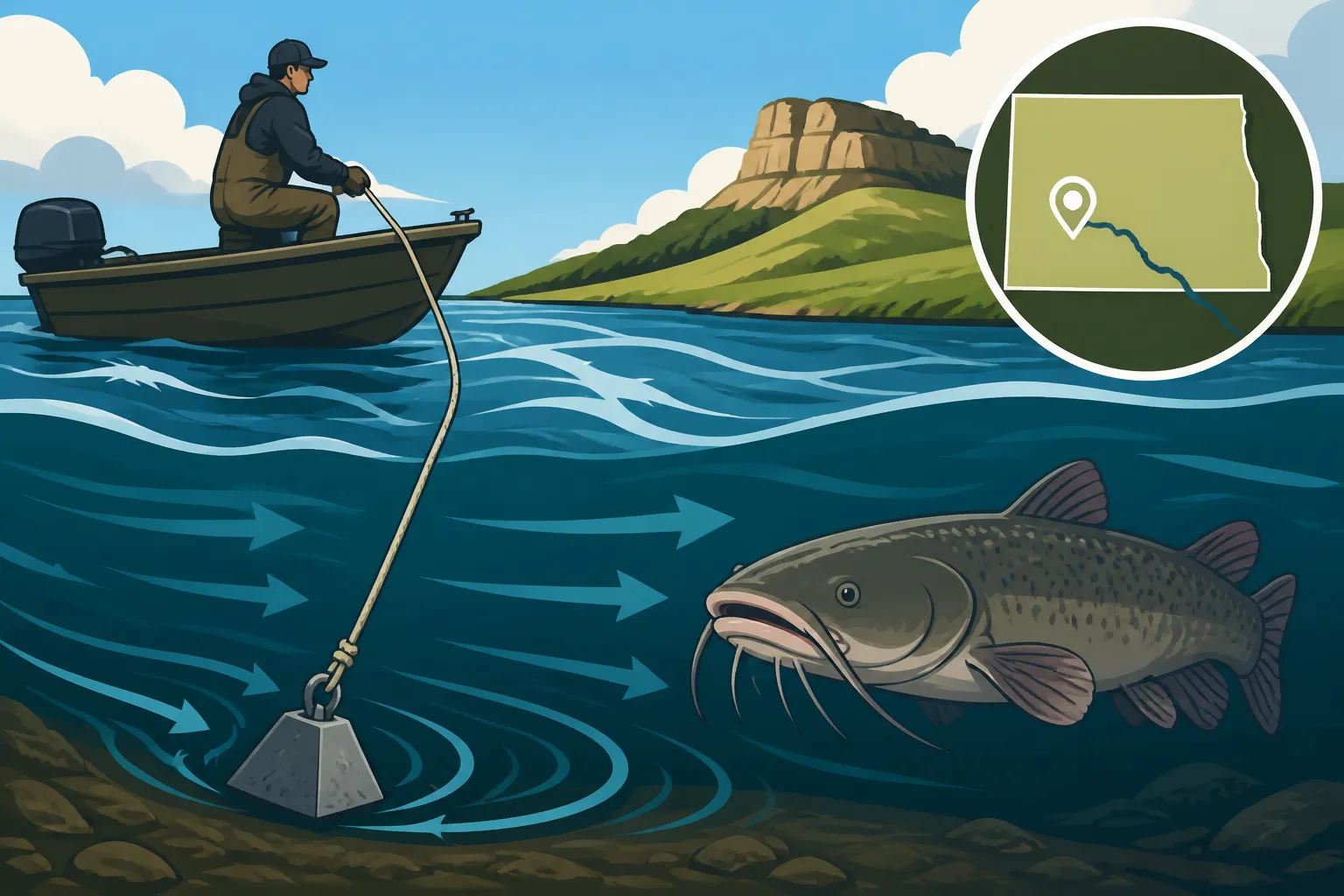
Catfish are powerful swimmers, but they're also opportunistic feeders and energy conservers. They don't typically want to fight the main current all day long. Instead, they'll position themselves just out of the strongest flow, in areas where the current slows down, creating a "seam" or an "eddy line." Here, they can wait comfortably, letting the current bring food to them without expending excessive energy. This might be a deep hole, behind a log jam, or on the downcurrent side of a submerged hump. Your goal with anchoring is to place your boat in a strategic position so you can cast into these prime feeding zones without being swept away.
Imagine fishing a bend in the Missouri River Fishing Below Garrison Dam in North Dakota. The outside bend will often be deeper and have a faster current, while the inside bend might be shallower and have slower water. Catfish could be holding in that transition zone, or even in the slower water of the inside bend, darting out to grab morsels swept past them. Understanding these subtle changes and how they concentrate catfish is the first step to choosing your anchoring spot wisely.
Identifying Prime Catfish Holding Spots
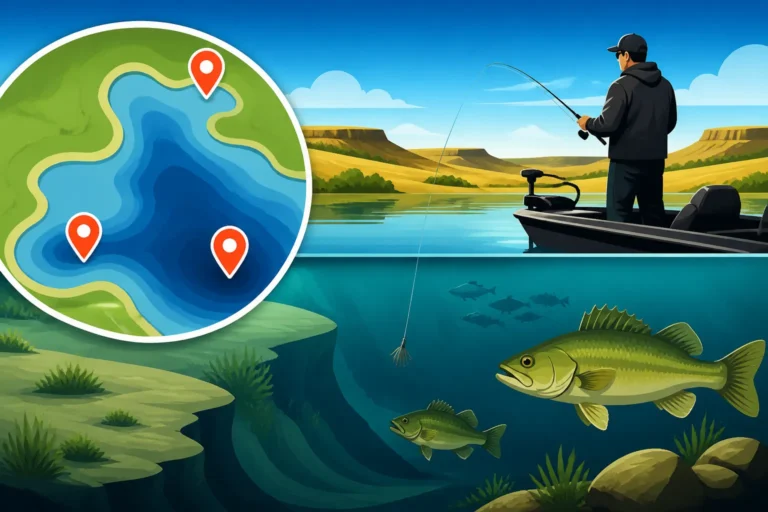
So, how do you find these hidden gems where catfish lurk? It starts with reading the water. Look for visual cues on the surface: swirling water, debris collecting in certain areas, or even changes in water color can indicate current breaks or depth changes. Below the surface, a good fish finder or depth sounder is your best friend. It helps you identify those deeper holes, humps, and submerged structures that create prime catfish habitat.
Once you’ve pinpointed a promising spot, consider how the current interacts with it. A sharp drop-off into a deep hole on the outside of a river bend will create an eddy directly downstream of that drop. Catfish will often sit on the bottom, just at the edge of the fast water, in the slightly calmer zone. Your anchor needs to hold your boat upstream of this spot, allowing you to cast your bait directly into the sweet spot where the catfish are waiting.
Think about the Red River Catfish Fishing Spots in North Dakota. The river's meandering nature creates countless bends and deep scour holes. Catfish absolutely love these areas, especially where there's overhead cover from brush or trees, or where the current pushes baitfish directly into their ambush points. A strong, reliable anchor setup is what allows you to precisely position your boat to capitalize on these specific features, rather than just drifting aimlessly.
Essential Anchoring Gear for Catfish Anglers
Trying to anchor in current with the wrong gear is like trying to hammer a nail with a sponge – frustrating and ineffective. Catfish angling on moving water demands specific types of anchors, robust ropes, and a few key accessories to ensure your boat stays exactly where you want it. Skimping on your anchoring setup is a common mistake that leads to lost fishing time and unnecessary headaches.
Types of Anchors for Current
When fishing strong currents, not just any anchor will do. You need something designed to dig in and hold, even against significant pressure.
- River Anchors (Fluke/Grapnel Style): These are often specifically designed with wide flukes or tines that can dig into muddy or sandy river bottoms. The greater surface area, compared to a traditional mushroom anchor, gives them better holding power in current. For smaller boats or kayaks, a grappling hook style anchor can work well, especially if there are rocks or submerged timber to grab onto, but ensure it has a release mechanism (trip line) if it gets stuck.
- Box Anchors: These are fantastic for current because their design creates drag on the bottom, effectively acting like a parachute to slow and hold your boat. They often have multiple flukes that dig in, providing superior holding power in varying bottom conditions. Some anglers even use a homemade version, essentially a heavy metal box that grabs the bottom.
- Weight vs. Design: While anchor weight is important – you generally need a heavier anchor for current than for still water – the design is arguably more critical. A heavy mushroom anchor might still skip along a muddy river bottom in a strong current, whereas a lighter, well-designed fluke or box anchor will dig in and hold much more effectively. Always consider the bottom composition of the river you're fishing; the Red River's silty bottom might demand a different anchor style than the rockier sections of the Missouri. You can find a good selection of specialized river anchors on platforms like Amazon.
Anchor Rope and Chain
Having the right anchor is only half the battle; the rope and chain are equally crucial for a secure hold.
- Anchor Rope: You need a strong, durable rope that can withstand constant strain and abrasion. Nylon rope is a popular choice because it has some stretch, which acts as a shock absorber against boat movement and current surges. The diameter of the rope should be appropriate for the size of your boat and the anticipated current. For larger boats or extremely strong currents, a thicker rope is essential. Always have plenty of rope – much more than just the depth of the water.
- Anchor Chain: This is perhaps the most overlooked, yet vital, component of an effective anchoring system in current. A length of heavy chain (typically 4-6 feet or more) between your anchor and your rope serves several critical functions. First, it helps the anchor lie flat and dig in by creating a horizontal pull. Second, its weight drags along the bottom, providing additional holding power and acting as a shock absorber. Third, it protects your rope from abrasion against the riverbed, which can quickly wear through a rope in rocky or gritty conditions. Without chain, your anchor is far more likely to skip and pull free.
Accessories for Effective Anchoring
A few additional pieces of gear can make your anchoring experience much smoother and safer.
- Adequate Cleats: Your boat needs sturdy, well-mounted cleats to secure your anchor rope. Ensure they are strong enough to handle the strain of holding your boat in a strong current. Don't rely on flimsy or poorly attached cleats.
- Anchor Davit or Roller: For heavier anchors, an anchor davit or roller on the bow can make deploying and retrieving your anchor much easier and safer, preventing damage to your boat's gelcoat or hull.
- Anchor Trolley System (for smaller boats/kayaks): If you're fishing from a kayak or a smaller boat, an anchor trolley is a game-changer. This system allows you to run your anchor line from bow to stern (or anywhere in between) along the side of your boat, giving you precise control over your boat's position without having to move the anchor itself. This is incredibly useful for casting into specific current seams or structures. A good anchor trolley system can be found on Amazon.
- Secondary Anchor/Drift Sock: In exceptionally strong currents or for specific presentations, a second, lighter anchor off the stern can help prevent your boat from swinging. Alternatively, a drift sock (also known as a drift anchor or sea anchor) deployed off the stern can slow your drift significantly, making it easier to hold your position with a single anchor or to drift more slowly over a productive area. This is a common tactic on the Missouri River Fishing Through Bismarck, North Dakota when covering a lot of water.
| Anchor Type | Best Use Cases in Current | Advantages | Disadvantages |
|---|---|---|---|
| River Anchor | Muddy, sandy, silty bottoms (Red River) | Digs in well, good holding power in soft substrates | Can get stuck in rocky areas, less effective on hard bottoms |
| Box Anchor | Varying bottoms, strong currents (Missouri River, Red River) | Excellent holding power, resists dragging, self-righting | Bulky to store, can be heavy |
| Grapnel Anchor | Rocky bottoms, submerged timber (areas with snags) | Grabs onto structure, good for small craft | Prone to getting stuck, can be difficult to retrieve |
| Drift Sock | Slowing drift, fine-tuning boat position (secondary use) | Reduces drift speed, less invasive than traditional anchor | Doesn't hold boat stationary, requires main anchor |
Step-by-Step Anchoring Techniques in Current
Anchoring effectively in current isn't just about dropping your anchor and hoping for the best; it's a calculated maneuver that requires practice and precision. The goal is to set your anchor securely upstream of your desired fishing spot, allowing your boat to settle perfectly over or just above the fish. This takes more thought than simply dropping anchor in a lake.
The Approach and Drop
This is where the magic happens – or where you end up far downstream of your target.
- Scout Your Spot: First, use your fish finder and knowledge of North Dakota Channel Catfish Fishing Guide to locate the precise spot where you believe the catfish are holding. Pay attention to depth changes, submerged cover, and current seams. Mark this spot on your GPS.
- Approach Upcurrent: Crucially, you must approach your desired spot from downstream, heading into the current. Pass slightly beyond your target fishing area. For example, if you want to fish a deep hole, motor about 50-75 feet (or more, depending on current strength and depth) past it, upstream. This seems counterintuitive, but it's essential for properly setting your anchor.
- Estimate Your Scope: This is arguably the most important factor in securing a good anchor hold in current. "Scope" refers to the ratio of your anchor line length to the water depth. A good rule of thumb for strong current is a 7:1 ratio, meaning for every 10 feet of water depth, you need 70 feet of anchor line. Add to that the distance your boat will drift back to your target. So, if it's 20 feet deep, and you're 50 feet upstream of your target, you might need (20 ft * 7) + 50 ft = 190 feet of line out. This long line allows the anchor to pull horizontally along the bottom, digging in, rather than pulling straight up and out.
- Deploy the Anchor: Once you're positioned upstream of your target, cut your engine (or put it in neutral) and gently lower your anchor over the bow (never the stern in strong current, as this can swamp your boat). Don't just throw it in! Let the current slowly carry your boat downstream while you feed out anchor line, maintaining tension. As your boat drifts back towards your target spot, continue to feed out more line, allowing the anchor to drag and dig into the bottom.
When you feel the anchor dig in and the boat's drift slows significantly, you know you're getting close. Keep an eye on your GPS to ensure you are drifting back to your marked fishing spot. This precise deployment is what allows you to hold steadfast against the relentless push of the river.
Setting the Anchor Firmly
Once your boat has drifted back to your desired fishing position, you need to ensure the anchor is properly "set" – firmly dug into the riverbed.
- Feel the Tug: With the appropriate amount of line out (considering your scope), you should feel a distinct "tug" as the anchor digs in. The boat's movement will slow to a crawl, and then stop, or at least become very steady. If you still feel the boat slowly drifting or swinging, you likely don't have enough scope out, or your anchor isn't properly set.
- Test the Set: Engage your boat's engine in a very slow reverse (or forward, depending on your setup) against the current for a moment. This extra pull helps to really bury the anchor into the bottom. Watch your GPS. If your boat doesn't move, or moves only minimally, your anchor is well-set. If it begins to drag, release more line immediately and try again. Don't be afraid to experiment with letting out more line than you think you need; it’s better to have too much scope than too little.
- Adjusting Position: Sometimes, even with a good set, your boat might be a few feet off the ideal position. If you need to move slightly upstream, you can slowly retrieve a few feet of anchor line. To move downstream, simply pay out a bit more line. For more significant lateral adjustments, especially in smaller boats, an anchor trolley becomes invaluable, allowing you to reposition your tie-off point along the boat's side without re-anchoring. This finesse is crucial for targeting those tight Catfish Bait Techniques for the Red River.
Multiple Anchor Setups
For the most demanding conditions or when ultra-precise positioning is required, a single anchor might not be enough. This is especially true on large, powerful rivers like parts of the Red River of the North Fishing Guide where the current can be incredibly strong, or when you want to absolutely minimize boat swing.
- Bow and Stern Anchoring: This is the classic two-anchor setup. You'll drop your primary anchor from the bow as described above. Once it's set and your boat is in position, you'll then deploy a second, often lighter, anchor from the stern. This stern anchor is paid out downstream and slightly to one side, holding the rear of the boat steady and preventing it from swinging. This setup creates a fixed platform, which is ideal for precise bait placement and minimizing tangles. Just be mindful of how you retrieve them to avoid tangling.
- Two Anchors Off the Bow (V-Anchoring): Some experienced river anglers prefer to run two anchors off the bow, spread slightly apart in a "V" shape. This creates an incredibly strong, stable hold and can be very effective in extremely swift currents. The technique involves deploying the first anchor, letting out sufficient line, and then dropping a second anchor a short distance to the side, also with plenty of scope. The boat then settles between the two, creating a very secure hold. This method is particularly useful when you need to fish a very specific, narrow current seam or piece of structure.
- Using a Drift Sock with an Anchor: While not strictly a "multiple anchor" setup, combining a primary anchor with a drift sock off the stern is another excellent way to stabilize your boat and reduce swing in current. The drift sock acts as a parachute, creating drag that keeps the stern from moving laterally, offering a good compromise between a full two-anchor setup and single-anchor versatility. This is a common strategy when Fishing From a Kayak in North Dakota, where managing two heavy anchors can be challenging.
Safety Considerations and Troubleshooting Common Issues
Even with the best gear and techniques, anchoring in current can present challenges. Being prepared for common problems and understanding safety protocols is just as important as knowing how to drop your anchor. After all, you want to bring home fish, not tales of a lost anchor or a close call.
Anchor Retrieval Challenges
Getting your anchor stuck on the bottom is a rite of passage for river anglers. Submerged logs, rock piles, and other debris are notorious for snagging anchors.
- The "Pull-Back" Method: If your anchor is stuck, don't just pull harder. First, motor slowly upstream, directly over the anchor, putting slack in the line. Then, reverse past it, attempting to pull the anchor out from the opposite direction (where it dug in). This often works because anchors are designed to hold from one direction.
- The "Anchor Ring" or Trip Line: The best defense against a stuck anchor is a trip line. This is a lighter line attached to the crown (the top) of your anchor, run up the anchor shaft, and then tied to your main anchor line with a break-away zip tie or a weak piece of string. If your anchor gets stuck, you pull on the trip line, which reverses the anchor's orientation and frees it from the snag. Alternatively, an "anchor ring" allows you to slide a ring down the anchor line, past the snag, and pull the anchor from the crown. If you fish snaggy rivers, investing in or rigging up one of these systems is a must. Remember that even the strongest anchor might need help to get free, and a quality anchor retrieval system will save you money and frustration in the long run.
- When to Cut Your Line: In extreme cases, if an anchor is hopelessly stuck and you can't free it, you might have to make the difficult decision to cut your anchor line. This is why it’s a good idea to have a sharp knife readily accessible on your boat. While it hurts to lose an anchor, it's better than getting your boat in a dangerous situation or damaging your vessel. Always prioritize safety.
Emergency Situations and Environmental Awareness
River currents, while productive for fishing, demand respect. Always be aware of your surroundings and potential hazards.
- Avoiding Obstructions: Before dropping anchor, scan downstream for any large obstructions like dams, rapids, bridge pilings, or large log jams. You never want to anchor so close to these hazards that a sudden anchor drag or equipment failure could put you in immediate danger. Always maintain a safe distance. This is particularly important on longer stretches of the Missouri River Fishing Guide.
- Stay Alert: River conditions can change quickly. A sudden increase in current due to heavy rains upstream, or the release from a dam, can put unexpected strain on your anchor. Pay attention to weather forecasts, water levels, and any warnings from local authorities. Keep an eye on other boaters and their positions.
- Know When to Pull Up: If the current becomes too strong, your anchor starts consistently dragging, or if dangerous weather moves in, don't hesitate to pull up your anchor and find safer water. Your safety and the safety of your passengers should always be your top priority.
- Respect the Riverbed: When anchoring, try to minimize disturbance to the riverbed. Avoid dragging your anchor unnecessarily, and choose your anchor type based on the bottom composition to prevent excessive damage. Remember the importance of preventing the spread of aquatic nuisance species; always clean, drain, and dry your boat and gear after each outing. For more on this, check out Aquatic Nuisance Species Rules for Boaters.
By mastering these anchoring techniques and being prepared for the challenges that come with river fishing, you'll be well on your way to consistently putting your boat in the prime catfish zones and enjoying more successful days on North Dakota's incredible rivers. It takes practice, patience, and the right gear, but the reward of landing a trophy channel cat from a perfectly anchored position is absolutely worth it.
Disclaimer
This article is for general informational purposes only and does not constitute professional advice. Laws, prices and regulations vary by location and change over time. Consult a qualified professional for guidance on your specific situation.