Fall Feeding Patterns for Walleye
As the crisp air of autumn settles over North Dakota, many anglers find themselves scratching their heads. You’ve probably experienced it: a summer full of promising bites that suddenly drops off, leaving you wondering where all the walleye went and why they’re not hitting your usual spots. This guide is here to shed light on those perplexing shifts, helping you understand the fall feeding patterns of walleye so you can make the most of this often overlooked, incredibly productive season.
The Transformative Power of Autumn for Walleye
Fall fishing for walleye in North Dakota isn't just another season; it's a completely different ballgame, offering some of the most exciting and rewarding angling experiences of the year. The entire aquatic environment undergoes a significant change, and with it, the walleye's behavior shifts dramatically. If you've ever felt like the walleye just vanish after Labor Day, you're not alone, but they're still out there – you just need to know where to look and what they're doing.
Why Fall is Different: Water Temperature and Metabolism
The most significant driver of walleye behavior in the fall is the steady decline in water temperature. As the long, hot summer days give way to cooler nights and shorter days, the surface water begins to cool. This cooling effect penetrates deeper into the water column, eventually leading to a phenomenon known as "turnover" in many lakes, where the warmer surface water cools, becomes denser, and sinks, mixing with the deeper, cooler water. This re-oxygenates the entire lake and can sometimes scatter fish temporarily, but the overall trend is clear: water temperatures are dropping.
This drop in temperature triggers a metabolic change in walleye. Unlike their sluggish summer counterparts who might be conserving energy in warm water, fall walleye feel an intense, biological urge to feed aggressively. They instinctively know that winter is coming, a season of limited food availability and colder temperatures that demand stored energy. This means they are actively seeking out food, often in shallower water than you might expect, and they're willing to hit lures with a ferocity rarely seen during other times of the year. It's this drive to bulk up for the lean months ahead that creates the incredible fall bite.
Shallow vs. Deep: Where Walleye Relocate
One of the biggest frustrations for anglers transitioning from summer to fall is trying to find walleye in their usual deep, thermal refuge areas. While some might linger on deep structures, the majority will begin to follow baitfish into shallower waters, especially as the water temperatures dip into the 50s and 40s. This relocation is crucial to understanding fall patterns. Walleye move to areas where baitfish are abundant, often relating to shallower points, humps, weed lines, and even expansive flats.
Consider Lake Sakakawea or Devils Lake in North Dakota; during the peak of summer, walleye might be suspended over deep water or hugging the bottom of main lake humps in 30-40 feet of water. Come fall, however, those same fish might be found on the edges of remaining green weeds in 8-15 feet, or cruising rocky points and submerged islands in 10-25 feet. They are often less concentrated than in summer and can be more nomadic, following schools of baitfish that are also moving to shallower, oxygenated areas before winter sets in. This means anglers need to be adaptable, covering a lot of water and constantly searching for these new feeding grounds.
Deciphering Fall Walleye Feeding Behaviors
Once you understand why walleye move and feed differently in the fall, the next step is to understand how they feed. Their behaviors are distinctly different from spring or summer, and recognizing these nuances will allow you to tailor your approach for maximum success. This isn't about subtle nibbles; it's about aggressive pursuit.
The "Gorge-Fest" Mentality: Aggressive Strikes
Forget the light, tentative bites that often characterize summer walleye fishing. In the fall, walleye operate with a "gorge-fest" mentality. They are driven by an instinctual need to consume as much food as possible before ice-up. This translates into incredibly aggressive strikes. When a fall walleye hits your lure, there's often no mistaking it – it's a solid, thumping strike, a real rod-bender that can surprise you if you're still in a summer mindset.
This heightened aggression means you can often get away with more active presentations and sometimes even larger baits. They’re not just nipping at tails; they're actively trying to swallow their prey whole. This also means that if you’re fishing a known walleye hotspot, you might experience quick flurries of intense activity, as entire schools move through, feeding voraciously. This makes fall fishing exhilarating, but also demands quick reactions and being ready for a strong fight the moment that strike hits.
Baitfish Migration and Walleye Following
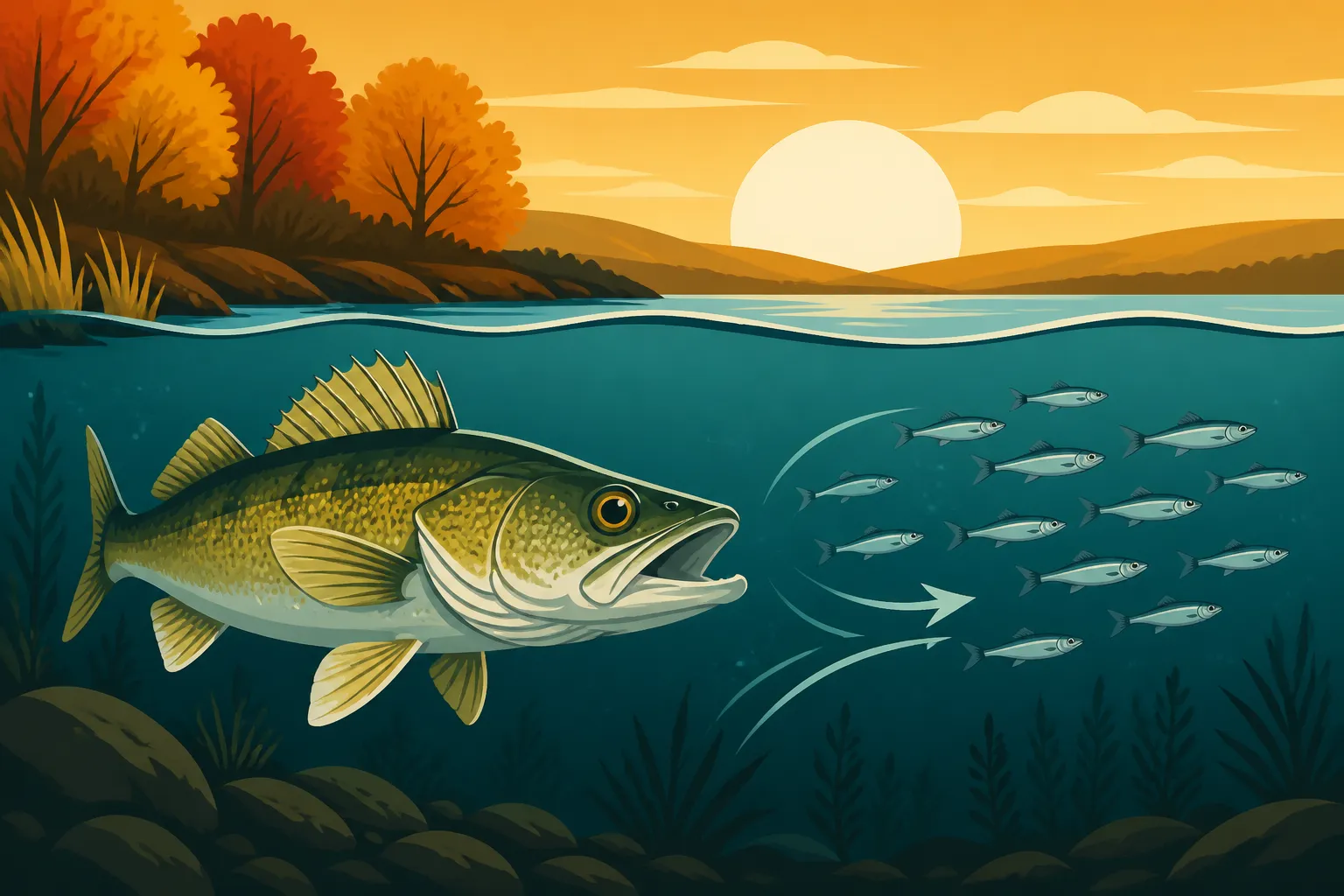
The key to consistently finding fall walleye is understanding baitfish movements. As water temperatures drop, many species of baitfish, like yellow perch, cisco, and various shiners, begin to migrate from deeper, open water into shallower areas, congregating in bays, along breaklines, and near remaining green vegetation. Walleye are opportunistic predators, and they will follow these baitfish schools relentlessly. If you find the bait, you'll often find the walleye close behind, ready to feast.
Think about scouting areas not just for structure, but for signs of baitfish. Your fish finder will be an invaluable tool here, showing you large schools of baitfish suspended in the water column or hugging specific depths. Matching the hatch – using lures that mimic the size, color, and action of the predominant baitfish in the area – becomes incredibly important. If the walleye are feeding on small perch, a perch-colored crankbait or jig might be your ticket. If they're on bigger cisco, a larger swimbait or trolling plug will be more effective. Finding the bait is often 90% of the battle in fall walleye fishing.
Best Times of Day for Fall Walleye Action
While summer walleye often prefer low-light conditions, the cooler temperatures of fall can extend feeding windows. Yes, prime low-light periods at dawn and dusk are still incredibly productive, especially for larger, more cautious fish. The sun's angle is lower, and shadows are longer, providing excellent ambush conditions. However, don't pack up your gear just because the sun is high in the sky.
On cloudy or overcast days, or even bright days with a good chop on the water, fall walleye can be active throughout the midday hours. The cooler water temperatures make them less sensitive to bright light, and their intense feeding drive means they'll often continue to chase prey even when the sun is directly overhead. The "Fall Feeding Patterns for Walleye" can be quite diverse. Watching the weather forecast for those classic North Dakota overcast, blustery days can give you a huge advantage, as these are often prime conditions for an extended walleye bite. Always remember to consult the North Dakota Fishing Season Calendar for specific dates, but generally, fall opens up a lot of daylight opportunities.
Tactical Approaches for Fall Walleye Success
Now that we've covered the "why" and "when," let's talk about the "how." Fall walleye fishing often requires a change in tactics from your typical summer game plan. Being prepared with the right gear and techniques will greatly increase your chances of finding and landing these hungry fish. It's about being efficient and adaptable on the water.
Lure and Bait Selection for Aggressive Feeders
When walleye are in their aggressive "gorge-fest" mode, you can often get away with more commotion and larger presentations. Deep diving crankbaits are absolute workhorses for fall trolling. Lures that dive down to 15-30 feet, often with bright or natural baitfish patterns, can be incredibly effective when trolled over those transition areas, points, and flats where baitfish are concentrating. Brands like Rapala, Berkley, or Bandit offer excellent options for various depths and profiles. You can often find a fantastic selection of these crankbaits, jigs, and soft plastics on Amazon, giving you plenty of choices to experiment with.
Jigging spoons, such as Acme Kastmasters or Northland Fishing Tackle Forage Minnows, are also deadly when walleye are schooling up or relating to specific pieces of structure. Dropping these spoons down and jigging them aggressively can trigger those reaction strikes from fish looking for a quick meal. Don't forget about live bait either; large minnows, shiners, or even small suckers presented on a slip bobber or a plain jighead can be irresistible to a hungry walleye, especially when presented near structure. For deeper water presentations, consider using a good quality Best Jig Head Weight for Deep Water Walleye.
Trolling vs. Jigging: Choosing Your Method
The choice between trolling and jigging often depends on the specific conditions you're facing and the type of water you're fishing. Trolling is an excellent method for covering large expanses of water quickly, allowing you to search for scattered schools of walleye or follow baitfish migrations. This is especially effective on big waters like Lake Sakakawea, where fish can be spread out. Using multiple lines with different crankbaits at varying depths can help you dial in on what the fish prefer on any given day. To learn more about this approach, read our guide on Trolling Crankbaits for Walleye.
Jigging, on the other hand, is ideal when you've located a concentration of fish on specific structure, like a humped island or a rocky point. Vertical jigging with spoons, jigs, or live bait allows for a precise presentation right in the strike zone. This can be particularly effective in windy conditions where boat control for trolling might be difficult, or when fish are holding tight to cover. Both methods have their place in a fall angler's arsenal, and often the most successful days involve adapting between the two as conditions and fish locations change. A little research into North Dakota Walleye Fishing Techniques can further hone your skills.
Finding the Right Depth and Structure
This is where the detective work comes in, and it's paramount for fall walleye. As discussed, walleye will often relate to specific types of structure where baitfish are present. Look for breaklines where shallow flats drop off into deeper water, submerged points, humps, and the edges of any remaining green weed beds. These "edges" are prime ambush points for walleye. The exact depth will vary daily based on weather, light conditions, and baitfish location, but generally, expect to find them in 8-25 feet of water.
Your fish finder is your best friend in this pursuit. Use it to mark baitfish schools, identify changes in bottom contour, and pinpoint potential walleye. Don't be afraid to experiment with different depths until you start marking fish. Sometimes, walleye will be suspended just above the baitfish, waiting for the perfect moment to strike, while other times they'll be belly-to-the-bottom. Consistently monitoring your electronics and adapting your presentation to the depth where you're seeing activity is key. A good read on How Water Temperature Affects Walleye Location can provide valuable insights here. Don't forget to check out our Best Fish Finders for North Dakota Lakes guide for optimal equipment choices.
Common Pitfalls and How to Avoid Them
Even with the best intentions, fall walleye fishing can present its challenges. Many anglers fall into common traps, especially if they try to apply summer strategies to the completely different fall environment. Recognizing these pitfalls and proactively avoiding them will save you frustration and lead to more productive outings.
Not Adjusting to Changing Conditions
One of the most frequent mistakes anglers make in the fall is failing to adjust their mindset and techniques from summer patterns. Just because you caught walleye in 40 feet of water near a specific basin edge in August doesn't mean they'll be there in October. The water temperature is constantly dropping, baitfish are moving, and the walleye's metabolic demands are shifting. Sticking to old habits out of comfort or stubbornness will almost guarantee an empty livewell.
It's crucial to be flexible. Start by checking the current water temperature if your boat has a thermometer; this is your most important clue. If it's in the mid-50s, focus on shallower breaklines and weed edges. If it drops into the low 40s, walleye might start concentrating more tightly on deep structure again, or move into river channels and deep bays. Continuously evaluate what's happening around you and be willing to change lures, depths, or even fishing locations entirely. The best fall anglers are those who can quickly adapt to the day's specific conditions. Our Best Time of Year to Fish in North Dakota delves deeper into seasonal shifts.
Underestimating the Impact of Weather
North Dakota fall weather can be a beautiful, but fickle, beast. One day it's calm and sunny, the next it's howling winds and a sudden cold snap. Underestimating the impact of these weather changes can severely hinder your success. While walleye often become more active before a major cold front, they can shut down for a day or two immediately after one. Strong winds can create fantastic feeding conditions by concentrating baitfish and breaking up the water surface, but they also make boat control challenging.
Always check the forecast before heading out. If a cold front is coming, try to hit the water beforehand. If it's going to be windy, plan your approach to fish areas that offer some protection or where the wind creates current and chop that walleye prefer. And for your own comfort and safety, layering is essential. Investing in good quality cold weather gear, found easily on Amazon, will make those blustery days much more enjoyable and allow you to stay on the water longer when the bite turns on. This type of preparation can make all the difference, especially on days that would typically deter less prepared anglers. For specifics on how to dress for these conditions, consider our guide on What to Wear Ice Fishing in North Dakota, as much of the advice applies to late fall open water.
Ignoring the Details: Line, Hooks, and Electronics
In the heat of the moment, it's easy to overlook the small stuff, but these details can really impact your catch rate, especially when walleye are hitting aggressively. Always ensure your fishing line is in good condition; a frayed line can easily break during a powerful fall strike. Check your knots regularly. Most importantly, ensure your hooks are razor-sharp. A dull hook can lead to missed strikes or fish coming unbuttoned, especially with the hard mouths of walleye. A small hook file or a supply of fresh hooks is a must-have.
Lastly, make sure you're effectively using your electronics. Don't just look at the screen; learn to interpret what it's telling you. Distinguish between baitfish and larger marks that could be walleye. Understand how to read structure and identify subtle changes in the bottom. Your fish finder is a window into the underwater world, and mastering it can significantly cut down your search time. Take the time to learn your specific unit – many online tutorials exist, and it’s well worth the effort. Getting comfortable with tools like How to Read a Fish Finder for Ice Fishing will help you interpret your sonar returns, even in open water.
| Factor | Summer Walleye Patterns | Fall Walleye Patterns |
|---|---|---|
| Water Temp | Warm (65-75°F), seek cooler, deeper water | Cooling (55-40°F), triggers aggressive feeding |
| Location | Deeper main lake basins, thermocline, offshore humps | Transition areas, shallower breaks, weed edges, points |
| Feeding Drive | Often lethargic, subtle bites, opportunistic | Highly aggressive, "gorge-fest" mentality, urgent feeding |
| Baitfish | Scattered, deeper schools | Concentrating in shallower areas, migrating |
| Lure Size | Often smaller, finesse presentations | Larger, more active baits often effective |
| Bite Times | Primarily low-light (dawn/dusk, night) | Extended windows, can be strong all day on overcast days |
| Energy Level | Conserving energy | Building reserves for winter |
Disclaimer
This article is for general informational purposes only and does not constitute professional advice. Laws, prices and regulations vary by location and change over time. Consult a qualified professional for guidance on your specific situation.