Rarest Fish Species Found in North Dakota
It's easy to get caught up in the pursuit of North Dakota's most famous fish — the mighty walleye, the feisty northern pike, or the bountiful yellow perch. But beneath the surface, our lakes and rivers hold a secret world of truly special, often unseen, aquatic residents. Many anglers don't realize there are fish species dwelling in these waters that are genuinely rare, some facing significant conservation challenges, and encountering one is a truly unique experience. This guide will take you off the beaten path to explore the rarest fish species found in North Dakota, shedding light on their stories and how we can all help protect them.
Defining "Rarity" in North Dakota's Waters
When we talk about "rare" fish, it's not always just about how few there are. Sometimes, it's about how infrequently they're encountered by the average angler, their limited habitat, or a population that's struggling to thrive. North Dakota's aquatic ecosystems are surprisingly diverse, but certain species are teetering on the edge of local extirpation or are simply incredibly elusive.
What Makes a Fish Species "Rare" in North Dakota?
A fish species can be considered rare in North Dakota for several compelling reasons. The most critical, of course, is when a population is genuinely small and endangered, often due to habitat loss, pollution, or changes in water flow. These species are usually protected by state and federal laws, making it illegal to target or keep them. The Missouri River system, in particular, has seen significant alterations over the decades, impacting its native inhabitants.
Beyond critically low numbers, some fish are rare because their specific habitat is limited to very few, isolated areas within the state. You might find a species thriving in one small stream but nowhere else. Others are simply extremely difficult to catch or even observe due to their elusive nature, nocturnal habits, or preference for deep, inaccessible waters. For the everyday angler, these fish are truly a needle in a haystack, and their presence often signals a healthy, unique ecosystem worth preserving.
Beyond the Walleye and Pike: Understanding the Ecosystem
It's easy to focus on game fish, the ones that give us a thrill on the line or a delicious meal. But the health of an entire fishery, including our beloved walleye and pike, relies on a complex web of life. The smaller, rarer fish, often minnows or darters, play crucial roles as food sources for larger predators and as indicators of water quality. When these smaller, less charismatic species start to disappear, it's a red flag for the entire aquatic community.
Understanding and appreciating these lesser-known species expands our perspective as anglers. It shifts our focus from purely harvesting to becoming stewards of the environment. Recognizing the importance of biodiversity means we care not just about the big ones we catch, but about the delicate balance that allows any fish to thrive. It helps us understand the broader context of Fish Species Found in North Dakota Lakes and Rivers.
Unveiling North Dakota's Elusive Aquatic Residents
While the average angler might go a lifetime without seeing many of these, a few species truly stand out as North Dakota's rarest and most protected. They are living relics, vital components of our natural heritage, and their stories are fascinating.
The Mysterious Pallid Sturgeon
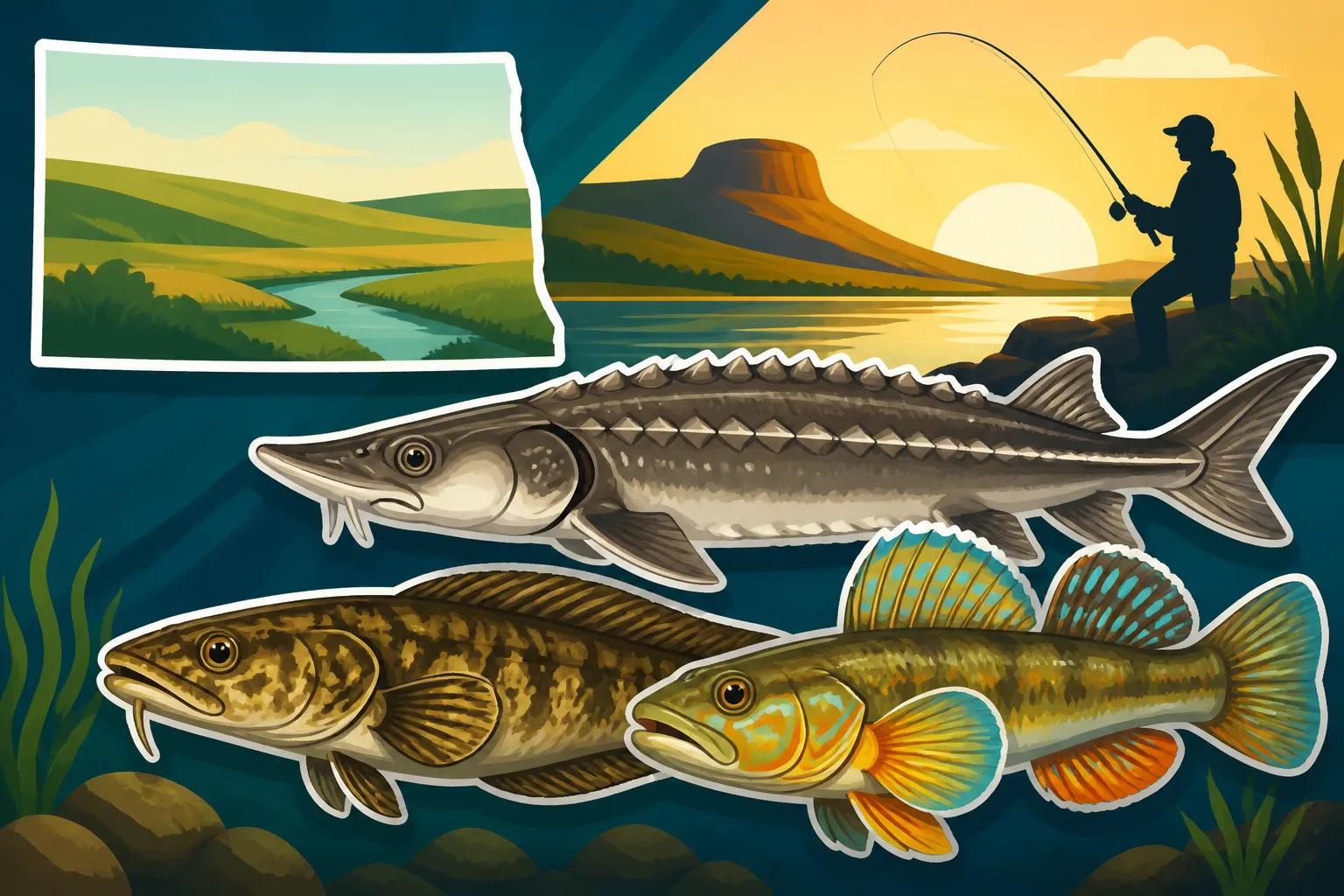
Perhaps the most famous — and certainly the most critically endangered — rare fish in North Dakota is the Pallid Sturgeon. This ancient fish, a bottom-dweller with a flattened snout and distinctive barbels, is truly a living dinosaur. It can grow incredibly large, sometimes over five feet long and living for many decades. The Pallid Sturgeon is native to the Missouri and Mississippi River basins and has suffered catastrophic population declines primarily due to habitat fragmentation caused by dams and river channelization. They need long stretches of free-flowing, turbid water with specific sand and gravel bottoms for spawning, conditions that have become incredibly scarce.
In North Dakota, the Missouri River is one of the last strongholds for this magnificent creature. Catching one is an incredibly rare event, and if you do, it's absolutely crucial to know that the Pallid Sturgeon is a federally and state-protected endangered species. Is the Pallid Sturgeon Protected in North Dakota? The law requires immediate, careful release. Many are tagged with passive integrated transponders (PIT tags) or external tags, so handling them as minimally as possible is paramount. Anglers are encouraged to report any sightings to the North Dakota Game and Fish Department, providing details about the location and size. This information is critical for ongoing conservation efforts, including the intensive Pallid Sturgeon Recovery in the Missouri River programs aimed at boosting their numbers through hatchery rearing and stocking.
The Seldom-Seen Lake Sturgeon
While not quite as imperiled as its cousin, the Pallid Sturgeon, the Lake Sturgeon is another incredibly rare and protected species in North Dakota. Historically, Lake Sturgeon were present in the Red River and Lake Winnipeg basin, as well as the Missouri River system. Like the Pallid Sturgeon, they are long-lived, slow-growing fish that can reach impressive sizes. However, they prefer different habitats, often found in large rivers and lakes with rocky or gravel bottoms, which are critical for their spawning.
Unfortunately, overfishing in the past, coupled with dam construction that blocked migration routes and destroyed spawning grounds, led to a dramatic decline in Lake Sturgeon populations across their range, including North Dakota. Today, Lake Sturgeon are considered a state-threatened species in North Dakota, and they are protected. Anglers are not permitted to harvest them, and any incidentally caught Lake Sturgeon must be immediately and carefully released. If you encounter one, it's a truly special moment. Their presence signifies a glimmer of hope for river health, and ongoing management efforts focus on habitat restoration and stocking to try and bring these magnificent fish back. It's a testament to the fact that Is It Legal to Catch Sturgeon in North Dakota? with specific regulations, but keeping them is strictly prohibited.
Uncommon Darters and Minnows
While the sturgeon grab headlines due to their size and critically endangered status, many smaller, less glamorous fish are equally rare and vital to our ecosystems. North Dakota is home to several species of darters and minnows that have very restricted distributions or extremely low populations. These aren't the fish that will pull your line, but they are crucial for a healthy environment.
For instance, certain species of darters, like the Iowa Darter or Slender Madtom, might only be found in a handful of pristine, undisturbed streams or small rivers. These fish are often quite sensitive to changes in water quality, siltation, and habitat disruption. Their rarity makes them important bioindicators – if their populations are struggling, it often means the ecosystem around them is under stress. Similarly, some native minnow species, essential forage fish for larger game species, have seen their numbers dwindle due to competition from invasive species or changes in water flow. While you might not specifically fish for these tiny marvels, their presence is a good sign, and their absence is a cause for concern. Anglers contributing to environmental observations, perhaps by taking clear photographs of any unusual species they encounter before careful release, can help biologists track these small, often overlooked populations. A waterproof field guide, easily found on Amazon, can be a great tool for identifying these subtle differences.
Conservation Efforts and Angler Responsibility
Protecting North Dakota's rare fish isn't just a job for biologists; it's a collective responsibility that involves everyone who enjoys our outdoors, especially anglers. Our actions, both on and off the water, can make a real difference.
State and Federal Protection Programs
The North Dakota Game and Fish Department, in conjunction with federal agencies like the U.S. Fish and Wildlife Service, works tirelessly on conservation and recovery programs for endangered and threatened species. These programs involve extensive research, habitat restoration projects, and careful monitoring of populations. For species like the Pallid Sturgeon, these efforts are incredibly hands-on, including hatchery breeding programs where young fish are reared in controlled environments and then released into suitable river sections. These released fish are meticulously tracked to assess survival rates and movement patterns.
Habitat improvements are also a cornerstone of these programs, focusing on restoring natural river flow, creating suitable spawning beds, and mitigating the negative impacts of dams and agricultural runoff. This work is complex and long-term, requiring significant resources and public cooperation. Understanding the North Dakota Fishing Regulations Explained is critical because specific rules are in place to protect these vulnerable populations. These regulations, which include immediate catch-and-release and reporting requirements for certain species, are not arbitrary; they are the result of scientific assessment and are vital for the survival of these fish.
The Role of Anglers in Protecting Rare Species
As anglers, we are often the eyes and ears on the water, and our vigilance can be incredibly valuable. The most important responsibility we have is to understand and respect all fishing regulations, especially those pertaining to protected species. If you happen to catch a Pallid Sturgeon or Lake Sturgeon, you must know how to identify it quickly and accurately. The North Dakota Game and Fish Department provides resources to help with this identification, usually through online guides or information within the annual fishing proclamation.
Beyond identification, proper catch-and-release techniques are paramount. For large, rare fish, minimize handling time, keep the fish in the water as much as possible, and use tools like long-nose pliers (which you can often find on Amazon) to remove hooks quickly and gently. Avoid dragging the fish onto dry land or rough surfaces, as this can remove their protective slime layer and cause injury. If you can, take a quick photo while the fish is still in the water, then release it. Reporting your sighting with details about location, time, and any tag numbers is incredibly helpful for researchers. Your respectful actions ensure these rare encounters remain positive for the fish and contribute to their long-term survival.
How to Potentially Encounter and Protect Rare Fish
While you shouldn't specifically target endangered species, knowing where they live and how to act if you stumble upon one is crucial. It’s about being an informed and responsible angler.
Specific Habitats and Fishing Considerations
The most likely place to encounter North Dakota's rarest fish species, particularly the sturgeon, is within the Missouri River system, including Lake Sakakawea and Lake Oahe. These expansive waters, with their deep channels and varying currents, provide habitat for many native species. When fishing in these areas, especially if you're targeting bottom-dwelling species like catfish or even walleye with deep-diving baits, there's always a small chance you might hook into something unexpected.
Areas with significant current, deep scour holes, and undisturbed stretches of riverbed are often prime locations for sturgeon. Anglers focusing on Missouri River Fishing Guide or Lake Oahe Fishing Guide should be extra vigilant. It's not about seeking them out for a trophy photo – in fact, intentionally targeting endangered species is illegal – but rather being prepared for the possibility of an incidental catch. Using barbless hooks, or at least crimping down the barbs on your hooks, can significantly reduce stress and injury to any fish, especially if you need to release it quickly. This small change in gear, easily done with a pair of pliers, makes a huge difference.
Reporting Sightings and Sustainable Practices
If you are fortunate enough to encounter a rare or protected fish species, your actions can contribute directly to conservation efforts. After safely releasing the fish with minimal handling, immediately report the sighting to the North Dakota Game and Fish Department. Provide as much detail as possible: the exact location, estimated size, any visible tags (note the number if you can), and a photograph if you managed to get one without harming the fish. This data helps biologists understand population distribution, movement, and the effectiveness of their recovery programs.
Beyond reporting, adopting sustainable fishing practices in general benefits all fish populations, including the rare ones. This includes respecting all North Dakota Fishing Season Dates and Limits, practicing responsible catch-and-release, properly disposing of all litter and fishing line, and preventing the spread of aquatic nuisance species (ANS) by cleaning, draining, and drying your boat and gear. Even something as simple as choosing eco-friendly fishing line that degrades faster, available from many retailers including Amazon, can make a difference in preventing long-term entanglement hazards. By being mindful and proactive, we can all play a part in ensuring these rare and precious aquatic residents continue to survive and, hopefully, thrive in North Dakota's waters for generations to come.
Here's a quick overview of some of North Dakota's rare and protected fish species:
| Species | Primary Habitat (ND) | Conservation Status (ND) | Key Identification Feature(s) | Angler Action (If Caught) |
|---|---|---|---|---|
| Pallid Sturgeon | Missouri River, Lake Oahe | Federally Endangered | Long, slender body; flattened snout; four barbels, no scales. | Immediate, careful release; report. |
| Lake Sturgeon | Red River, Missouri River | State Threatened | Elongated body; conical snout; five rows of bony scutes. | Immediate, careful release; report. |
| Iowa Darter | Clear, cool streams | Very Localized/Rare | Small, slender fish; often colorful; distinctive vertical bars. | Handle gently, release. |
| Slender Madtom | Clear, sandy/gravel streams | Very Localized/Rare | Small, catfish-like; venomous spines (mild); slender body. | Handle gently, release. |
| Pugnose Shiner | Clear, vegetated lakes/streams | Very Localized/Rare | Small, silvery minnow; very small, upturned mouth. | Handle gently, release. |
Disclaimer
This article is for general informational purposes only and does not constitute professional advice. Laws, prices and regulations vary by location and change over time. Consult a qualified professional for guidance on your specific situation.