North Dakota Yellow Perch Fishing Guide
There's nothing quite like the excitement of a perch bite in North Dakota, but finding those schools and knowing how to entice them can feel like a real mystery sometimes, especially with changing conditions. Whether you're chasing them through a hole in the ice or casting into open water, this comprehensive guide is here to unravel the secrets of yellow perch fishing in North Dakota, helping you consistently land those tasty panfish.
Understanding North Dakota Yellow Perch
Yellow perch (Perca flavescens) are one of North Dakota's most beloved panfish. They might not be the biggest fish in the lake, but what they lack in size, they more than make up for in sheer numbers and delicious table fare. For many anglers, catching a bucket of perch is a rite of passage, a perfect family outing, or just a fantastic way to spend a day on the water.
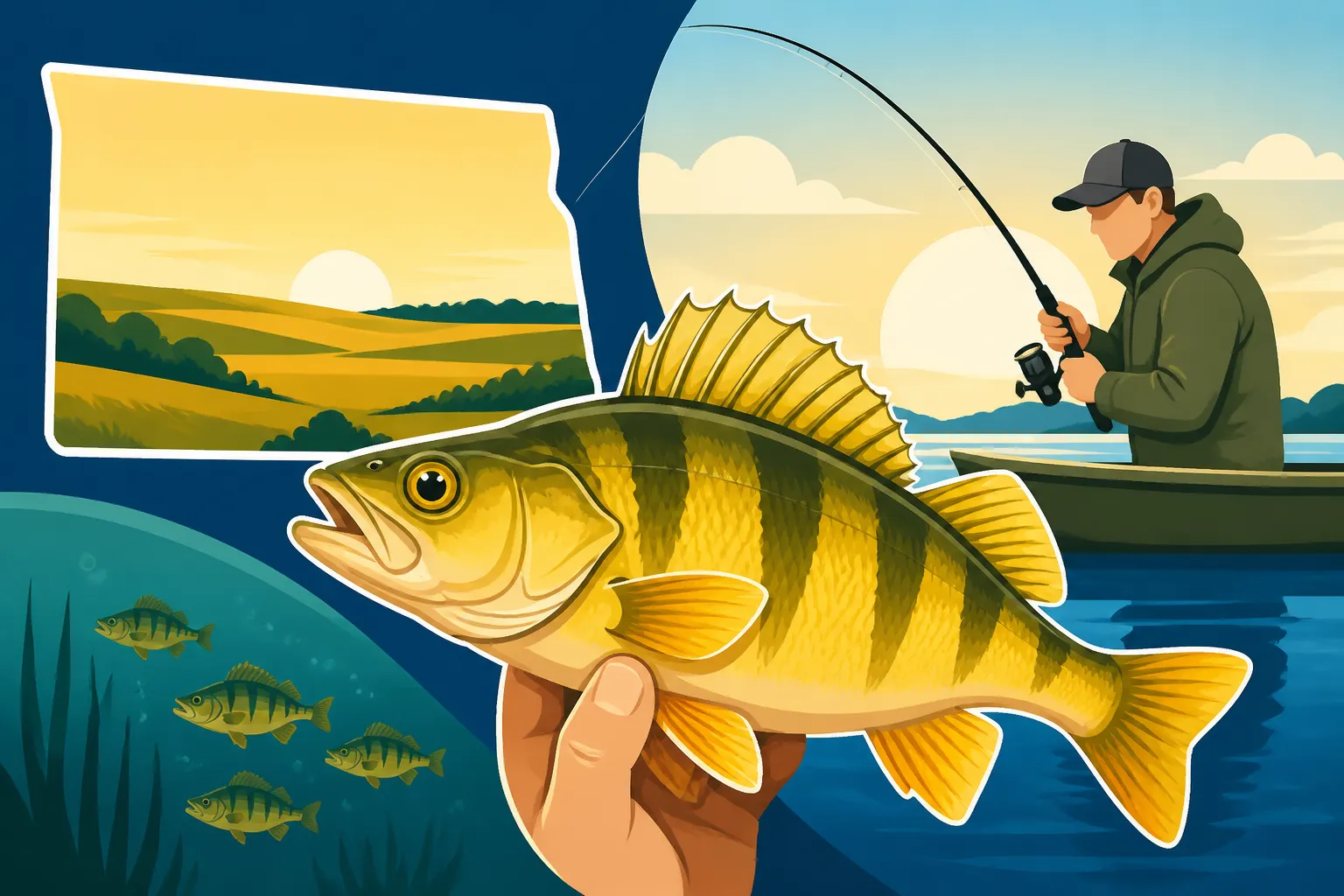
These fish are characterized by their distinct yellow-gold bodies, often with 6-8 dark vertical bars, and bright orange-red lower fins. They have a spiny dorsal fin, which can give you a little poke if you're not careful when handling them! Perch thrive in a variety of North Dakota waters, from the vast expanses of Devils Lake to smaller community ponds. Their schooling behavior makes them particularly exciting to target because once you find one, you've often found a whole lot more. This social nature also contributes to their popularity; it's hard to beat the action when a school of perch decides to cooperate.
The pursuit of yellow perch is a fantastic entry point for new anglers, offering consistent action and building confidence. For seasoned veterans, it's a chance to refine subtle techniques, experiment with new baits, and enjoy the pure, simple joy of fishing. Plus, let's be honest, there's a reason they're often called "poor man's walleye" – they're incredibly good to eat!
Yellow Perch Identification and State Record
Identifying a yellow perch is usually pretty straightforward, even for novice anglers. As mentioned, their most distinctive features are those vertical bars and their vibrant coloration. However, it's always good to be certain, especially when regulations might differentiate between panfish species. Beyond the looks, they have a somewhat elongated, oval-shaped body, a moderately compressed profile, and two separate dorsal fins—the first spiny and the second soft-rayed. You can learn more about specific characteristics in Yellow Perch Identification and State Record.
North Dakota has a rich history of impressive perch catches, and every angler dreams of breaking a state record. While the current record is a truly massive fish, anglers consistently pull out "jumbo" perch that measure over 12 inches and weigh well over a pound, particularly from prolific fisheries like Devils Lake. These larger perch offer a fantastic fight on light tackle and are highly prized for their fillets. Understanding what constitutes a "keeper" and what might be a record-breaker often comes down to length and weight, and anglers always need to be aware of the daily limits and potential special regulations for trophy waters.
Yellow Perch Habitat on Devils Lake
When anyone talks about yellow perch in North Dakota, Devils Lake almost immediately comes to mind. This sprawling, ever-changing lake is legendary for its perch fishery, producing both incredible numbers and trophy-sized fish. The habitat here is complex and varied, which is precisely why perch thrive. Yellow Perch Habitat on Devils Lake details how the unique flooded timber, vast submerged roadbeds, rock piles, and expansive shallow flats create a perfect ecosystem.
In Devils Lake, perch will relate to different structures depending on the season and water levels. During open water, they might be found schooling along weed edges, congregating over submerged humps, or exploring the flooded timber. In winter, they often gang up in deeper basins adjacent to structure, or cruise the edges of old roadbeds, always on the lookout for their next meal. Understanding these habitat preferences is key to success on Devils Lake. A good depth map and a reliable fish finder become invaluable tools in locating these prime perch hangouts.
The Allure of Perch Fishing in North Dakota
What truly draws anglers to yellow perch in North Dakota? It's a combination of factors. First, there's the accessibility. Perch can be found in a multitude of lakes, rivers, and even smaller ponds across the state, making them a viable target for many. Second, the action can be fast and furious. When you hit a school of hungry perch, it's not uncommon to catch fish after fish, offering non-stop excitement for anglers of all ages. This makes it an ideal species for introducing kids to fishing, as the consistent bites keep them engaged and excited.
Beyond the sheer fun of catching them, the culinary appeal of yellow perch is undeniable. Their firm, flaky, white meat is considered a delicacy by many, making them one of the most sought-after panfish for the dinner table. Whether lightly breaded and fried, baked, or added to a fish chowder, perch fillets are a true North Dakota treat. This combination of thrilling action, widespread availability, and delicious reward cements yellow perch as a perennial favorite among North Dakota anglers, creating memories that last a lifetime.
Prime Yellow Perch Fishing Spots in North Dakota
North Dakota might be known for its walleye, but the state also boasts some absolutely phenomenal yellow perch fisheries. While Devils Lake gets most of the glory, and for good reason, there are many other fantastic lakes and reservoirs where you can fill your bucket with these tasty panfish. Knowing where to start looking is half the battle, and each body of water offers its own unique challenges and rewards.
From large, complex systems to smaller, more intimate settings, North Dakota's diverse aquatic landscapes provide ample opportunities for perch anglers. The key is understanding that perch, being schooling fish, tend to congregate in certain areas, often relating to structure, food sources, and changes in depth. This means that while a lake might be large, the productive perch spots can be quite specific, requiring a bit of reconnaissance or local knowledge.
Devils Lake Perch Fishing Spots
Devils Lake is, without a doubt, the undisputed king of North Dakota perch fishing. Its unique characteristic of being a rising, saline lake has created an incredibly fertile environment for yellow perch. The lake's vast size and complex underwater structure, including miles of flooded trees, old roads, and submerged farmsteads, provide endless nooks and crannies for perch to hide and feed. Anglers often refer to specific areas like the flooded timber west of Minnewaukan, the main lake basins, or the deeper edges of the old roadbeds as prime spots.
During the open water season, successful anglers often target perch around weed lines and over humps in deeper water, particularly in bays like Mauvais Coulee or around the various points and islands. As fall progresses and water temperatures drop, perch begin to congregate in larger schools, moving towards deeper areas. Come winter, the ice fishing bite on Devils Lake for perch is legendary. Anglers will spread out over vast areas, drilling countless holes to locate schools. Popular ice fishing access points and known perch haunts include areas near Six Mile Bay, Creel Bay, and the various public access points that dot the lake's extensive shoreline. You can delve deeper into specific locations by checking out Devils Lake Perch Fishing Spots.
Other Top Perch Lakes and Reservoirs
While Devils Lake holds the crown, North Dakota has a wealth of other fantastic perch waters. Lake Sakakawea, for instance, though famous for its walleye and salmon, also holds significant populations of yellow perch, particularly in its many bays and calmer arms. Anglers often find perch associated with submerged rock piles, natural springs, or the edges of deeper channels within the lake. Lake Sakakawea Walleye Fishing Guide might be about walleye, but understanding the lake's structure helps for perch too.
Smaller, but highly productive lakes like Lake Ashtabula, Jamestown Reservoir, and Lake Audubon also offer excellent perch fishing. Lake Ashtabula, a long, narrow reservoir, features distinct channels, humps, and submerged timber that attract perch. Jamestown Reservoir is known for its consistent panfish action, often found along the shoreline breaks and submerged structures. Even some of the smaller district lakes managed by the North Dakota Game and Fish Department can provide hidden gems for perch anglers, especially early or late in the season. These lakes might not produce the sheer numbers of Devils Lake, but they can often yield some truly respectable "jumbo" perch.
Finding Perch in Smaller Waters and Ponds
Don't overlook the myriad of smaller lakes and community ponds scattered across North Dakota. These often-overlooked gems can provide incredible perch fishing, especially for those looking for a quieter experience or a quick trip close to home. Many of these waters are regularly stocked and managed, creating healthy populations of panfish. To find perch in these smaller systems, focus on areas with submerged vegetation, sudden depth changes, or any visible structure like fallen trees or docks.
These smaller ponds are particularly fantastic for bank fishing or kayak fishing. Because of their more compact size, it's often easier to cover water and pinpoint where the perch are holding without needing a large boat. Kids and beginners often have a blast in these locations, as the fish are typically less pressured and more willing to bite. Always check local regulations for specific ponds, as some might have special rules regarding bait or catch limits. A simple approach with a bobber and a worm can often be incredibly effective in these more intimate settings, proving that you don't always need to travel far to find excellent perch fishing.
Essential Gear for North Dakota Perch Fishing
To consistently catch yellow perch in North Dakota, having the right gear is just as important as knowing where to find them. While perch aren't typically tackle-busters, using appropriate rods, reels, lines, and lures can significantly increase your success rate and enhance the overall experience. Whether you're fishing open water or braving the winter ice, tailoring your setup to the species and conditions will make a world of difference.
The beauty of perch fishing is that it doesn't require an overwhelming amount of specialized, expensive equipment. Many basic setups work wonderfully, making it accessible for beginners. However, for those looking to maximize their catch and truly feel every subtle bite, investing in a few key items can really pay off. From sensitive rods to specific baits, each piece of gear plays a role in putting more perch on your line.
Rods, Reels, and Line for Perch
For open water perch fishing, a light to medium-light action spinning rod, typically 6 to 7 feet in length, is ideal. This type of rod offers the sensitivity needed to detect subtle perch bites while still having enough backbone to handle a good-sized fish. Pair this with a small spinning reel (1000 or 2000 series) spooled with 4-6 pound test monofilament or fluorocarbon line. Monofilament is forgiving with a bit of stretch, while fluorocarbon offers excellent sensitivity and low visibility underwater. Some anglers prefer braided line for its no-stretch sensitivity, often paired with a fluorocarbon leader. Best Fishing Line for North Dakota Lakes can help you choose the right line for various conditions.
When it comes to ice fishing for perch, specialized ice fishing rods are the way to go. A light to ultra-light action rod, generally 24 to 32 inches long, provides the necessary sensitivity for detecting faint bites through the ice. Carbon fiber rods are excellent for this, transmitting even the slightest nibble to your hand. Pair these with a small spinning reel or an inline reel, again spooled with 3-6 pound test ice fishing line. Fluorocarbon is a popular choice for ice fishing due to its low stretch and invisibility, crucial in clear winter waters. Best Ice Fishing Rod for Perch provides detailed recommendations.
Best Bait and Lures for Perch
Yellow perch are not particularly picky eaters, which is great news for anglers. Live bait is almost always a surefire bet. Small minnows, especially fatheads or shiners, are incredibly effective, whether fished under a bobber in open water or on a plain hook through the ice. Wax worms, maggots (eurolarvae), and even small pieces of nightcrawler are also excellent choices, especially for finicky fish or smaller perch. Many anglers swear by tipping their artificial lures with a small piece of live bait to add scent and appeal.
For artificial lures, small jigs are incredibly productive. Teeny-tiny jigging spoons, often no larger than a dime, in silver, gold, or glow-in-the-dark colors, work wonders, particularly through the ice. Small soft plastics, like tiny grubs or tubes, fished on a light jig head, can also be deadly. Small crankbaits or blade baits can be effective in open water, especially when perch are actively chasing baitfish. Experimentation is key; sometimes a bright, aggressive lure will trigger a bite, while other times a subtle, natural presentation is required. You can find a vast selection of these baits and lures, often with customer reviews, on Amazon, which can be a convenient way to stock up before your next trip.
Essential Tackle and Accessories
Beyond the rods, reels, and bait, a few other essential items will make your perch fishing trips more successful and enjoyable. A good selection of small hooks (sizes 8-12), split shot weights, and bobbers (slip bobbers are great for precise depth control) are fundamental for open water. For ice fishing, a reliable ice auger is non-negotiable for cutting holes, and a portable fish finder or flasher is incredibly valuable for locating schools of fish and monitoring their activity beneath the ice.
A sturdy pair of pliers or a hook remover is crucial for safely unhooking fish, especially when they've swallowed the bait deep. Don't forget a comfortable chair or bucket for ice fishing, and a sled to transport all your gear across the ice. And, of course, a cooler or bucket with some ice to keep your catch fresh for the journey home. For those who like to stay organized, a small tackle box or bag specifically for panfish gear can keep everything tidy. Amazon offers a wide array of affordable tackle boxes and other accessories perfect for keeping your perch gear organized and ready for action.
| Gear Category | Open Water Perch | Ice Fishing Perch | Key Considerations |
|---|---|---|---|
| Rod | Light to Med-Light Action (6-7 ft) | Ultra-Light to Light Action (24-32 inch) | Sensitivity is key for subtle bites |
| Reel | Small Spinning Reel (1000-2000 series) | Small Spinning or Inline Reel | Smooth drag for light line |
| Line | 4-6 lb Mono/Fluorocarbon (or Braid w/leader) | 3-6 lb Fluorocarbon Ice Line | Low visibility, good sensitivity |
| Primary Baits | Small Minnows, Wax Worms, Nightcrawler pieces | Small Minnows, Wax Worms, Maggots | Live bait often best, especially when tipped |
| Primary Lures | Small Jigs, Micro Plastics, Tiny Crankbaits | Micro Jigging Spoons, Tungsten Jigs, Small Soft Plastics | Experiment with colors and glow |
| Electronics | Portable Fish Finder (Optional, but helpful) | Flasher or Fish Finder (Highly Recommended) | Locating schools and depth is critical |
| Must-Have Tools | Pliers, Hook Remover, Net (small) | Ice Auger, Skimmer, Pliers, Hook Remover | Safety and efficiency are paramount |
| Comfort/Transport | Hat, Sunglasses, Cooler, Bug Spray | Portable Shelter, Heater, Sled, Warm Clothes | Dress for the weather, transport gear easily |
Techniques for Catching Yellow Perch
Catching yellow perch effectively involves understanding their behavior and adapting your techniques to the conditions, whether you're enjoying the mild temperatures of open water or braving the frosty expanses of a frozen lake. While perch can be caught with relatively simple methods, mastering a few key techniques will significantly boost your success rate and lead to more consistent catches.
Perch are schooling fish, which means that the strategy often revolves around locating the school rather than individual fish. Once you find them, the action can be non-stop. Their aggressive, yet sometimes finicky, nature means you might need to experiment with presentation, speed, and bait choices. Flexibility and observation are your best friends in the world of perch fishing.
Open Water Perch Fishing Techniques
Open water perch fishing typically focuses on finding structure and food sources. Trolling with small crankbaits or spinner rigs is a great way to cover water and locate schools, especially on larger lakes like Sakakawea or Ashtabula. Once you get a bite, slow down or stop and try to pinpoint the school with vertical jigging or by casting small jigs tipped with bait. Drifting with a slip bobber and a live minnow or worm over humps, along weed edges, or near submerged timber is another highly effective method. The slip bobber allows you to present your bait precisely at the depth where perch are holding, without having to deal with long leaders or constantly retying.
When casting from shore or a boat, small jigs (1/16 to 1/8 ounce) paired with soft plastic grubs or minnow-imitating baits work very well. A slow, steady retrieve with occasional pauses can often trigger a strike. Pay attention to fish movements. If perch are actively chasing baitfish near the surface, a small spoon or inline spinner might be more effective. Always be prepared to adjust your depth, bait, and retrieve until you find what the fish are responding to on any given day.
How to Catch Perch Through the Ice in North Dakota
Ice fishing is arguably the most popular way to target yellow perch in North Dakota, and for good reason—it can be incredibly productive and a ton of fun. The key to ice fishing for perch is mobility and presentation. How to Catch Perch Through the Ice in North Dakota emphasizes the importance of drilling many holes and moving frequently until you locate a school. Once you find them, you'll want to stay put!
Small jigging spoons, tungsten jigs, or teardrop jigs tipped with wax worms, maggots, or a small minnow head are staple baits. Drop your lure to the bottom, reel up a foot or two, and then employ a "lift-drop" or "jiggle" retrieve. Perch bites can be incredibly subtle through the ice, sometimes feeling like just a slight weight or a tiny tick on your line. A sensitive rod and a flasher or fish finder are invaluable here, allowing you to see your lure and any fish approaching it in real-time. Don't be afraid to experiment with how aggressively you jig; sometimes a frantic dance is needed, other times a barely perceptible quiver is best. You can read up on specific tactics in Perch Jigging Techniques for Devils Lake.
Reading the Water and Electronics for Perch
Becoming proficient at perch fishing often comes down to learning how to "read the water" and effectively use your electronics. In open water, observe surface activity like diving birds or baitfish schools, which can indicate the presence of predatory fish like perch. Look for transition areas: where a weed bed meets open water, where a shallow flat drops into deeper water, or where rocky bottom transitions to mud. These are often highways for cruising perch.
For both open water and ice fishing, a quality fish finder or flasher is a game-changer. These devices allow you to identify depth, bottom structure, and most importantly, locate schools of fish. On a flasher, you'll see your jig as a distinct mark, and approaching fish as another. This enables you to present your bait directly to the fish and observe their reaction. If they're rising to your lure but not biting, you might need to change your retrieve or swap baits. If they ignore it completely, it's time to move. Understanding how to interpret what your electronics are showing you is perhaps the single biggest advantage an angler can have, helping you pinpoint How to Find Perch Schools Under the Ice quickly.
Seasonal Perch Fishing Strategies
Yellow perch, like most fish, change their behavior, location, and feeding patterns throughout the year in response to water temperature, available food, and spawning cycles. Understanding these seasonal shifts is critical for consistent success, transforming a hit-or-miss fishing trip into a productive outing. North Dakota's distinct seasons, from the open water of spring and summer to the frozen landscapes of winter, each offer unique opportunities and challenges for perch anglers.
Being adaptable and knowing what to expect during different times of the year will allow you to adjust your tactics and increase your chances of finding those eager schools of perch. It’s not just about the right lure, but the right lure in the right place, at the right time.
Spring and Summer Perch Patterns
As the ice melts in spring, perch become very active, feeding heavily after a long winter. Early spring, often referred to as "ice out," can be a fantastic time to target perch as they move into shallower bays and channels, sometimes even river mouths, seeking warmer water and preparing for their spawn. During this period, small jigs tipped with live bait, fished slowly, can be incredibly effective. Perch will often be found in relatively shallow water (5-15 feet), especially areas that warm up quickly with direct sunlight.
As summer progresses and water temperatures rise, perch tend to move into deeper, cooler water, often relating to submerged structures like humps, points, and deep weed lines. They'll form large schools and actively chase baitfish. Trolling with small crankbaits or spinner rigs can be an excellent way to locate these schools across vast areas. Once found, vertical jigging with small spoons or soft plastics, or drifting with live bait, becomes productive. Early mornings and late evenings are often the best times during the summer heat, as perch may become less active during the bright midday sun. For deeper insights into seasonal movements, Seasonal Fish Movement Patterns in North Dakota Lakes is a valuable read.
Fall Perch Fishing for Big Bites
Fall is a prime time for perch fishing in North Dakota, often producing some of the largest, most aggressive fish of the year. As water temperatures begin to drop, perch sense the approaching winter and go on a feeding frenzy, packing on fat for the lean months ahead. They typically move from their summer haunts back into shallower to mid-depth areas, often concentrating along distinct breaks, rock piles, or the edges of deeper channels.
During this period, perch are less finicky and more willing to chase down a meal. Larger jigs, jigging spoons, and even small blade baits can be very effective. Live bait, particularly minnows, fished under a slip bobber or on a bottom-bouncer rig, can also be deadly. Pay close attention to current seams and areas where baitfish are congregating, as perch won't be far behind. The fall bite can last right up until the lake freezes over, offering some of the most consistent action of the year. For more general advice on fishing during this productive period, refer to North Dakota Fall Fishing Guide.
Winter Perch Fishing Strategies
Winter is undoubtedly the most iconic season for yellow perch fishing in North Dakota, with ice fishing drawing thousands of anglers to lakes like Devils Lake. Once safe ice forms, perch typically settle into deeper basin areas, often adjacent to prime structures like old roadbeds, flooded timber, or rock reefs. They will school tightly, sometimes in vast numbers, moving slowly along contours. Finding these schools is paramount, and it often requires an aggressive approach of drilling many holes and moving frequently until you find active fish.
As the winter progresses, perch can become more finicky. Early and late ice periods are often the most productive, offering the fastest action. Mid-winter can be slower, requiring more subtle presentations. Small tungsten jigs tipped with a single maggot or wax worm, jigged very lightly, can entice strikes from reluctant fish. Alternatively, small spoons (like Northland Forage Minnows or Clam Drop-Kick spoons) in glow patterns, tipped with a minnow head, are hard to beat. Best Ice Fishing Spots on Devils Lake will give you a head start on where to look, but remember that perch can move, so stay mobile. Understanding Best Time of Day for Ice Fishing Perch can also give you an edge, as their feeding windows can be quite specific in winter.
North Dakota Perch Regulations and Conservation
Fishing in North Dakota, especially for popular species like yellow perch, comes with a responsibility to understand and abide by the state's regulations. These rules are not arbitrary; they are carefully crafted by the North Dakota Game and Fish Department to ensure sustainable fish populations for future generations of anglers. Ignoring these regulations can lead to fines, loss of fishing privileges, and negatively impact the very fishery we all enjoy.
It's crucial for every angler to familiarize themselves with the current fishing proclamation, which outlines daily limits, possession limits, size restrictions, and any special rules that may apply to specific bodies of water. These regulations can change, so always ensure you have the most up-to-date information before you head out on the water. Responsible angling also extends beyond just following the law; it involves ethical practices that help preserve the resource.
Yellow Perch and Panfish Daily Limits Explained
North Dakota typically groups yellow perch under "panfish" regulations, though specific rules can vary. Generally, there's a generous daily limit for yellow perch, reflecting their abundance and reproductive capacity. However, it's vital to check the current North Dakota Fishing Guide or proclamation each year, as these limits can be adjusted based on population surveys and management goals. Yellow Perch and Panfish Daily Limits Explained goes into detail on what you can expect.
A "daily limit" refers to the maximum number of fish you can keep in a 24-hour period, typically from midnight to midnight. A "possession limit" is the maximum number of fish you can have in your possession at any time, including those at home. Often, the possession limit is twice the daily limit, but this is not always the case. For instance, if you fish for three days, you cannot keep catching your daily limit each day if your possession limit has been reached. Always count your fish carefully, especially if you plan multiple days of fishing or are bringing fish home for the freezer.
Understanding Size Restrictions and Special Regulations
While yellow perch generally don't have strict statewide length limits like walleye or northern pike, some specific lakes or fisheries might implement special regulations to manage for trophy potential or address localized population issues. These special rules could include minimum length limits or slot limits (e.g., you can keep fish under a certain size and over another size, but must release fish in a specific "slot"). It's rare for perch, but it's important to be aware.
The North Dakota Game and Fish Department occasionally implements these rules on certain lakes to promote larger fish or protect specific age classes. These special regulations are always clearly outlined in the annual fishing proclamation. For example, some bodies of water might have specific ice fishing shelter rules that apply, or unique access restrictions. Being caught unknowingly violating a special regulation is still a violation, so make it a habit to check the rules for the specific lake you plan to fish before dropping a line. This diligence protects both you and the fishery.
Practicing Sustainable Perch Fishing
Beyond simply adhering to the rules, practicing sustainable fishing ensures that yellow perch populations remain healthy and abundant for generations to come. This includes ethical practices such as only keeping what you can reasonably use, rather than filling a freezer beyond capacity just because you can. Releasing larger, trophy-sized perch, especially those "jumbos" that are excellent breeders, can also contribute to a healthier fishery. These big fish are often critical for passing on strong genetics.
Proper catch-and-release techniques are also vital for fish you intend to put back. Handle fish gently, minimize their time out of the water, and use appropriate tools like pliers to quickly remove hooks. Avoid handling fish by their gills or squeezing their bodies excessively. If a fish is deeply hooked, it's often best to cut the line rather than try to remove the hook, which can cause more damage. Finally, always pack out everything you pack in—don't leave any trash, discarded line, or bait containers on the ice or along the shore. Leave the fishing spot better than you found it, ensuring a pristine environment for wildlife and fellow anglers.
Disclaimer
This article is for general informational purposes only and does not constitute professional advice. Laws, prices and regulations vary by location and change over time. Consult a qualified professional for guidance on your specific situation.