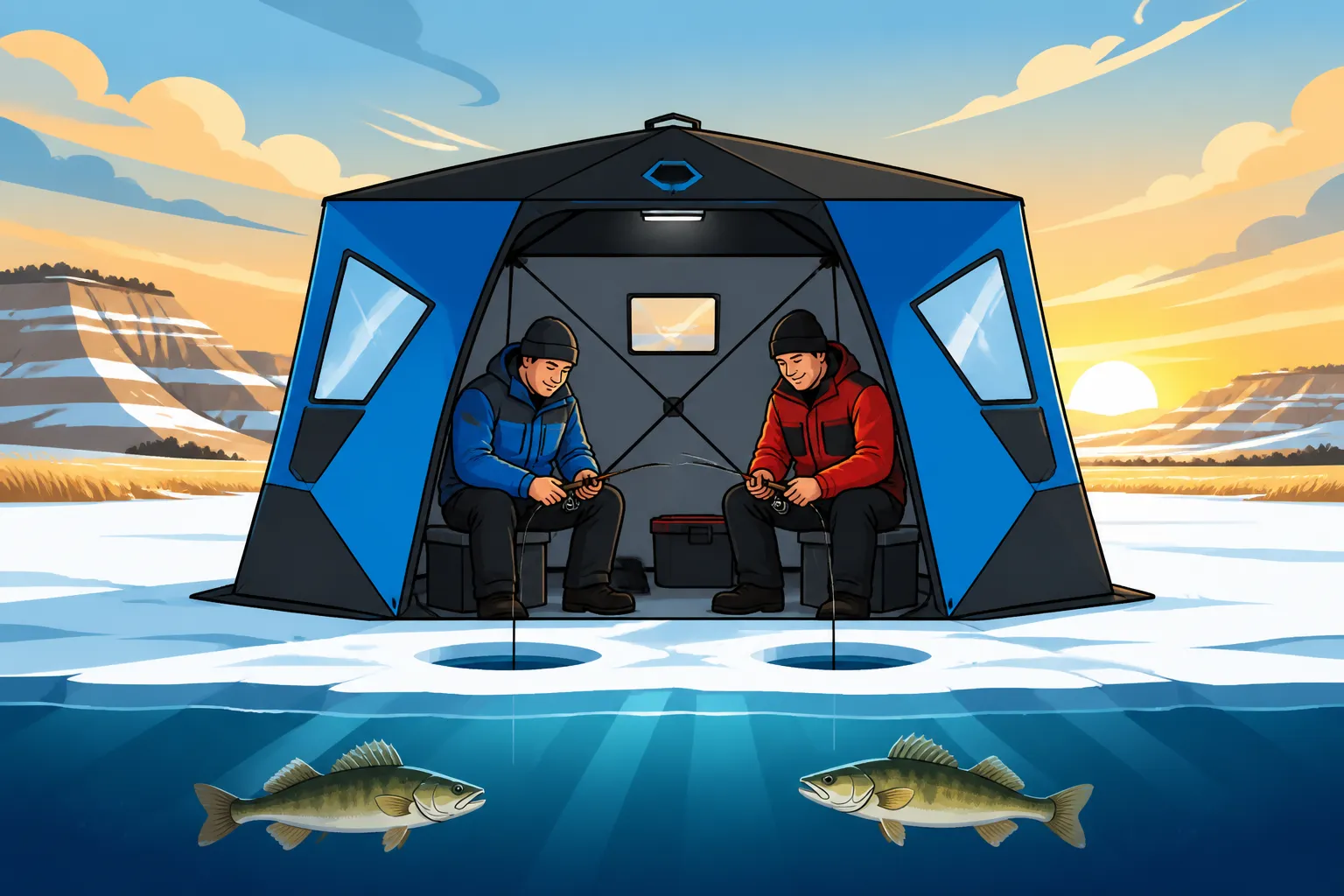
Best Ice Shelter for Two Anglers
Brrr, North Dakota winters are no joke, especially when you're out on the ice. Trying to squeeze two people and all their gear into a shelter meant for one, or battling the elements in something flimsy, is a recipe for a miserable day. This guide is all about helping you find the perfect ice shelter for two anglers, one that offers comfort, durability, and a truly enjoyable experience on the frozen plains.
The Case for a Dedicated 2-Person Ice Shelter
You might be thinking, "Can't we just make a 1-person shelter work?" or "Is a dedicated 2-person shelter really that much better than a bigger 1-person model?" And I hear you. We've all been there, trying to cram an extra bucket, a buddy's transducer, and a thermos into a space that was already snug for one. But trust me, a shelter specifically designed for two anglers makes a world of difference, transforming a cramped, awkward outing into a comfortable, productive, and frankly, much more fun experience.
When you're out on the ice in North Dakota, whether it's on Devils Lake chasing perch or Lake Sakakawea for walleye, the weather can turn on a dime. A sudden gust of wind, a drop in temperature, or an unexpected snow squall can quickly make you regret skimping on your shelter. A 2-person shelter provides not just space, but a haven. It's enough room for two people to fish comfortably, bring essential gear like a portable heater, a fish finder, and all their rods without tripping over each other. Plus, having that extra space allows for better heat retention, which is paramount when the mercury dips well below zero. It's about safety, comfort, and ultimately, enjoying your time on the hard water.
Choosing Your Style: Flip-Over vs. Hub Shelters for Two
When it comes to ice shelters, the two main styles you'll encounter are flip-overs and hub shelters. Both have their dedicated fans, and for good reason! Each offers distinct advantages and disadvantages, especially when you're talking about accommodating two anglers and their gear in North Dakota's unique fishing conditions. Understanding these differences is key to picking the right shelter for your ice fishing adventures.
Flip-Over Shelters: The Mobile Ice Machine
Flip-over shelters are often seen as the workhorses of the ice fishing world, especially for those who like to stay mobile. They're built on a sturdy sled base, which means you can pack all your gear inside, cover it up, and literally flip the tent portion over into fishing position in a matter of seconds. Imagine pulling up to your chosen spot on Lake Metigoshe, unhitching your snowmobile or ATV, and having your shelter ready before your buddy even ties on his first jig. That speed and convenience are huge.
The sled base itself is a major advantage. It serves as your transportation device, your floor, and even extra storage for your propane tank or tackle boxes. This integrated design is fantastic for running and gunning, hopping from one school of perch to the next. Many 2-person flip-overs come with comfortable seats already attached to the sled, offering a stable and ergonomic fishing experience. However, this convenience comes with a trade-off: flip-overs can be heavier and bulkier to transport if you don't have an ATV or snowmobile, and the sled can sometimes act like a sail in really strong winds if not properly anchored. They're typically a bit pricier, too, because of that integrated sled and seating system.
Hub Shelters: The Roomy Base Camp
Hub shelters are designed for maximum interior space and quick, compact storage. They get their name from the "hubs" that allow you to push out the walls and roof, expanding a compact package into a surprisingly spacious fishing sanctuary in just a couple of minutes. These shelters typically come in a bag and need to be carried to your fishing spot, meaning you'll also need a separate ice fishing sled for all your gear, like your Best Ice Fishing Sled for Hauling Gear.
For two anglers, a 2-person hub shelter offers a more open, less constrained feeling. There are no built-in seats or permanent sleds, giving you complete flexibility on how you arrange your fishing chairs, buckets, and heaters. This extra roominess is a huge plus if you like to spread out, or if you're bringing a lot of gear. Hub shelters are generally lighter and more compact when packed down, making them easier to load into a vehicle's trunk or bed. They also tend to be more affordable than flip-overs. The downside? Setting them up can be a bit more involved, especially in high winds, and you'll need to carry all your gear separately. You'll also need to secure them aggressively in North Dakota's notorious gusts to prevent them from taking flight.
Here's a quick comparison to help you weigh your options:
| Feature | 2-Person Flip-Over Shelter | 2-Person Hub Shelter |
|---|---|---|
| Portability | Integrated sled, heavier to manually pull | Lighter, compact bag, needs separate sled |
| Setup Time | Very fast, "flip and fish" | Fast, but requires anchoring and setup |
| Interior Space | Can feel tighter due to sled/seats | More open, flexible interior |
| Comfort | Often includes padded, swivel seats | Requires separate chairs/buckets |
| Wind Resistance | Low profile, but sled can catch wind if not anchored | Prone to catching wind, needs aggressive anchoring |
| Price Point | Generally higher due to integrated features | Generally more affordable |
| Ideal For | Mobile anglers, solo trips or short moves | Stationary fishing, group comfort, versatility |
Essential Features for a North Dakota 2-Person Ice Shelter
Now that you understand the basic types, let's dive into the nitty-gritty of what really matters when you're picking out a 2-person ice shelter for those long, cold days on the North Dakota ice. Not all shelters are created equal, and paying attention to these specific features can mean the difference between a memorable trip and one you just want to forget.
Insulation: Your First Line of Defense Against the Cold
This is perhaps the most critical feature for any ice shelter in North Dakota. We experience some truly brutal winters, where temperatures can plummet far below zero, often accompanied by biting winds. An uninsulated shelter is essentially just a tent, offering minimal protection from the cold. Look for shelters advertised as "fully insulated" or mentioning specific fabric deniers that indicate insulation. Many top brands use thermal fabrics with dark interiors to absorb and retain heat from your heater.
Good insulation not only keeps you warmer, but it also reduces propane consumption for your heater. Imagine a typical day on Lake Sakakawea in January: the wind is howling, and the air temp is -10°F. An insulated shelter, paired with a decent portable heater, can easily maintain a comfortable 40-50°F inside, allowing you to shed layers and focus on fishing. Without it, you'd be huddled in full winter gear, constantly battling the chill. Insulation also helps prevent condensation, which can lead to uncomfortable drips and frozen surfaces inside your shelter.
Durable Fabric and Frame: Built to Withstand the Elements
North Dakota's weather isn't just cold; it's often windy, and sometimes brutally so. Your shelter's fabric needs to be tough enough to handle abrasive ice, sharp auger blades, and constant flapping in the wind. Look for high-denier fabric (e.g., 600D, 900D, or even 1200D). This number refers to the weight and density of the fabric, with higher numbers indicating greater durability and resistance to tearing.
Equally important is a robust frame. Hub shelters rely on fiberglass or aluminum poles that need to withstand outward pressure and wind gusts. Flip-overs have internal support poles that articulate, and these need to be strong and have reliable connecting points. Check reviews for comments on frame integrity, especially in windy conditions. A flimsy frame will quickly bend or break, rendering your shelter useless, potentially stranding you in uncomfortable conditions. A solid frame ensures stability, especially when you need to anchor your shelter down, which is a must in North Dakota's wind. You don't want your shelter to become a kite on Devils Lake during a windy day!
Ease of Setup and Portability: Time is Precious on the Ice
While the general setup differences between flip-overs and hubs were discussed, consider the practicalities for two anglers. Can one person reasonably set it up if the other is busy or needs a hand? A truly well-designed 2-person shelter should be manageable for one person to deploy and pack up, even if it's easier with two.
For flip-overs, check the lifting mechanism. Is it smooth? Are the poles easy to extend and lock into place? For hubs, how easily do the walls and roof pop out? Do the zippers move freely without snagging? When researching options on sites like Amazon or Bass Pro Shops, look for customer reviews that specifically mention ease of setup. A shelter that's a struggle to set up or take down in cold, windy conditions is a major frustration point, wasting valuable fishing time and energy. Think about how you'll be transporting it too – if it needs to fit in a truck bed, will a longer flip-over work, or is a compact hub in a bag better? Portability ties directly into how often you'll want to use your shelter.
Ventilation and Window Options: Staying Comfortable and Safe
Even in extreme cold, proper ventilation is crucial, especially if you're running a propane heater. Carbon monoxide poisoning is a serious risk, so make sure your chosen shelter has ample, adjustable vents. These allow fresh air in and dangerous fumes out, keeping you and your fishing partner safe. Never seal your shelter completely, even when trying to stay warm.
Windows are also important for a couple of reasons. Firstly, they let natural light in, which can be nice, especially if you're not using lights inside. Secondly, and perhaps more importantly, they allow you to keep an eye on your tip-ups or check for other anglers or hazards outside. Look for windows that are clear, cold-weather rated (so they don't crack easily), and ideally, have covers that can be zipped open or closed for privacy or light control. Being able to survey the ice conditions or watch for snow squalls through a window without stepping outside is a huge bonus.
Door Design and Zipper Quality: Small Details, Big Impact
It might seem minor, but a poorly designed door or flimsy zippers can quickly become your biggest headache. With two people constantly going in and out, opening and closing, zippers get a workout. Look for heavy-duty, oversized zippers that operate smoothly even when cold or slightly iced up. Double-stitched seams around the zippers are also a good indicator of quality.
Consider the door's opening mechanism. Does it zip all the way down, creating a wide opening that's easy to get in and out of with bulky winter clothing and gear? Is there enough clearance for two people to pass without excessive squeezing? Some shelters have unique door designs that are more resistant to wind tearing or offer better access. For example, a larger, wider door prevents you from having to awkwardly duck or maneuver your fishing rods and buckets every time you enter or exit. Nobody wants to wrestle with a stuck zipper when their hands are numb.
Integrated Seating and Storage (Flip-Overs) or Flexible Space (Hubs)
For flip-over shelters, the seating is often built-in. Evaluate the comfort and durability of these seats. Are they padded? Do they swivel? Are they adjustable? Good seating can make a long day on the ice far more enjoyable. Also, consider the storage trays or pockets often integrated into the sled or frame. These are fantastic for keeping small tackle items, snacks, or your phone within easy reach.
For hub shelters, you have complete freedom to bring your own seating. This means you can opt for comfortable camping chairs, simple 5-gallon buckets, or specialized ice fishing seats. This flexibility allows you to customize your setup perfectly for your and your partner's preferences. In both cases, think about how two people and their gear will fit. Will there be enough room for two holes each, plus a heater in the middle, and still space to move around? Consider fishing gear for different species, like when you're targeting North Dakota Walleye Fishing Techniques or North Dakota Northern Pike Fishing Guide. Every angler knows how much gear you can accumulate!
Top Considerations for North Dakota's Harsh Realities
Fishing in North Dakota means facing some of the most challenging winter conditions imaginable. It's not just cold; it's seriously cold, often with persistent, strong winds that cut right through you, and heavy snowfalls that can quickly cover your gear. The "Best Ice Shelter for Two Anglers" for North Dakota isn't just good; it needs to be exceptional at handling these elements.
Extreme Cold Performance
We're talking about temperatures that can easily dip to -20°F or colder, before factoring in wind chill. Your shelter's insulation is your primary weapon against this. Look for shelters specifically rated for extreme cold. Beyond the fabric denier, some manufacturers use advanced thermal layering or even thicker insulation to boost R-values. The ability of your shelter to hold heat from a small propane heater is paramount. A good shelter, combined with a reliable heater, should create a comfortable enough environment that you're not constantly shivering, even when it's bitter outside. This is especially true for long days or overnight trips. Knowing How Cold It Gets Ice Fishing in North Dakota will help you truly appreciate the need for superior thermal performance.
Wind Resistance and Anchoring Systems
North Dakota is famous for its wind, and on an open, frozen lake, there's absolutely nowhere for it to hide. A sudden gust can lift an unsecured hub shelter like a sail, sending it tumbling across the ice – a nightmare scenario. For both flip-overs and hubs, a robust anchoring system is non-negotiable.
Most shelters come with ice anchors (threaded screws that go into the ice) and ropes. However, for North Dakota's winds, you often need more anchors than what's provided, or heavier-duty anchors. Make sure the shelter has strong attachment points on the fabric. Some shelters have skirt material that can be packed down with snow to further seal against wind and prevent drafts from entering at ground level. This ground seal is critical for preventing heat loss and keeping fine snow from blowing in. Always carry extra anchors and a drill driver to quickly secure your shelter, especially when Setting Up an Ice Fishing Shelter.
Snow Load and Durability
While heavy snow isn't an everyday occurrence, when it does hit, it can add significant weight to your shelter's roof. A well-designed 2-person shelter should have a frame strong enough to withstand a moderate snow load without collapsing. This is more of a concern for larger hub shelters with flat roof sections. For flip-overs, the angled roof usually sheds snow more effectively.
Additionally, the fabric needs to be durable enough to handle snow and ice without tearing when you're packing up. Freezing temperatures can make fabrics brittle, and dragging a frozen shelter or shaking off heavy snow can stress seams and zippers. Quality construction, like double-stitched seams and reinforced stress points, ensures your shelter will last many seasons of North Dakota abuse. Before heading out, make sure your Best Ice Fishing Gear for North Dakota includes everything you need for shelter setup and safety.
Maintaining Your 2-Person Ice Shelter for Longevity
Investing in a good 2-person ice shelter is a significant commitment, and you want it to last for many seasons of successful North Dakota fishing trips. Proper maintenance isn't just about keeping it clean; it's about preserving its structural integrity, fabric quality, and overall performance.
Cleaning and Drying After Each Use
This might sound like a chore, but it's probably the most important step for longevity. After every trip, especially when fishing in slushy or snowy conditions, your shelter will likely be damp, dirty, or both.
- Wipe Down: Use a damp cloth to wipe down any mud, fish slime, or spilled bait from the fabric and frame. Pay special attention to the inside, especially if you've been heating it.
- Thorough Drying: This is critical. Never store a wet or even damp ice shelter. Moisture leads to mildew, which not only smells terrible but will eventually rot the fabric, compromise zippers, and degrade the frame materials. Set up your shelter in a garage, basement, or even outside on a sunny, dry day. Let it air out completely until every surface is bone-dry. If possible, leave zippers open to allow air circulation through all compartments. This process might take a full day or two, but it's non-negotiable.
Inspecting and Repairing Minor Damage
Regular inspection can catch small issues before they become big problems.
- Fabric: Check for small tears, abrasions, or holes. These can often be patched easily with fabric repair kits designed for outdoor gear, which you can find at sporting goods stores or on Amazon. Ignoring a small tear can lead to it ripping wider in strong winds.
- Zippers: Ensure zippers are running smoothly. If they're sticky, clean them with a small brush and apply a zipper lubricant or wax. A broken zipper in freezing temperatures is a disaster.
- Frame: Inspect poles (for hubs) or support bars (for flip-overs) for bends, cracks, or loose connections. Replace any damaged sections if parts are available from the manufacturer. Tighten any loose screws or bolts.
- Anchors: Make sure your ice anchors are clean and free of rust or bends. Replace any compromised anchors.
Proper Storage During the Off-Season
When the ice finally melts and you're transitioning to open water fishing, how you store your ice shelter for the spring, summer, and fall matters.
- Clean and Dry: As mentioned, ensure it's spotless and bone-dry.
- Loose Storage: Ideally, don't store it tightly compressed for months on end. If you have the space, storing a hub shelter loosely folded in its bag (or even slightly open) in a dry, dark place can help. For flip-overs, ensure the canvas isn't pinched or stressed and the sled is clean.
- Pest Protection: Store your shelter in a location where mice or other rodents can't get to it. They love to chew through fabric to make nests. Using sturdy containers or hanging it can help.
- Environmental Control: A cool, dry, dark place (like a shed or garage, but ideally not one with extreme temperature fluctuations) is best. Keep it out of direct sunlight, which can degrade fabric over time.
By taking these steps, your investment in a quality 2-person ice shelter will pay dividends for years, providing you and your fishing partner a warm, comfortable, and reliable base for all your North Dakota ice fishing adventures. Consider this part of your overall North Dakota Fishing Season Calendar prep, ensuring your gear is ready when the cold hits!
Disclaimer
This article is for general informational purposes only and does not constitute professional advice. Laws, prices and regulations vary by location and change over time. Consult a qualified professional for guidance on your specific situation.