Best Crankbaits for North Dakota Walleye
There's nothing quite as frustrating as hitting the water in North Dakota, knowing those hungry walleye are out there, but not being able to entice a single bite. Often, the missing piece of the puzzle isn't your skill, but simply having the right crankbait in your tackle box. This comprehensive guide will dive deep into the world of crankbaits, helping you understand which ones work best for North Dakota walleye and how to use them to turn those frustrating days into memorable catches.
Understanding North Dakota Walleye Behavior and Habitat
Before we even talk about specific lures, it's crucial to grasp what makes North Dakota walleye tick. Their behavior changes drastically throughout the year, and their preferred hangouts are as diverse as our state's incredible waterways. Matching your crankbait to their mood and location is the first step to consistent success.
Seasonal Movements and Feeding Habits
Walleye are creatures of habit, but those habits shift with the seasons, largely driven by water temperature and spawning cycles. Understanding these patterns is key to presenting the right crankbait at the right time.
In the early spring, right after the ice melts, walleye are often in recovery mode from the spawn. They're typically found in shallower bays, near inflows, or on sunny mud flats where the water warms up first. Their metabolism is still relatively slow, so they might prefer a more subtle presentation. As the water warms through late spring, they start to become more active, chasing down baitfish in these same shallower areas before eventually moving to deeper haunts. This is a prime time for shallower-diving crankbaits that mimic small baitfish. For more on navigating this tricky time, check out Early Spring Walleye Techniques in North Dakota.
As summer progresses, walleye often migrate to deeper, cooler water, congregating around main lake points, humps, and structural elements where they can ambush baitfish. They become more aggressive, making faster retrieves and more erratic actions effective. They'll follow the thermocline if one sets up, suspending over open water or relating to deep breaks. In the fall, as water temperatures drop again, walleye enter a major feeding frenzy, bulking up for winter. They'll move back to shallower, oxygen-rich areas, often following schools of baitfish into bays or onto flats. This aggressive period calls for crankbaits that can cover water quickly and draw attention. Knowing when and where to find them can make all the difference, and our Best Time of Year to Fish in North Dakota guide offers more insights.
Habitat Preferences in North Dakota's Diverse Waters
North Dakota boasts an incredible variety of walleye fisheries, from massive reservoirs to flooded timber lakes and winding rivers. Each presents unique challenges and opportunities for crankbait anglers.
Take Lake Sakakawea, for instance. This massive reservoir, formed by the Garrison Dam on the Missouri River, is known for its sheer size, deep main lake basins, vast points, and flooded timber. Walleye here can be found suspended over open water, relating to deep structure like submerged islands or creek channels, or even shallow in the backs of bays depending on the season and water levels. A successful angler on Sakakawea needs a range of crankbaits that can effectively probe depths from a few feet to over thirty feet. You can learn more about tackling this immense fishery in our Lake Sakakawea Fishing Guide for North Dakota Anglers.
Devils Lake presents an entirely different scenario. Famous for its ever-changing water levels and vast expanses of flooded timber, Devils Lake walleye often relate directly to this woody cover, as well as submerged roadbeds, rock piles, and gradual slopes. The water clarity can vary significantly, from stained to relatively clear in different sections. Crankbaits that can be worked through or around snags are essential, and often, baits with strong rattles are preferred here due to the lower visibility. Our Devils Lake Fishing Guide for North Dakota Anglers dives deeper into its unique characteristics. Then there's the Missouri River System, including Lake Oahe, which is characterized by current, sandbars, and deep channels. Walleye in these riverine environments often hold in current breaks, behind wing dams, or in scour holes. Crankbaits that run true in current and can be precisely trolled or cast to specific features are invaluable. For a full picture of this powerful river, consult the Missouri River Fishing Guide. Understanding these diverse habitats is crucial for selecting the right lure for the job.
Key Characteristics of Effective Walleye Crankbaits
Crankbaits aren't just one-size-fits-all lures. They come in a dizzying array of shapes, sizes, colors, and actions, each designed for a specific purpose. Knowing what to look for can simplify your selection process and put more walleye in the boat.
Diving Depth and Lip Design
The most distinguishing feature of a crankbait is its lip, which dictates how deep it dives and how it swims. This is paramount for ensuring your bait reaches the strike zone where walleye are holding.
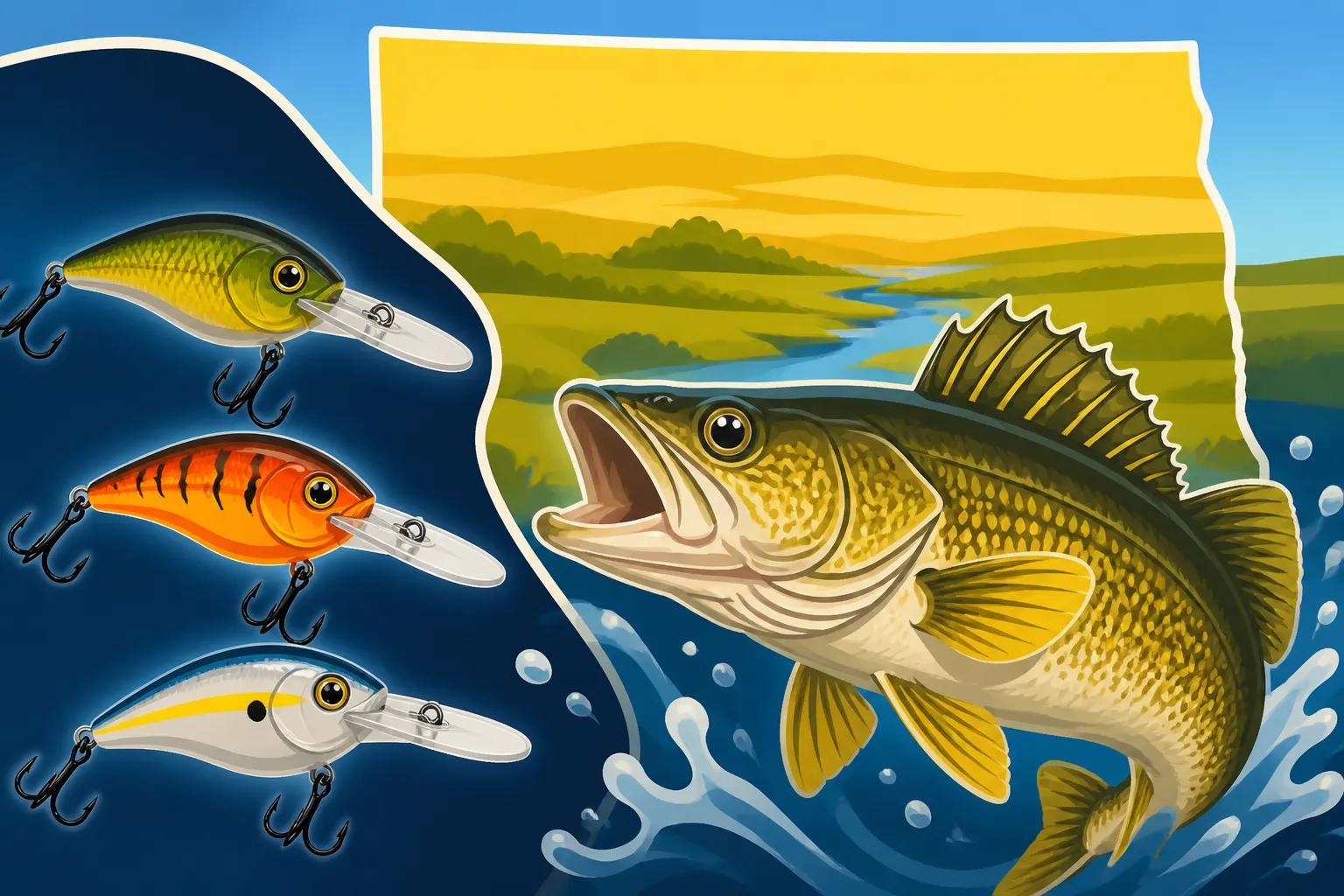
Shallow-diving crankbaits typically have a short, sometimes square-shaped lip. These baits are designed to run from just below the surface down to about five feet. They're ideal for working over shallow weed beds, across sand flats, or targeting walleye that are actively feeding in low light conditions near the shore. A square lip is particularly effective for "bumping" off submerged cover, creating erratic deflections that often trigger reaction strikes without getting hung up. Think of a Rapala Shallow Shad Rap or a similar profile. Medium-diving crankbaits feature a longer, often more rounded lip. These are the workhorses, designed to reach depths from six to fifteen feet. They're incredibly versatile and perfect for fishing breaklines, medium-depth humps, and the edges of weed lines. Their dive curve allows them to explore that crucial mid-range depth where walleye frequently transition or hold.
Then we have the deep-diving crankbaits, characterized by a long, wide, and often steeply angled lip. These are engineered to get down quickly and stay in the deeper water, often reaching twenty feet or more on a long troll. They are indispensable for targeting walleye in deep main lake basins, river channels, or suspended over significant depths. The size and angle of the lip create a lot of water resistance, pulling the bait down. The larger lip also contributes to a wider, more aggressive wobble that can call fish from a distance. The shape of the lip also influences the crankbait's action: a more rounded lip often produces a tighter wiggle, while a flatter or more angled lip can create a wider, more aggressive wobble.
Color Patterns and Their Importance
Color is often the first thing anglers consider, and for good reason – it can be a significant factor in whether a walleye decides to strike or ignore your lure. However, the "best" color isn't static; it changes with conditions.
Natural baitfish patterns, mimicking minnows, shad, or perch, are always a solid starting point. These realistic colors tend to perform exceptionally well in clear water and on bright, sunny days when walleye have good visibility. The idea is to make the crankbait look as much like their natural prey as possible, fading into the background just enough to seem vulnerable. Conversely, when fishing in stained or murky water, during low-light conditions (dawn, dusk, or overcast days), or when walleye are particularly aggressive, bright and fluorescent colors often shine. Chartreuse, firetiger (a combination of green, orange, and yellow), and bright oranges and reds create a strong visual presence that stands out, making it easier for walleye to locate the bait. They act as "attractors" rather than imitators.
Metallic finishes, such as chrome or gold, can be deadly on sunny days, as they effectively reflect light, creating a flash similar to a fleeing baitfish. These are particularly effective in clear to moderately stained water. Furthermore, contrast is vital. Sometimes, a crankbait with a dark back and a light belly, or a combination of natural and fluorescent colors, provides the best visibility and attraction in varying conditions. The key is to experiment. If one color isn't producing, don't be afraid to switch it up, even if it feels counter-intuitive. What works one day might not the next, and factors like water clarity, sunlight penetration, and even cloud cover can dramatically alter a walleye's color preference.
Rattle and Action Varieties
Beyond depth and color, the sound and movement a crankbait produces play a huge role in its effectiveness, particularly for finicky North Dakota walleye.
Many crankbaits contain internal rattles, small beads or BBs that create noise as the lure moves through the water. These rattles serve a crucial purpose: they attract fish. In murky water, low-light conditions, or when walleye are spread out, the sound can draw them in from a greater distance, acting like a dinner bell. Some rattles produce a high-pitch, subtle sound, while others offer a loud, low-pitch thump. Experimenting with different rattle sounds can be beneficial, as walleye can show preferences. However, sometimes silence is golden. In extremely clear water, or when fishing pressured walleye that are wary of unnatural sounds, a silent crankbait can be more effective. These baits rely solely on their visual appeal and swimming action to entice strikes, often proving deadly when other, noisier lures fail.
The "action" of a crankbait refers to its swimming motion. A tight wiggle, where the bait vibrates rapidly with minimal side-to-side body roll, often mimics a distressed baitfish and is excellent for cold water conditions or when walleye are lethargic. This subtle movement can be just enough to trigger a bite without being overly aggressive. Conversely, a wide wobble, characterized by a more pronounced side-to-side swimming motion, displaces more water and creates a stronger vibration. This action is typically more effective in warmer water, with aggressive fish, or in stained conditions where the strong vibration helps walleye locate the lure. Beyond the basic wiggle, crankbaits can also be floating (they float when at rest), suspending (they stay at a certain depth when paused), or sinking (they sink when not being retrieved). Each buoyancy type has its tactical advantages, particularly when trying to hold a bait in the strike zone or work it over specific cover.
Top Crankbait Styles for North Dakota Walleye
North Dakota's diverse waters demand a varied approach, and having a selection of crankbait styles tailored for different situations is essential. Here, we'll break down the primary categories and where they shine.
Shallow-Diving and Lipless Crankbaits
These baits are your go-to for covering vast shallow areas, particularly during the cooler waters of spring and fall, or when walleye are actively chasing baitfish in the upper water column.
Shallow-diving crankbaits, often with a short or square bill, typically run from just below the surface down to about 5 feet. They are fantastic for working over submerged weed beds, rocky shoals, or shallow mud flats. The square bill design allows them to deflect off cover, creating an erratic, triggering action without getting consistently snagged. Brands like the Rapala Shallow Shad Rap or specific shallow-running Berkley Flicker Shad models are popular choices. When fishing these, a steady retrieve often works wonders, but adding pauses or quick jerks can imitate a struggling baitfish, drawing aggressive strikes. These are particularly potent during the early season when walleye are still in shallower waters post-spawn, before they move to deeper summer haunts. When the ice first goes out and the water is chilly, these subtle, shallow baits are hard to beat.
Lipless crankbaits are a bit different, lacking an external diving lip entirely. Their weight distribution and flat head cause them to dive on the retrieve and sink when paused. They are incredibly versatile and can be fished at virtually any depth, depending on your retrieve speed and how long you let them sink. For shallow applications, they're excellent for "ripping" through emerging weed beds or across open flats. A common technique involves casting them out, letting them sink briefly, then "ripping" them up with a sharp rod sweep before letting them fall again on a semi-slack line. The fall often triggers reaction strikes. Popular lipless options include the Bill Lewis Rat-L-Trap or the Strike King Redeye Shad. These are fantastic for covering a lot of water quickly and are particularly effective when walleye are aggressive and looking for a fast-moving meal.
Medium-Diving Crankbaits for Structure Fishing
When walleye move to their more predictable summer and fall patterns, often relating to underwater structure, medium-diving crankbaits become indispensable tools in your arsenal. These baits bridge the gap between shallow and deep, excelling in that 6 to 15-foot range where much of the magic happens.
These crankbaits typically feature a medium-length lip and are designed to dive to moderate depths. They are perfect for targeting key structural elements like main lake points, submerged humps, rock piles, and distinct breaklines. Walleye often stage on the edges of these structures, moving up to feed and then retreating to deeper water. A medium diver allows you to effectively present a lure in this transition zone. Excellent examples include the Rapala Shad Rap (the original, not the shallow version), Salmo Hornets, or the Bandit Walleye Deep crankbaits that can get down into that sweet spot. The key technique here is often trolling or casting parallel to the structure. By keeping your boat or your cast aligned with a contour line, you can keep your crankbait in the strike zone for longer periods.
Anglers also find success "crank and pausing" these lures. Retrieve the bait until it makes contact with the bottom or a piece of structure, then pause your retrieve for a second or two. This pause often allows the bait to slightly float or suspend, mimicking an injured baitfish, which can trigger a hesitant walleye to strike. Another effective method is to use your fish finder to locate schools of baitfish or individual walleye holding on breaks, and then adjust your trolling lines to put your crankbait right in front of them. Understanding how to interpret your sonar and How to Find Walleye Structure With a Map will significantly boost your success with these versatile baits.
Deep-Diving Crankbaits for Open Water Trolling
When the walleye descend into the deeper basins of Lake Sakakawea, Lake Oahe, or the main channels of the Missouri River, or when they suspend over vast expanses of water, deep-diving crankbaits become your secret weapon. These baits are built to get down and stay down.
Characterized by their long, often wide lips, these crankbaits are engineered to reach depths of 15 feet, 20 feet, and even much deeper on a long trolling pass. They are crucial for targeting walleye that are relating to deep contour lines, suspended in the thermocline, or holding in deeper river channels. Brands like the Reef Runner 800 Series, Berkley Flicker Minnow Deep, and Rapala Deep Down Husky Jerk are perennial favorites among North Dakota walleye anglers for their ability to plumb the depths. These lures often have a more aggressive wobble at speed, which helps call fish from a distance in deeper, darker water.
The primary technique for deep-diving crankbaits is trolling. Long-lining, where you let out a significant amount of line, is common, but anglers also employ snap weights, lead core line, or even planer boards to get their baits to precise depths and spread them out. The goal is to present your crankbait at the exact depth where fish are being marked on your electronics. Sometimes walleye will suspend at specific depths over literally hundreds of feet of water, and having a deep diver that runs true at that depth is critical. Mastering the art of getting these baits down to where the fish are can take some practice, but it's an incredibly effective way to catch numbers of fish once you dial it in. For a more detailed look at this technique, refer to Trolling Crankbaits for Walleye.
Here's a quick reference table for selecting crankbaits based on general North Dakota fishing conditions:
| Crankbait Type | Diving Depth (Approx.) | Ideal Season/Conditions | Typical ND Locations | Key Features |
|---|---|---|---|---|
| Shallow-Diver | 0-5 feet | Early Spring, Fall, Low Light | Shallow bays, weed lines, sandy flats, shorelines | Short/square lip, erratic deflection, subtle wobble |
| Lipless Crankbait | Variable (0-15+ feet) | Spring, Summer (shallow cover), Fall | Weedy areas, open flats, rip-rapping | No lip, internal rattle, dives on retrieve, sinks on pause |
| Medium-Diver | 6-15 feet | Spring, Summer, Fall | Points, humps, breaklines, submerged timber, roadbeds | Medium lip, versatile, good for structure contact |
| Deep-Diver | 15+ feet | Summer, Fall | Deep basins, river channels, main lake points, suspended fish | Long/wide lip, aggressive wobble, reaches max depth |
Matching Crankbaits to North Dakota's Major Walleye Fisheries
North Dakota is blessed with a variety of incredible walleye fisheries, each with its own quirks and prime crankbait strategies. What works on Sakakawea might not be ideal for Devils Lake, and vice-versa.
Lake Sakakawea Strategies
Lake Sakakawea is a behemoth, a massive impoundment of the Missouri River that can feel like fishing an inland ocean. Its sheer size means walleye can be anywhere from shallow bays to the main lake's deepest points and submerged humps.
For Sakakawea, your crankbait selection needs to be comprehensive. In the spring and early summer, as walleye move into the backs of bays and onto shallower points, medium-diving crankbaits are excellent for finding active fish. As the water warms and the fish move deeper, or suspend over the main lake basin, deep-diving crankbaits become absolutely essential. Long-line trolling these baits, or using lead core line, allows you to cover vast amounts of water and present your lure at the precise depth where walleye are actively feeding. Colors here can vary, but natural shad, minnow, and perch patterns are often very effective, especially in the clearer main lake water. However, don't shy away from bright colors like firetiger on overcast days or in stained tributary arms. Because Sakakawea is so large and often windy, choosing crankbaits that run true and stable at various trolling speeds is important. Think about picking up a variety of sizes and diving depths from a reputable retailer like Bass Pro Shops to cover all your bases on this expansive lake. When you're fishing such big water, having confidence in your gear is paramount.
Devils Lake Tactics
Devils Lake is a whole different beast. Known for its constantly fluctuating water levels and abundant flooded timber, it offers a unique challenge and incredible walleye fishing. The walleye here are masters of navigating the submerged trees and brush.
When fishing Devils Lake, your crankbait choices should lean towards lures that can be worked effectively around cover. Medium-diving crankbaits with a good deflecting action are often perfect for trolling along the edges of flooded timber or over submerged roadbeds and rock piles. Shallow-diving and even lipless crankbaits can be deadly in the spring and fall when walleye are cruising over the expansive mud flats or in the shallower, weedy bays. Due to the often stained or murky water conditions, crankbaits with strong rattles can be a significant advantage, helping walleye locate your lure by sound. Chartreuse, firetiger, and other bright, high-contrast colors tend to perform very well here. Precision is key when trolling through timber, so paying attention to your line counter and using your electronics to guide you around snags is crucial. If you're buying new tackle specifically for Devils Lake, look for options that are known for their durability and ability to handle contact with wood. Many anglers find great deals on these specialized baits through online retailers like Amazon, especially when stocking up for a season.
Missouri River System Approaches
The Missouri River and its impoundments like Lake Oahe offer powerful current and distinct structural elements that dictate a specific crankbait approach. Walleye in the river system often hold in current breaks, behind wing dams, or in the deep scour holes.
For the Missouri River, you'll want crankbaits that can handle current without blowing out and that can dive deep enough to reach fish in channels and scour holes. Medium to deep-diving crankbaits are generally the most productive, as walleye often relate to the bottom or deeper breaks. Trolling upstream or downstream, carefully navigating the current seams, is a highly effective tactic. Look for crankbaits that have a tight, stable action, even when pulled against or with a strong flow. Colors should often mimic natural forage like shad or minnows, especially in clearer sections of the river, but bright colors can still be effective in stained water or during aggressive feeding periods. Casting crankbaits to eddies, current breaks, or visible structure like rip-rap can also yield excellent results, especially for active fish. Focus on baits that get down quickly and stay in the strike zone, allowing you to quickly ascertain the depth the fish are holding at.
Advanced Crankbait Techniques and Rigging Tips
Having the right crankbaits is only half the battle; knowing how to present them effectively, especially in North Dakota's challenging conditions, is what truly sets successful anglers apart.
Trolling Speeds and Line Choices
Dialing in your trolling speed and selecting the appropriate fishing line are critical factors that directly influence your crankbait's action and depth. These aren't one-size-fits-all settings, but rather variables you'll constantly adjust based on conditions.
The optimal trolling speed for walleye crankbaits can vary significantly. Generally, in colder water (early spring or late fall), a slower troll (around 1.0-1.5 mph) is often more effective, as walleye are more lethargic and prefer a more subtle presentation. As water temperatures rise in summer, walleye become more active and will readily chase a faster-moving bait (1.8-2.5 mph, or even faster for reaction bites). However, sometimes a slight increase or decrease in speed can trigger bites on a tough day, so it's always worth experimenting. Observe your rod tips; you want a consistent wiggle from your crankbait.
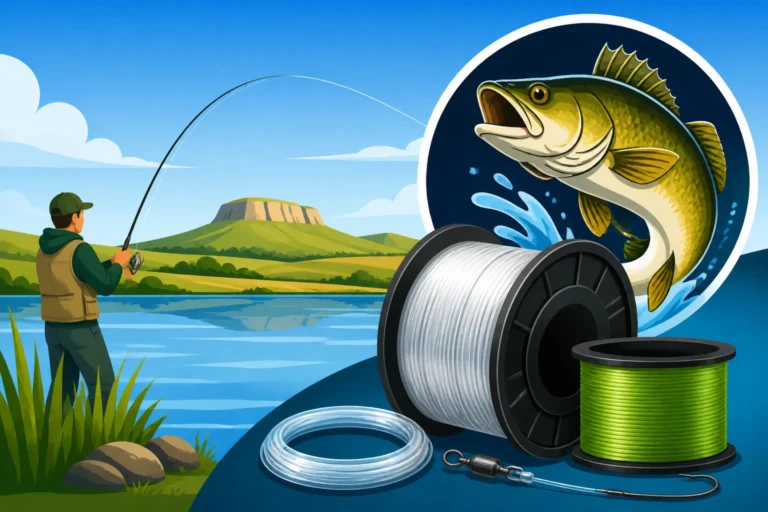
Your choice of fishing line also plays a huge role. Monofilament line offers stretch, which can be forgiving when a walleye strikes, preventing hooks from tearing out. However, its larger diameter and buoyancy can limit the diving depth of your crankbaits. Fluorocarbon line is nearly invisible underwater and has less stretch than mono, providing better feel and deeper diving capabilities due to its density. Braided line offers superior sensitivity and strength with almost no stretch, making it excellent for feeling subtle bites and for battling larger fish. However, its high visibility can sometimes deter wary walleye, so many anglers will use a fluorocarbon leader with braided mainline. Remember that line diameter significantly impacts diving depth; a thinner line will allow your crankbait to reach greater depths than a thicker line of the same type. For a deeper dive into line selection, check out Best Fishing Line for North Dakota Lakes.
Adjusting for Wind and Current
North Dakota is notorious for its wind, and both wind and current can wreak havoc on your boat control and crankbait presentation if you're not prepared. Mastering these adjustments is key to maintaining control and putting your lure in front of fish.
When faced with strong winds, maintaining a consistent trolling speed and direction can be a nightmare. Drift socks are invaluable tools here, acting as underwater parachutes that slow your boat down and help stabilize its direction, allowing your crankbaits to run true. Trolling with the wind can increase your speed, while trolling against it will decrease it. You may need to adjust your motor's throttle significantly to achieve your desired speed relative to the water. Wind also creates waves, which can impart an additional, often desirable, erratic action to your crankbaits. Don't be afraid to experiment with trolling directly into or directly with the wind, as different directions can be more productive depending on how the waves affect the fish and your bait. Our guide on Fishing in North Dakota's Windy Conditions offers more strategies for these challenging days.
Current, particularly on the Missouri River system and Lake Oahe, adds another layer of complexity. When trolling with the current, your actual boat speed (over ground) might be much faster than your speed through the water, meaning your crankbait's action could be subdued. Conversely, trolling against the current means your boat's speed over ground will be slower, but your bait will be working harder, often with a more aggressive action. You'll need to constantly monitor your GPS speed and adjust. Walleye often position themselves in current breaks, behind structure, or in eddies to conserve energy and ambush prey. Presenting your crankbait on the edges of these current seams, or even directly within them with a heavier bait or specific rigging, is crucial. Pay attention to how the current affects your line angle and crankbait depth, making adjustments as needed.
Modifying Crankbaits for Optimal Performance
Even the best crankbaits can sometimes benefit from a little fine-tuning or modification to enhance their performance or suit specific conditions. These small tweaks can often make a big difference.
One of the most common adjustments is "tuning" a crankbait. If your crankbait consistently tracks off to one side when retrieved, gently bend the line tie eyelet in the opposite direction of the deviation using needle-nose pliers. Make very small adjustments and test frequently until the bait runs perfectly straight. A properly tuned crankbait will achieve its maximum diving depth and have its intended action. Another popular modification is upgrading the hooks. Many stock treble hooks are adequate, but replacing them with sharper, stronger aftermarket hooks can significantly improve your hook-up ratio and prevent fish from throwing the bait. Brands like VMC or Gamakatsu offer excellent replacement trebles. Consider upsizing your hooks slightly for larger walleye, but be careful not to impede the bait's action.
Adding a small snap or a high-quality ball-bearing swivel to your line tie can prevent line twist, especially when trolling or casting repeatedly. For extra attraction, many anglers also apply scent to their crankbaits. Scent can mask human odors, encourage fish to hold onto the bait longer, and add an olfactory appeal. Gels or sprays from brands like Pro-Cure or Smelly Jelly can be applied directly to the lure. You can easily find these types of accessories and upgrade components at major fishing retailers like Bass Pro Shops or online through Amazon, allowing you to customize your crankbaits to your exact specifications. Don't be afraid to experiment with these small changes; they often lead to big results!
In the end, mastering crankbaits for North Dakota walleye is a journey of understanding, experimentation, and adaptation. By delving into walleye behavior, knowing the characteristics that make a great crankbait, and learning to apply advanced techniques on our incredible lakes and rivers, you're well on your way to becoming a more effective and successful angler. So grab your rods, pack your tackle box with a variety of these versatile lures, and get out there to experience the thrill of North Dakota walleye fishing! Our North Dakota Walleye Fishing Guide has even more insights to help you along the way.
Disclaimer
This article is for general informational purposes only and does not constitute professional advice. Laws, prices and regulations vary by location and change over time. Consult a qualified professional for guidance on your specific situation.