How Thick Ice Needs to Be for Ice Fishing
There's a special kind of excitement that bubbles up when the lakes start to freeze solid in North Dakota. The thought of stepping out onto that vast, white expanse, drilling a hole, and dropping a line is pure bliss for many of us. But let's be honest, that thrill is often accompanied by a nagging question in the back of our minds: "Is the ice safe enough?" This guide aims to take the guesswork out of that critical question, offering a realistic look at how thick the ice really needs to be for safe ice fishing in North Dakota.
Understanding North Dakota Ice Formation and Underlying Dangers
When you're looking at a big, frozen lake, it's easy to assume the ice is a uniform, solid sheet. But out here in North Dakota, where the weather can be as wild and unpredictable as a bull in a china shop, ice formation is anything but simple. Understanding these dynamics is your first step toward safe ice fishing.
How Ice Layers Form on North Dakota Lakes
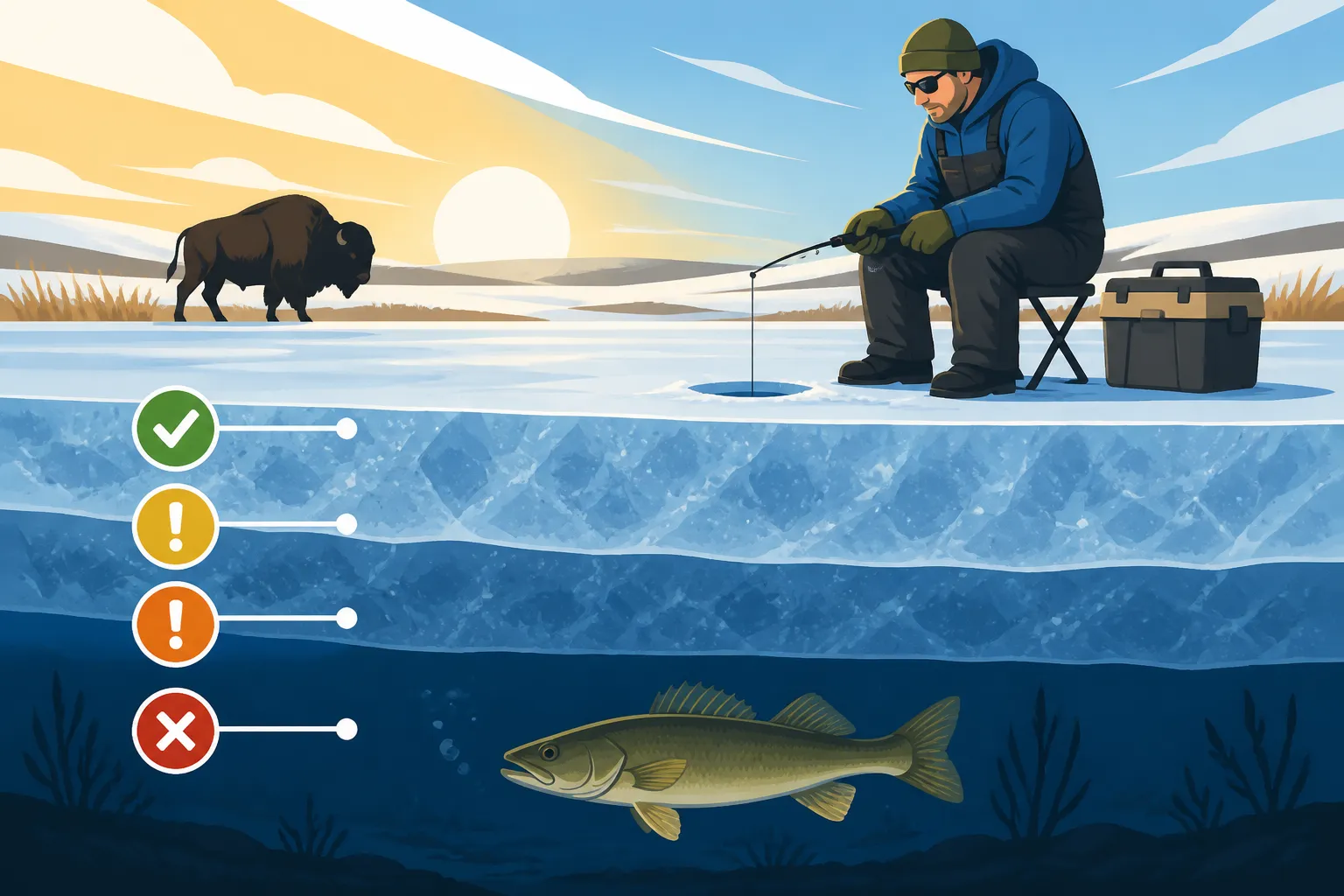
Ice doesn't just form as one big block; it typically builds in layers, and each layer tells a story about the conditions it formed under. The strongest, most reliable ice you'll encounter is often clear, blue ice, which forms when temperatures drop steadily and consistently without heavy snow or wind. This kind of ice is dense and has a high structural integrity. You might find this type of ice in calm, shallow bays on lakes like Lake Audubon or smaller community fishing ponds.
However, many factors can disrupt this ideal formation. You'll also see white or milky ice, which forms when snow falls on thin ice and freezes, or when ice forms quickly with trapped air bubbles. This "snow ice" is often less dense and significantly weaker than clear ice. Then there's slush ice, which is exactly what it sounds like – a mix of water and ice crystals that might look solid from a distance but offers very little support. Imagine walking across a frozen puddle versus trying to walk across a slushy parking lot; the difference in stability is immense. Recognizing these different types of ice is crucial when you're out on a North Dakota lake.
Why Ice Thickness Isn't Always Consistent or Safe
One of the biggest frustrations for ice anglers is the deceptive nature of ice. You can check the ice thickness near shore, find a solid 8 inches, and feel confident. But just a hundred yards out, where a spring bubbles up from below or a current subtly moves, that 8 inches could suddenly become 2 inches, or even open water. It’s a terrifying thought, and it’s a reality for many North Dakota lakes.
Fluctuations in temperature, underwater currents, or even the presence of submerged structures can create dramatic differences in ice thickness within a very small area. A consistent 10 inches over one section of a lake could rapidly drop to a dangerous 3 inches near a point or a river channel. This is why just because the ice looks "good" or has a certain average thickness, it doesn't mean it's uniformly safe. Anglers often face the challenge of navigating these hidden dangers, making constant vigilance and understanding of ice conditions paramount to a safe day out. For more details on staying safe, check out our guide on Early Ice Fishing Safety Tips.
General Ice Thickness Guidelines for Anglers
Alright, let's get down to the numbers. While no ice is ever 100% safe, there are widely accepted minimums that give us a much better chance of staying on top. These guidelines are based on clear, solid new ice, so always err on the side of caution if the ice is slushy, cracked, or appears otherwise compromised.
Minimum Ice for Foot Traffic and Solo Anglers
For a single person walking out onto the ice, 4 inches of clear, solid ice is generally considered the absolute minimum. This is the bedrock standard, and honestly, even at 4 inches, I'm taking it slow and checking often with a spud bar. Think about it: that's just enough to hold your weight and perhaps a small portable sled with your gear. It's certainly not enough to be zipping around or gathering in a crowd.
If you're heading out for some early season perch fishing on a smaller lake like Spiritwood Lake or Jamestown Reservoir, and the ice is just starting to hit that 4-inch mark, you need to be incredibly mindful of every step. Always drill test holes every 20-30 feet, especially if you're venturing away from areas others have already walked. The best practice is to spread out, don't follow directly in another person's footsteps, and always carry essential safety gear. You can find robust ice picks and rope on platforms like Amazon that are designed for ice safety. Don't forget, our article on Is 4 Inches of Ice Safe for Ice Fishing? goes even deeper into this specific thickness.
Supporting Snowmobiles, ATVs, and Small Shelters
When you start adding the weight of a snowmobile or an ATV, along with a portable ice shelter and all your gear, you need significantly more ice. For snowmobiles or ATVs, the recommendation jumps to 5-7 inches of clear, solid ice. This allows you to cover more ground and get to those prime fishing spots faster, but it also increases your risk if the ice isn't consistent.
If you're bringing out a smaller, portable flip-over or pop-up shelter for a couple of anglers, like the ones you'd use for targeting walleye on Devils Lake, you should aim for at least 7-12 inches of clear ice. Remember that the weight of these machines and shelters, combined with your body weight and gear, is distributed over a much smaller area than a permanent fish house, making concentrated weight points critical. Always drive slowly, avoid stopping in clusters with other vehicles, and be prepared to abandon your vehicle if you hear cracking. We discuss setting up these shelters in our guide on Setting Up an Ice Fishing Shelter.
Driving Vehicles and Setting Up Permanent Fish Houses
This is where things get serious. Driving a full-size truck out onto a frozen North Dakota lake is a common practice, but it requires the thickest, most stable ice. For light trucks and larger permanent fish houses, you're looking at a minimum of 12-15 inches of clear, solid ice. For heavier trucks or very large, insulated fish houses, you absolutely need 15 inches or more.
The risks associated with driving vehicles on ice are substantial. The weight can create pressure cracks that extend for hundreds of feet, weakening vast areas of the lake. These cracks are often hidden under a fresh dusting of snow. Before driving out, make sure the access points are clearly marked by local bait shops or other experienced anglers, and always stay on established ice roads if they exist. And don't forget, permanent fish houses in North Dakota have specific Fish House Registration Requirements in North Dakota you need to adhere to.
Here’s a quick overview of general ice thickness guidelines:
| Activity / Vehicle Type | Minimum Clear Ice Thickness (Inches) | Important Considerations |
|---|---|---|
| Foot Traffic / Solo Angler | 4 | Spread out, check continuously, carry safety gear. |
| Snowmobile / ATV | 5-7 | Drive slowly, avoid clusters, distribute weight. |
| Small Portable Shelter | 7-12 | Factor in weight of anglers and gear. |
| Light Truck / Permanent House | 12-15 | Stay on marked roads, check ice far ahead, be aware of pressure cracks. |
| Medium/Heavy Truck / Large House | 15+ | Extreme caution, consult local conditions and experienced anglers. |
Factors That Dramatically Affect Ice Strength
Just hitting those thickness numbers isn't the end of the story. Ice strength is a dynamic beast, constantly changing based on environmental factors that are often out of our control. Ignoring these can turn a seemingly safe day into a perilous situation.
Warm Spells, Snow Cover, and Sun Exposure
North Dakota winters can be a rollercoaster. We get those frigid weeks that build beautiful, thick ice, and then BAM! A warm spell rolls through, bringing temperatures above freezing, often with bright sunshine. Even if the air temperature isn't melting the ice directly, solar radiation can penetrate clear ice, weakening it from within. This is particularly true in late winter when the sun sits higher in the sky.
Snow cover is another tricky factor. While it might look like a pristine, solid blanket, snow acts as an insulator. This means that while the air above might be freezing, a thick layer of snow prevents the ice below from getting colder and thickening. Worse, snow can hide weak spots, slush pockets, or even open water. If you get heavy snow on top of thin ice, the weight can actually push the ice down, causing water to flood on top, creating dangerous slush. Knowing How Cold It Gets Ice Fishing in North Dakota is one thing, but understanding how warmth affects the ice is equally vital.
The Influence of Currents, Springs, and Inlets/Outlets
Moving water is ice's arch-nemesis. If you're fishing on a body of water with currents, such as the Missouri River or sections of Lake Sakakawea near river channels and dams, the ice will almost always be thinner and more unpredictable than on still water. These currents erode the ice from underneath, creating dangerously thin spots that are impossible to detect from above.
Similarly, natural springs that bubble up from the lakebed or inlets and outlets where streams or rivers feed into and out of a lake will have weaker ice. These areas introduce warmer water, preventing ice from forming properly or causing it to melt from below. Even on seemingly frozen lakes like Devils Lake, specific points near culverts or areas with known springs can remain open or have dangerously thin ice much longer than surrounding areas. Always be extra cautious around these features, and if you’re unsure, stay clear.
Pressure Cracks, Old Holes, and Heavy Angler Traffic
The ice isn't a solid, unmoving entity; it's constantly expanding and contracting with temperature changes. This movement creates pressure cracks, which can run for miles across a lake. These cracks, especially fresh ones, represent weak points. While they may refreeze, the refrozen ice is often weaker than the original solid sheet. You might find several of these on larger bodies of water, even on some of the Best Ice Fishing Lakes in North Dakota.
Another often-overlooked factor is previous angler activity. A cluster of auger holes from yesterday's successful walleye bite might seem harmless, but they collectively weaken that area of ice. If vehicles repeatedly drive over the same path or gather in a tight group, the concentrated weight can cause the ice to flex, creating new cracks or expanding existing ones. Always consider the cumulative impact of all the activity around you. When practicing Ice Fishing Auger Techniques, be mindful of how your holes might affect ice integrity for others.
Essential Ice Safety Practices and Emergency Preparedness
Knowledge of ice conditions is vital, but it’s only half the battle. A truly safe ice angler is one who not only understands the ice but is also equipped and prepared for the worst-case scenario. After all, when you're out ice fishing in North Dakota, you're often far from immediate help.
Proactive Ice Checking: Your First Line of Defense
You wouldn't drive a car without checking the fuel, would you? The same goes for ice fishing. Your spud bar or ice auger isn't just for making fishing holes; it's your primary safety tool. When you first step onto the ice, use your spud bar to test the thickness. A solid thunk indicates good ice, while a thud or a splintering sound means caution is needed. As you move, especially into new areas or toward areas with potential hazards like points or changes in color, stop and drill a test hole every 20-30 feet.
Never assume the ice is consistent across the entire lake. Always carry a measure with you, perhaps a retractable tape measure you can buy from Amazon, to accurately gauge the thickness of each test hole. Make it a habit. It might slow you down a little, but it could save your life. We delve into more safe practices in our comprehensive guide on How to Ice Fish in North Dakota.
Crucial Safety Gear for Every North Dakota Ice Angler
Beyond checking the ice, equipping yourself with the right safety gear is non-negotiable. This isn't just for beginners; even the most seasoned anglers can encounter unpredictable conditions.
- Ice Picks: These are small, sharp spikes connected by a string worn around your neck. If you break through, they give you purchase on the slippery ice to pull yourself out. They are simple, inexpensive, and incredibly effective. You can find many options on Amazon.
- Rope/Throw Bag: A 50-foot length of floating rope or a purpose-built throw bag should be easily accessible. If someone else goes through, you can toss them the rope from a safe distance.
- Personal Flotation Device (PFD): Wearing a PFD or a float suit provides buoyancy and insulates against the frigid water. Many modern ice fishing suits are designed with built-in flotation.
- Spud Bar: We've mentioned it, but it's worth reiterating. It's an indispensable tool for safely probing ice ahead of you.
- Buddy System: Never fish alone, especially during early or late ice. A partner can call for help or assist in a rescue.
- Communication: Always have a fully charged cell phone in a waterproof bag, or consider a satellite messenger for remote areas where cell service is spotty.
- Change of Clothes: Keep a dry set of clothes in a waterproof bag in your vehicle or in your Best Ice Fishing Shelters for North Dakota. If you get wet, changing quickly can prevent hypothermia. For more details on staying warm and safe, refer to What to Wear Ice Fishing in North Dakota.
Responding to an Ice Break-Through: Self-Rescue and Assisting Others
The moment of truth: you've gone through the ice. It's terrifying, but knowing what to do can save your life.
- Don't Panic: Take a deep breath. Your clothes will be heavy, and the cold will shock you, but panic uses up valuable energy.
- Turn Around: The direction you came from is likely where the ice was strongest. Turn your body to face that direction.
- Use Ice Picks: Drive your ice picks into the solid ice ahead of you. Kick your feet to create some buoyancy, and pull yourself onto the ice, using a swimming or rolling motion to distribute your weight. Do not try to stand up immediately.
- Roll Away: Once you're out, roll away from the hole, rather than standing up, until you're on much thicker, safer ice.
- Get Warm: Immediately get to shore, change into dry clothes, and seek warmth. Hypothermia sets in quickly.
If someone else goes through, remember the "reach, throw, row, go" principle:
- Reach: If they are close enough and you can safely reach them with a branch or pole from a stable position, do so.
- Throw: Use your throw bag or rope to toss it to them.
- Row: If you have a boat or a large sled that can distribute your weight, push it towards them.
- Go: As a last resort, if you are trained in ice rescue and have proper safety gear, you might attempt to go to them, but this is extremely risky. Always call 911 immediately and provide your exact location. Remember, our guide on Late Ice Fishing Safety Tips provides further insights into end-of-season hazards.
Disclaimer
The information provided in this guide is for general educational purposes only and is not a substitute for personal judgment, local conditions, or professional advice. Ice conditions are highly variable and can change rapidly. Always exercise extreme caution, confirm local ice reports, and prioritize safety above all else when venturing onto frozen water. The author and publisher are not responsible for any accidents or injuries that may occur.