Sauger Identification vs Walleye
Many anglers hitting the waters of North Dakota find themselves in a classic predicament: did I just catch a walleye or a sauger? These two fish, closely related and often sharing the same waters, can be incredibly tricky to tell apart at a glance, leading to confusion, especially when regulations for each species might differ significantly. This comprehensive guide will equip you with the knowledge and practical tips to confidently distinguish between walleye and sauger, ensuring you stay compliant with North Dakota's fishing rules and truly appreciate the unique characteristics of each catch.
Why Walleye and Sauger Cause So Much Confusion
It's a scene played out on many North Dakota lakes and rivers: an angler pulls in a fish, and for a moment, everyone on the boat, or even on the shore, starts debating its identity. Is it a walleye or a sauger? The confusion is incredibly common, and it's not just new anglers who struggle. Even seasoned veterans can sometimes pause when faced with a "tweener" that seems to blend characteristics. This isn't due to a lack of fishing prowess, but rather the evolutionary closeness and shared environments of these two popular game fish. They're like cousins who look remarkably alike, especially when they're young.
Shared Ancestry and Appearance
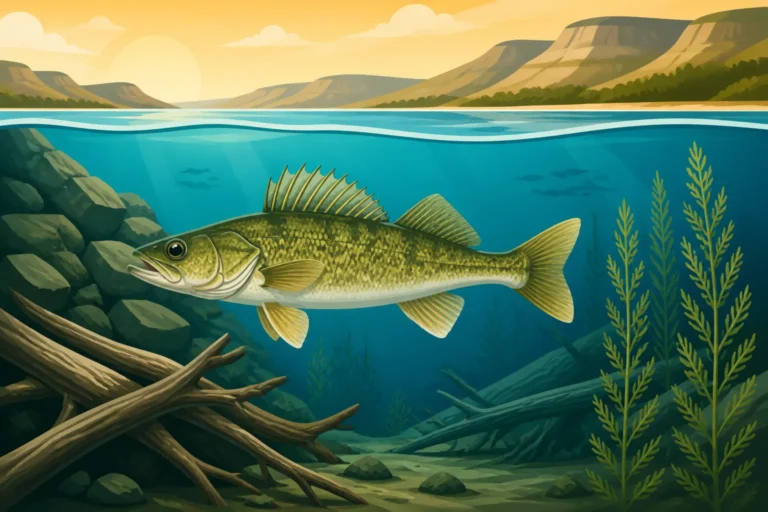
Walleye and sauger are both members of the perch family (Percidae) and the genus Sander. This close genetic relationship means they share a lot of fundamental anatomical features. They both have that distinctive elongated, torpedo-like body, two prominent dorsal fins (one spiny, one soft-rayed), and large, glass-like eyes that are adapted for low-light conditions. Their overall color patterns, while subtly different, can also appear quite similar depending on the water clarity, light conditions, and the specific lake or river they inhabit. A sauger from a murky river might look a lot like a walleye from the same water, as both can exhibit darker, more muted tones. The common names themselves, sometimes used interchangeably in casual conversation, further contribute to the muddle.
Imagine you've just landed a decent fish on Lake Sakakawea. It's got the characteristic shape, the big eyes, and that familiar greenish-gold hue. Without knowing the specific distinguishing marks, it's easy to assume it's one or the other. This visual similarity is often the first hurdle anglers face. Plus, both are highly prized for their delicious, flaky white meat, so the motivation to correctly identify them for the dinner table adds another layer to the identification challenge.
Overlap in Fishing Spots
Adding to the identification challenge is the fact that walleye and sauger frequently inhabit the same bodies of water and can even be caught in the same fishing spots. In North Dakota, you'll find both species thriving in major systems like the Missouri River and its reservoirs, including Lake Sakakawea and Lake Oahe. They share similar prey items, feeding on smaller baitfish, and often respond to similar baits and presentations. So, when you're jigging a minnow or trolling a crankbait in a proven fishing area, you truly don't know which one might hit your line.
This overlap means that simply knowing where you caught the fish isn't always enough to make a positive identification. While sauger tend to prefer areas with more current and turbidity, and walleye often favor clearer, deeper waters, these preferences are not absolute. On a large, diverse system like the Missouri River, you could easily pull a sauger from a current seam and then a walleye from a nearby breakline just minutes later. This cohabitation forces anglers to look beyond general location and focus on the fish's individual characteristics. For more on where to find these fish, check out our Missouri River Fishing Guide or Lake Sakakawea Fishing Guide for North Dakota Anglers.
Key Physical Differences to Spot
While walleye and sauger might seem like identical twins at first glance, a closer inspection reveals several distinct physical features that, once you know what to look for, make identification much clearer. It’s all about training your eye to pick out these subtle but consistent markers. Think of it like distinguishing between two similar breeds of dogs – you learn the tell-tale signs.
Dorsal Fin Markings
This is often the most reliable and easiest way to differentiate between a walleye and a sauger, especially for those new to the identification game. Both fish have two dorsal fins, but it's the first, spiny dorsal fin that holds the key.
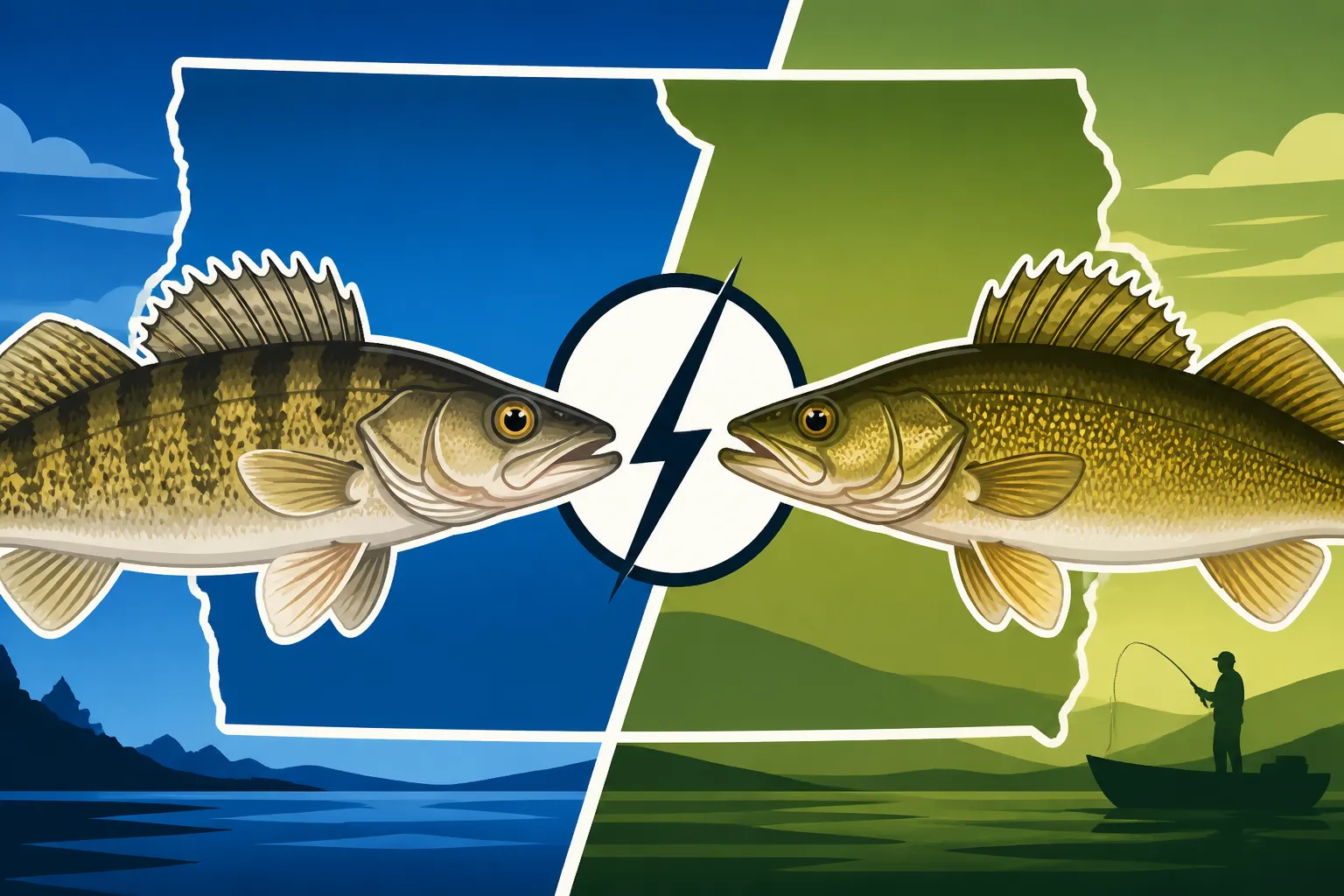
- Walleye: A walleye will almost always have a distinct, dark blotch at the very rear base of its first dorsal fin. This blotch is typically a prominent, solid black spot. The rest of the spiny dorsal fin will usually be clear or only lightly mottled. This dark spot is like a signature mark for the walleye.
- Sauger: In contrast, a sauger's first dorsal fin will be covered in rows of distinct, dark spots or speckles, creating a striped or banded appearance across the entire fin. There will be no single, large black blotch at the rear. It's more of a speckled mosaic rather than a single concentrated mark.
Once you know to look for it, this difference is usually quite obvious. If you've just landed a fish and you're wondering, gently spread out that first dorsal fin. If you see one big black spot at the very back, it's a walleye. If it's covered in smaller, scattered spots or bands, it's a sauger. This is the first thing I teach anyone who's struggling with the identification. This is the clearest method to identify the Difference Between Walleye and Sauger.
Body Shape and Coloration
Beyond the fins, there are also general differences in their body shape and overall color palette, though these can be more subjective and influenced by the environment.
- Walleye: Walleyes tend to have a sleeker, more torpedo-shaped body. Their coloration is usually a greenish-gold or olive-brown on the back, fading to a lighter, sometimes yellowish, belly. They often have faint, vertical bars along their sides, but these are typically muted and can even disappear depending on the fish's mood or environment. The most striking color feature, apart from the dorsal spot, is often the white tip on the lower lobe of their caudal (tail) fin. This bright white tip is another excellent identifier for a walleye.
- Sauger: Sauger, on the other hand, often appear slightly more slender and cylindrical, sometimes described as having a "skinnier" profile than a walleye. Their coloration tends to be more bronze or brassy, with distinct, irregular dark blotches or saddle-like markings along their sides and back, giving them a mottled, almost camouflaged look. Unlike walleyes, sauger do not have a white tip on their caudal fin. Their tail fin will be uniformly colored or faintly mottled, lacking that crisp white edge.
These body and color differences, while sometimes less definitive than the dorsal fin, become much clearer when you've seen a few of each species. Comparing the overall shape, the intensity of side markings, and the presence (or absence) of that white tail fin tip will further solidify your identification. Many anglers find it helpful to have a laminated fish identification card, easily found on Amazon, in their tackle box to reference these specific features.
Spinal Ray Count and Size
For the truly dedicated angler or fisheries biologist, there are even more precise anatomical differences, though these require a bit more precision than a quick glance. The number of spinal rays in their fins, for example, can differ.
- Walleye: Generally, walleye have fewer than 22 soft rays in their second dorsal fin.
- Sauger: Sauger typically have 22 or more soft rays in their second dorsal fin.
Counting fin rays isn't something most anglers do on the water, but it's an underlying biological distinction. More practically, while both species can grow quite large, walleye generally reach larger sizes than sauger. While a sauger pushing 20 inches is a true trophy, a walleye of that length is a more common, though still very respectable, catch. The North Dakota state record walleye far exceeds the state record sauger, illustrating this general size disparity. So, if you're pulling in a particularly large fish, especially one over the 25-inch mark, it's statistically more likely to be a walleye. However, don't let size alone be your only guide, as plenty of smaller walleye and larger-than-average sauger can still trick you. To learn How to Tell a Walleye From a Sauger more easily, focus on the fin and tail markings first.
Habitat and Behavior Clues
While physical characteristics are the ultimate deciders, understanding the preferred habitats and typical behaviors of walleye and sauger can give you a strong hint about which species you're likely to encounter. These aren't hard and fast rules, but they often help narrow down the possibilities before you even get the fish in the boat. Knowing these tendencies can also help you target one species over the other if you have a preference.
Preferred Water Conditions
One of the most significant differences between walleye and sauger lies in their preferred water conditions, particularly regarding clarity and current.
- Walleye: Walleye generally prefer clearer, cooler water, often found in large lakes and reservoirs. They tend to stick to structured areas like submerged humps, rock piles, weed lines, and breaklines in these clearer environments. While they are sensitive to bright light and will often seek deeper water or shade during the day, they don't typically thrive in heavily turbid (muddy) conditions. You'll find them in abundance in places like the clearer sections of Lake Sakakawea, Devils Lake, and many of North Dakota's deeper, cleaner prairie lakes. They are excellent sight predators, making good use of their light-sensitive eyes in low-light, but still relatively clear, conditions.
- Sauger: Sauger, on the other hand, are much more tolerant of murky or turbid water and often prefer areas with noticeable current. They are riverine fish at heart and feel right at home in the faster-moving, often cloudier sections of rivers and the main channels of large reservoirs where river currents are still influential. The Missouri River below Garrison Dam and the deeper, current-washed sections of Lake Oahe are prime sauger territory. Their mottled coloration provides excellent camouflage in these environments. If you're consistently catching fish in stained water with a good current flow, especially in a river system, the odds shift towards sauger. For more details on fishing these systems, consider our Missouri River Fishing Below Garrison Dam in North Dakota guide, where sauger are frequently caught.
This doesn't mean you won't catch a walleye in current or a sauger in clearer water, but it's a strong general trend. If you're fishing a clear, rocky point on Devils Lake, you're almost certainly targeting walleye and perch. If you're drifting cut bait through a muddy channel bend on the Red River, catfish and sauger are probably your primary targets.
Feeding Habits and Depth
Their preferred habitats also influence their typical feeding habits and the depths at which you're most likely to find them.
- Walleye: Walleye are opportunistic predators that will feed throughout the water column but often relate to structure. In clearer lakes, they might suspend over deep water following schools of baitfish, or hug the bottom near drop-offs and humps. They are masters of using low-light conditions to their advantage, often feeding most aggressively at dawn, dusk, and even throughout the night. They'll readily take jigs, crankbaits, spinner rigs, and live bait presented at various depths, depending on the season and time of day. You might find them suspended in 30 feet of water over a 60-foot basin or tucked into 10 feet of water during a low-light bite. For techniques, check out our North Dakota Walleye Fishing Techniques guide.
- Sauger: Sauger tend to be more bottom-oriented than walleye, especially in river systems. They often hug the contours of the riverbed, seeking out current breaks behind submerged rocks, log jams, or channel bends. They are also incredibly adept at navigating turbid water, using their sensitive lateral lines and large eyes to find prey in conditions where other fish might struggle. While they can be caught at various times, they are often active throughout the day, particularly in stained water. Common depths for sauger are often in the 15-40 foot range, depending on the river or reservoir conditions. They respond well to vertical presentations like jigging and three-way rigs that keep the bait close to the bottom. Knowing the Sauger Habitat Below Garrison Dam is key to targeting this species.
Understanding these behavioral patterns means you can sometimes make an educated guess about your catch even before it breaks the surface. If your sonar is showing fish tight to the bottom in a strong current, it's a good bet you might be dealing with sauger. If you're marking fish suspended over an offshore hump in a large, relatively clear reservoir, walleye are a more likely candidate.
North Dakota Regulations: Why Identification Matters
Correctly identifying your catch isn't just about satisfying curiosity or impressing your buddies; it's a critical aspect of responsible angling, especially in North Dakota. The state's fishing regulations are designed to manage fish populations sustainably, and because walleye and sauger often have different population dynamics, their specific rules can vary. Misidentification can lead to unintentional violations, which no angler wants.
Differing Size and Creel Limits
The most direct reason to know your walleye from your sauger in North Dakota is the potential for different size and creel (daily possession) limits. These limits are set by the North Dakota Game and Fish Department (NDGFD) and can change based on current scientific assessments of fish health and population numbers in specific bodies of water.
- Scenario 1: Mixed Bag Limits: It's common for North Dakota regulations to have a combined walleye and sauger daily limit, but sometimes with specific restrictions on how many of each individual species you can keep. For example, a regulation might state "Daily limit: 5 walleye/sauger, but no more than 1 sauger may be kept." If you misidentify a sauger as a walleye and keep two sauger, you've inadvertently violated the rule. This is why North Dakota Walleye Size Limit Rules and other species-specific rules are so important.
- Scenario 2: Slot Limits: Both species can also be subject to "slot limits" in certain waters. A slot limit means you can keep fish below a certain size and/or above a certain size, but fish within a "slot" (e.g., 20-25 inches) must be released. If the slot limit applies differently to walleye than to sauger, a mistaken identity could mean releasing a legal fish or keeping an illegal one.
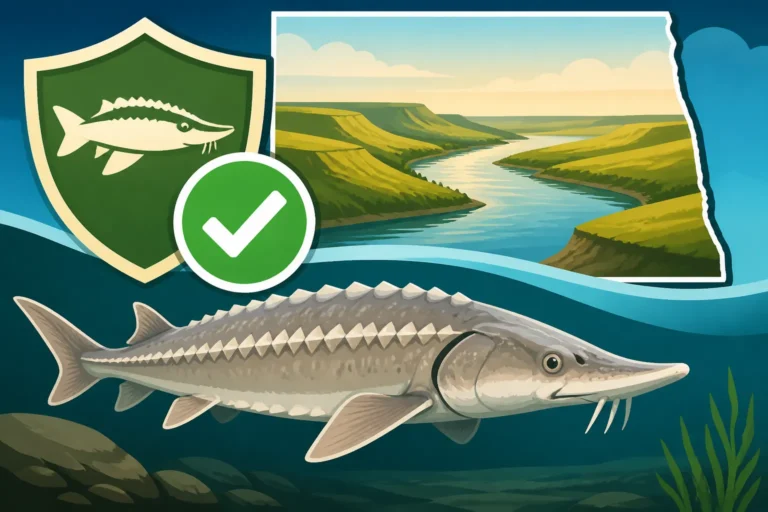
- Scenario 3: Protected Species: While not typically the case for adult walleye or sauger, understanding identification is crucial for other species too. For instance, the pallid sturgeon, a state and federally endangered species in North Dakota, is sometimes confused with the more common shovelnose sturgeon. Releasing a protected species immediately upon capture is paramount, and misidentification could have serious consequences. For a comprehensive look at the rules, consult the North Dakota Fishing Regulations Explained.
Always carry a current copy of the North Dakota Fishing Guide, available both online and at many tackle shops. This official document is your best friend for staying informed about current regulations.
Consequences of Misidentification
The repercussions of misidentifying your catch and thus violating fishing regulations can range from a polite warning to significant fines, confiscation of your catch, and even loss of fishing privileges. Game wardens are highly trained in fish identification and can quickly spot a misidentified catch.
Imagine you're having a banner day on the Missouri River, and you've kept what you believe are five walleye. A game warden pulls up to check your license and catch. If two of those fish are actually sauger, and the specific regulations for that waterbody only allow one sauger as part of the five-fish limit, you're now in violation. The warden isn't going to accept "I thought it was a walleye" as a valid excuse. Ignorance of the law is generally not a defense. This is why a solid understanding of Sauger Identification vs Walleye is so crucial.
Beyond the legal penalties, there's also an ethical responsibility. Regulations are put in place to ensure healthy fish populations for future generations of anglers. By adhering to the rules, we contribute to the sustainable management of North Dakota's precious fisheries. Taking an extra moment to correctly identify your fish before deciding to keep or release it is a small effort with a big impact. If you're ever in doubt, the safest bet is always to release the fish unharmed.
Tips for Positive Identification on the Water
Alright, so you've hooked a fish, and it's on the deck of your boat or pulled onto the ice. Now comes the moment of truth! Don't just make a quick guess. Take a breath and use these practical, on-the-water tips to confidently determine if you have a walleye or a sauger. The more often you practice these steps, the faster and more intuitive your identification skills will become.
Immediate Visual Cues
Before you even handle the fish too much, you can often pick up on the most obvious clues. A quick visual scan is your first line of defense against misidentification.
- The Dorsal Fin Spot Check: As mentioned, this is your number one indicator. Gently spread the first dorsal fin. If you see that single, prominent dark blotch at the back, it's a walleye. If it's uniformly spotted or banded with smaller, scattered dark spots across the entire fin, it's a sauger. This is usually definitive. Have a quick mental image or even a small laminated guide ready to compare. Many anglers keep a small species identification chart, easily printed or purchased from places like Amazon, right in their boat or tackle box.
- Tail Fin Inspection: This is your second quick check. Look at the lower lobe of the caudal (tail) fin. Is there a distinct white tip? A crisp, clean white edge on the bottom of the tail fin is a hallmark of a walleye. If the tail fin is completely uniform in color, or perhaps just subtly mottled without that stark white edge, you're almost certainly looking at a sauger.
- Body Pattern Assessment: Scan the body of the fish. Walleye tend to have a more uniform, often olive-green to golden-brown color, with any barring being very faint or absent. Sauger will typically have more pronounced, irregular dark blotches or saddle patterns along their sides, giving them a more camouflaged, almost "dirty" appearance. The difference in overall color and pattern can be quite striking once you've seen a few of each side-by-side.
By combining these three quick visual checks, you can usually make a very accurate identification in a matter of seconds. Remember, for a species like walleye, a crucial part of the process is also knowing the North Dakota Walleye Size Limit Explained for the specific water you're fishing.
Handling and Closer Examination
If the immediate visual cues aren't quite enough, or if you encounter a fish that seems to have characteristics of both (though pure hybrids are rare), a slightly closer examination while safely handling the fish can seal the deal. Remember to handle fish gently, especially if you intend to release them, minimizing their time out of water.
- Feel the Scales: While not a primary identifier, sauger tend to have a slightly rougher feel to their scales compared to the smoother scales of a walleye, especially when running your hand from tail to head. This is a subtle difference, but experienced anglers sometimes notice it.
- Pyloric Caeca (for extreme cases): This is a very advanced method and not practical for on-the-water identification, but it's a definitive biological difference. Pyloric caeca are finger-like projections found near the stomach. Walleye have long, branching caeca, while sauger have shorter, unbranched caeca. This is primarily for scientific study or for gutting a fish for consumption, not for quick identification!
- Take a Picture (and Release if Unsure): If you are truly, genuinely stumped, and especially if you are concerned about violating regulations, take a clear photograph of the fish, highlighting its dorsal fin and tail. Then, if you are unsure about the legal limits or species identity, the most responsible action is to release the fish unharmed. You can always consult your photo with the fishing guide or other experienced anglers later. There's no shame in releasing a fish when in doubt; it's better than facing a penalty. For more about specific fishing seasons, check our North Dakota Fishing Season Calendar.
| Feature | Walleye | Sauger |
|---|---|---|
| First Dorsal Fin | Single large, dark blotch at rear base | Distinct dark spots/speckles across entire fin |
| Caudal (Tail) Fin | Distinct white tip on lower lobe | No white tip, uniformly mottled |
| Body Markings | Faint, sometimes absent, vertical bars | Distinct, irregular dark blotches/saddle marks |
| Overall Color | Greenish-gold to olive-brown | Bronzy to brassy, more mottled |
| Body Shape | Generally thicker, more robust | Often more slender, cylindrical |
| Preferred Habitat | Clearer, cooler lakes; structure | Murkier, current-rich rivers/channels |
| Average Size | Generally larger | Generally smaller |
This table provides a quick reference for the key differences. Keep it handy, maybe even on your phone, when you're out on the water!
Catching and Consuming North Dakota Sauger and Walleye
Now that you're an expert at telling your walleyes from your sauger, let's talk about the fun part: catching them and, for those you decide to keep, enjoying them at the dinner table. Both species are incredibly popular targets for anglers in North Dakota, and for very good reason. They are both formidable fighters and highly prized table fare.
Taste and Texture
When it comes to eating, both walleye and sauger are considered premium freshwater fish, often commanding high prices in restaurants. You really can't go wrong with either!
- Walleye: Walleye meat is renowned for its delicate, flaky texture and mild, slightly sweet flavor. It's very low in fat, making it a lean and healthy option. Because of its subtle taste, it's incredibly versatile in the kitchen, lending itself well to almost any cooking method—frying, baking, broiling, grilling, or even pan-searing with just a little butter and seasoning. Many consider walleye to be the absolute pinnacle of freshwater eating, and it's often referred to as the "king" of the table. If you've ever had a fresh walleye fillet, you know exactly what I'm talking about.
- Sauger: Sauger meat shares many characteristics with walleye: it's also white, flaky, and has a mild flavor. However, some connoisseurs will argue that sauger has an even more delicate flavor and a slightly firmer texture than walleye, making it equally, if not more, desirable to some palates. This subtle difference is often attributed to their preference for current-rich, cooler waters. You can prepare sauger using all the same methods as walleye, and it will be equally delicious. In fact, if you get a chance to try both side-by-side, you might just find yourself preferring the sauger! Our Is Sauger Good to Eat? article dives deeper into this topic.
Ultimately, whether you prefer walleye or sauger might come down to a very subtle nuance of texture or flavor, or simply personal preference. The good news is, you're winning either way.
Handling Your Catch
Proper handling of your catch, whether you intend to keep it or release it, is crucial for both the health of the fish and the quality of the meat.
- For Release: If you're practicing catch and release, especially if you're uncertain about identification or if the fish is outside the legal slot limit, prioritize minimizing stress. Use appropriate gear that matches the size of the fish to reduce fight time. Handle the fish with wet hands to protect its protective slime coat, or use a rubberized landing net. Remove hooks quickly with pliers or a de-hooking tool, and if the fish is deep-hooked, cut the line as close to the hook as possible rather than trying to rip it out. Release the fish gently, allowing it to recover before swimming away. Check out North Dakota Fishing Regulations Explained for more on specific rules related to handling your catch.
- For the Cooler: If you've decided to keep your walleye or sauger, the goal is to get it on ice as quickly as possible. This maintains the quality of the meat. A good quality cooler filled with ice is indispensable. Some anglers even "bleed" their fish immediately upon capture by cutting a gill arch, as this can further improve the flavor and appearance of the fillets by removing blood from the muscle tissue. Get the fish cleaned and filleted promptly, ideally within a few hours of catching.
- Storage: Once filleted, rinse the fillets in cold water, pat them dry, and store them in airtight bags in the refrigerator for immediate consumption or freeze them for longer storage. For freezing, consider vacuum sealing to prevent freezer burn. Having a reliable cooler, readily available on Amazon, is key to ensuring your catch stays fresh until you can get it home and processed.
By paying attention to proper handling, you ensure that whether you release your catch to fight another day or bring it home for a meal, you're doing your part to respect the fish and the fishery.
Disclaimer
This article is for general informational purposes only and does not constitute professional advice. Laws, prices and regulations vary by location and change over time. Consult a qualified professional for guidance on your specific situation.