Best Fishing Kayak for River Current
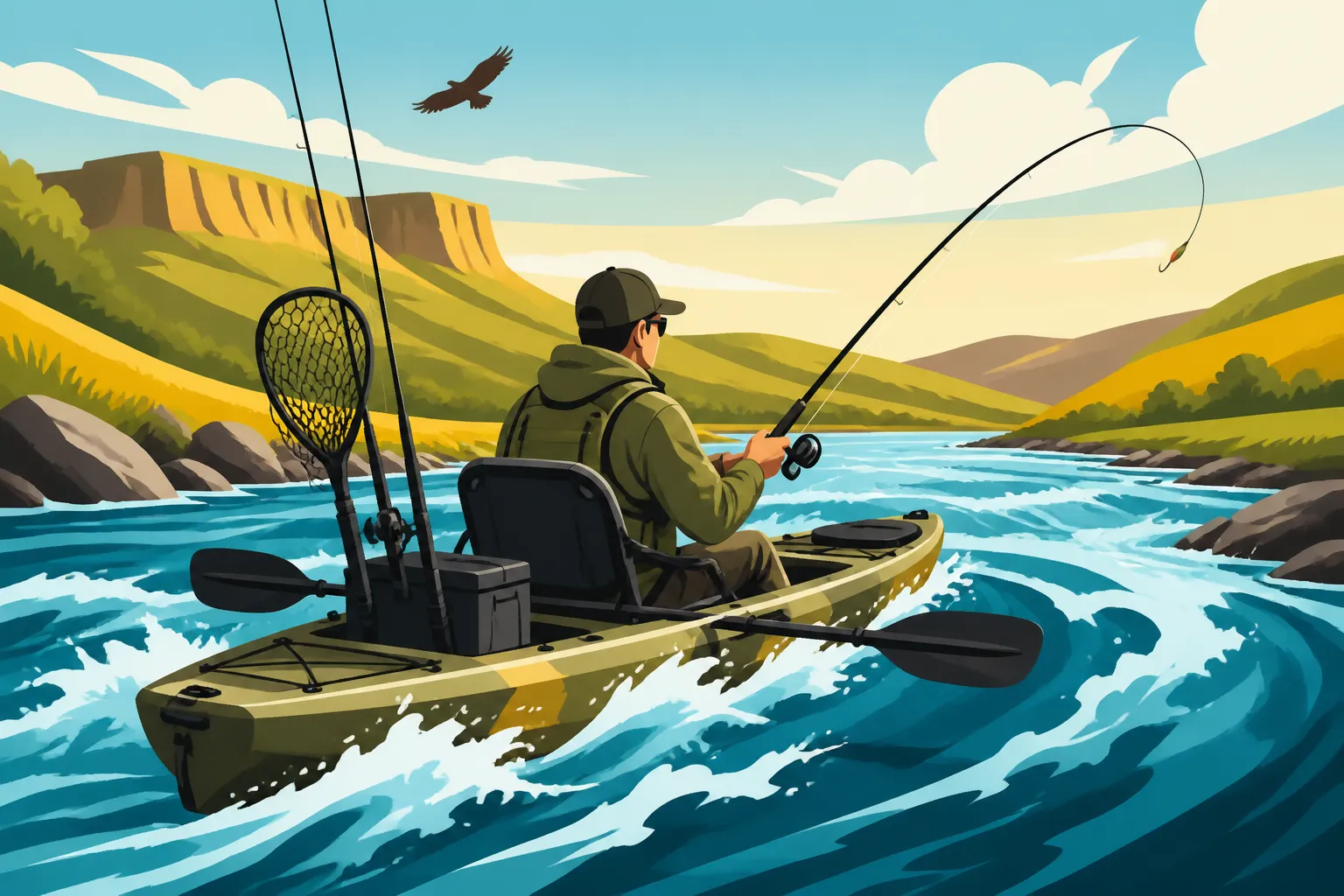
Navigating North Dakota's powerful rivers like the Missouri or the Red River in a fishing kayak presents a unique set of challenges. The constant current, potential for submerged obstacles, and the need for both stability and maneuverability can make choosing the right vessel feel overwhelming. This guide will walk you through the essential features and considerations for selecting the best fishing kayak to confidently tackle North Dakota's diverse river currents, ensuring your next angling adventure is both safe and successful.
Understanding the Demands of River Current on a Kayak
Fishing in river currents is a completely different ballgame than paddling on a calm lake. The water is constantly moving, creating dynamic conditions that test a kayak's design and an angler's skill. You're not just moving through water; you're often fighting it, maneuvering with it, or anchoring against it. This means your kayak needs to be built for more than just floating; it needs to be engineered for control and efficiency in moving water.
Stability vs. Maneuverability in Current
It's a classic balancing act: you want a kayak stable enough to stand in, cast from, and feel secure against unexpected wakes or strong eddies, but also nimble enough to quickly turn, avoid obstacles, and navigate tight spots. A wider, flatter hull often provides excellent initial stability, making you feel very secure, but it can become a real chore to paddle and steer against a strong current. Conversely, a narrower, V-shaped hull might slice through the water beautifully, making it easier to paddle upstream, but it might feel tippy, especially if you try to stand up or retrieve a fish. For river current fishing, a good compromise is key—something with secondary stability that feels secure even when leaned, and a hull designed to track straight but still respond to paddle strokes.
Imagine you're trying to hold your position in a swift section of the Missouri River, casting toward a submerged logjam. If your kayak is too wide and struggles to hold a line, the current will constantly push you off target. But if it's too narrow, every slight movement could feel like a potential capsize, making it hard to focus on your fishing. The best river kayaks manage to provide a solid platform without sacrificing the ability to change direction quickly when needed.
Tracking and Hull Design
"Tracking" refers to a kayak's ability to hold a straight line while paddling. In river current, good tracking is paramount because it allows you to conserve energy by not constantly correcting your course. A kayak that continually wants to spin or drift sideways will exhaust you quickly when trying to paddle upstream or even just maintain a steady drift downstream. The hull design, particularly the keel line and the presence of a skeg or rudder, significantly impacts tracking.
Kayaks with a pronounced keel or long, shallow channels on the hull tend to track better. However, too much keel can make it harder to turn the kayak on a dime when you need to navigate around a sudden hazard like a fallen tree or a shallow riffle. Many river-specific kayaks feature a balanced hull that offers a decent amount of tracking but still allows for quick pivots. This balance is crucial for North Dakota's rivers, which can transition from wide, open stretches to tighter, snag-filled areas. You might be targeting walleye in a long, steady drift, but then need to quickly adjust to fish a precise eddy behind a bend. North Dakota Walleye Fishing Techniques often involve precise boat positioning, which a well-tracking kayak can greatly assist with.
Key Features to Look for in a River Fishing Kayak
When you're sifting through all the options, trying to find that perfect river fishing kayak, certain features rise to the top as non-negotiables. These aren't just bells and whistles; they're fundamental to making your experience on moving water enjoyable and productive.
Hull Shape and Length for Current
The shape and length of a kayak's hull play the biggest role in how it performs in river current. Longer kayaks generally track better and maintain momentum more efficiently, which is a huge advantage when paddling upstream or covering long distances. They tend to glide more smoothly over waves and through choppy sections. However, they can be less nimble in tight turns and harder to transport and store. A kayak in the 12 to 14-foot range often strikes a good balance for North Dakota's larger rivers.
Shorter kayaks (under 10 feet) are incredibly agile and easy to turn, making them great for smaller, winding creeks or avoiding obstacles, but they'll be a constant battle against a strong current on bigger waters. For our larger rivers, you'll want something that splits the difference. Look for a kayak with a relatively flat mid-section for initial stability, transitioning to a more pronounced keel or subtle V-shape at the bow and stern for improved tracking. This combination helps you feel secure while still allowing you to move with purpose.
Rudder or Skeg System
A rudder or skeg system is almost essential for serious river current fishing, especially on larger, wind-prone waters like the Missouri. A skeg is a fixed fin that drops down from the stern to help the kayak track straight, particularly in crosswinds or current. A rudder, on the other hand, is steerable via foot pedals and provides active steering assistance. This allows you to maintain a straight course with minimal effort, freeing you up to focus on fishing.
Imagine paddling across a wide section of the Red River with a stiff crosswind pushing you off course. Without a rudder, you'd be constantly correcting with your paddle, losing energy and fishing time. With a rudder, a slight adjustment with your feet keeps you on target, even while you're casting. For those long drifts or when paddling against a relentless flow, a rudder can be a game-changer for energy conservation and precise boat control. It also greatly enhances your ability to manage your drift speed and angle, which is critical for many Red River Catfish Fishing Spots in North Dakota.
Comfortable and Elevated Seating
You're going to spend a lot of time in your kayak, sometimes for hours on end, so comfort is not a luxury, it's a necessity. Modern fishing kayaks often feature adjustable, stadium-style seats that are much more comfortable than traditional molded-in seats. Even better, many offer elevated seating positions. This does a few things for a river angler:
First, it improves your line of sight. Being a few inches higher off the water helps you spot structure, read current breaks, and even see fish more easily. Second, it makes standing up much easier and safer. When you're fishing a river, being able to stand and stretch, or stand to get a better casting angle or fight a fish, is a huge bonus. An elevated seat often means you have more leverage and a more natural standing posture. Third, it keeps your backside drier, which is always a good thing on a long day. Look for a seat that offers good back support, adjustable positions, and breathable material.
Ample Storage and Gear Tracks
River fishing often requires a variety of tackle, safety gear, and provisions. A good fishing kayak for current will have plenty of accessible storage. This includes stern and bow hatches for dry storage, often sealed with gaskets to keep water out, and open cargo areas with bungee tie-downs for tackle crates or coolers. Best Live Bait Cooler for Summer Fishing is a good read if you often use live bait. Gear tracks (often called "accessory rails") are incredibly useful, allowing you to easily mount rod holders, fish finders, camera mounts, and other accessories without having to drill permanent holes in your kayak.
Consider how you’ll organize your gear for different fishing scenarios. On the Red River, you might need space for multiple heavy catfish rods and a substantial tackle box. On the Missouri, perhaps a smaller setup for walleye, but more electronics. Having flexible storage and mounting options means you can customize your setup for any trip, ensuring your essential items are always within reach but also secure in moving water. You don't want your tackle box floating away downstream if you hit a small rapid or an unexpected current seam.
Types of Kayaks Best Suited for River Currents
Not all fishing kayaks are created equal, and some designs are inherently better equipped to handle the demands of river currents than others. Knowing the distinctions between these types will help you narrow down your choices and find the perfect match for your North Dakota river adventures.
Sit-on-Top vs. Sit-Inside Kayaks
For most river fishing in North Dakota, a sit-on-top (SOT) kayak is generally preferred. SOTs offer superior stability, are much easier to re-enter if you happen to capsize (a real concern in current), and provide an open deck plan that’s ideal for fishing gear and standing. They also drain water through scupper holes, so you're not sitting in a pool if water comes over the bow or splash deck. This open design is particularly advantageous when you're fighting a strong fish or need to quickly access gear.
While sit-inside kayaks (SINKs) can be faster and track well, their enclosed cockpit makes self-rescue in current more challenging and limits standing opportunities. They can also accumulate water inside, requiring a bilge pump. For calmer, protected waters, a SINK might be fine, but for the dynamic and sometimes unpredictable currents of North Dakota's major rivers, the safety and convenience of a SOT kayak usually win out. Imagine trying to land a trophy Northern Pike while trying to balance in a sit-inside kayak; the freedom of a SOT makes all the difference. How to Fish for Northern Pike in North Dakota can give you more insights into targeting these aggressive fish.
Pedal Drive vs. Paddle Kayaks
This is one of the biggest debates in kayak fishing, and for river currents, it has significant implications.
Pedal drive kayaks use your leg power to turn a propeller or fin system, freeing your hands for fishing. This is a massive advantage in current, as you can constantly adjust your position, hold against a current, or even move upstream, all while keeping your hands on your rod. Maintaining a precise position over a fishing spot or battling a strong current is dramatically easier with a pedal drive. Brands like Hobie and Old Town offer excellent pedal drive options that are very popular for river fishing due to their efficiency and hands-free operation.
Paddle kayaks are simpler, lighter, and often more affordable. They also allow you to navigate extremely shallow water or areas with dense submerged vegetation where a propeller or fin might get fouled. However, they require constant paddling to maintain position or move against current, which can be tiring and limits your ability to fish actively. For smaller rivers or for anglers who prioritize simplicity and don't mind the workout, a paddle kayak can still be a good choice. Many anglers start with a paddle kayak and then upgrade to a pedal drive once they experience the benefits on moving water. For those long days out on Lake Sakakawea Fishing Guide for North Dakota Anglers, where you might encounter current or wind, a pedal drive can extend your fishing time and reduce fatigue.
| Feature | Pedal Drive Kayak (River Fishing) | Paddle Kayak (River Fishing) |
|---|---|---|
| Current Control | Excellent; hands-free positioning, easy to hold against current. | Requires constant paddling; less precise positioning. |
| Speed/Efficiency | Faster and more efficient, especially against current. | Slower, more effort required, especially upstream. |
| Hands-Free | Yes, allows continuous fishing. | No, hands are occupied with paddling. |
| Shallow Water | Can be limited by prop/fin depth; some models allow retraction. | Excellent; can navigate very shallow areas. |
| Obstacles | Risk of prop/fin fouling; can be cumbersome to lift over snags. | Easier to maneuver around or over submerged obstacles. |
| Cost | Generally higher initial investment. | Generally more affordable. |
| Weight | Heavier due to mechanical components. | Lighter, easier to transport. |
Hybrid or Crossover Designs
Some manufacturers offer "hybrid" or "crossover" kayaks that blend elements of traditional kayaks with small boats. These often feature wider, more stable platforms, sometimes with raised casting decks and even transom mounts for small trolling motors. While they might sacrifice some traditional kayak maneuverability, they offer incredible stability and customization for serious anglers. They are particularly well-suited for larger, slower sections of rivers where stability and capacity are paramount, and you might want to consider a Best Trolling Motors for North Dakota Lakes to aid propulsion. These types of kayaks often give you the option to stand and sight fish, which can be highly effective for species like smallmouth bass in rocky river sections.
Essential Accessories for River Kayak Fishing
Beyond the kayak itself, a few key accessories will significantly enhance your safety, comfort, and success when fishing North Dakota's rivers. Don't skimp on these; they're an investment in better angling experiences.
Anchors and Anchor Management Systems
An anchor is absolutely critical for river fishing. Without one, you're constantly drifting, making it nearly impossible to thoroughly fish a specific spot like a deep hole, a current seam, or a logjam. For river currents, a small grapnel anchor or a drift sock (sea anchor) is indispensable. A grapnel anchor is good for holding in rocky or snaggy bottoms, while a drift sock slows your drift significantly, allowing for a more controlled presentation, especially useful when targeting walleye on a slow river drift.
An anchor management system, typically involving a trolley system that runs along the side of your kayak, allows you to deploy and retrieve your anchor from the bow, stern, or anywhere in between. This is vital for safety, as it allows you to quickly release your anchor in an emergency, and for controlling your angle to the current. You'll want a Best Kayak Anchor for River Current that's heavy enough to hold you in place but light enough to manage easily. When positioning yourself to fish a precise spot in the Missouri River, being able to adjust your anchor point to present your lure perfectly can make all the difference.
Personal Flotation Devices (PFDs)
This isn't just an accessory; it's a non-negotiable safety item. Always wear a properly fitted PFD (life jacket) when on the water, especially in river currents. North Dakota's rivers can be deceptively powerful, and even strong swimmers can be overwhelmed by cold water or strong currents if they fall in. Look for a PFD designed for paddling, which will offer better arm mobility for casting and paddling. Some fishing-specific PFDs even come with extra pockets for tackle or tools, adding convenience.
Consider the water temperature, especially during spring and fall fishing. Cold water can quickly incapacitate you, making a PFD even more vital. Investing in a comfortable, high-quality PFD is an investment in your life. Brands like NRS or Mustang Survival offer excellent options that combine safety with angler-friendly features. Check out Best Life Jackets for Cold Water Fishing for more details on choosing the right one.
Trolling Motors and Batteries
While pedal drives offer hands-free propulsion, a small electric trolling motor can be a powerful addition to a fishing kayak, particularly on larger rivers or when you need to cover significant distances against the current. Many fishing kayaks are designed with transom mounts or scupper holes that can accommodate a compact trolling motor. This transforms your kayak into a formidable fishing machine, allowing for effortless upstream travel, precise position holding, and extended range.
If you opt for a trolling motor, you'll also need to consider a robust battery system. Lithium-ion batteries are popular for their lighter weight and longer run times compared to traditional lead-acid batteries, though they come with a higher price tag. Think about the motor's thrust rating; for river current, you'll generally want something with sufficient power to overcome the flow. Having a trolling motor can be a game-changer for navigating Missouri River Fishing Below Garrison Dam in North Dakota where currents can be strong.
Electronics and Navigation
A reliable fish finder and GPS unit can significantly improve your success on North Dakota's rivers. A fish finder helps you locate fish, identify underwater structure, and determine water depth, all crucial information in an ever-changing river environment. GPS is essential for marking hotspots, navigating back to launch points, and staying aware of your location, especially on large, complex river systems.
Many modern fish finders integrate GPS, providing an all-in-one solution. Look for units that offer clear, bright displays, reliable mapping, and durable construction to withstand the elements. Mounting options are also important; gear tracks allow for flexible placement of your unit. Having detailed river maps on your GPS can help you identify deeper channels, submerged islands, and other features that hold fish, giving you an edge when exploring new stretches of river. For those who want to integrate multiple devices, a Best Portable Power Station for Ice Fishing Electronics might also be useful for powering your gear for longer trips.
Choosing Your River Kayak from Local and Online Retailers
Once you have a clear idea of the features you need, it's time to start looking. North Dakota anglers have a few great avenues for finding their ideal river fishing kayak and accessories.
Exploring Local Retailers
Visiting local sporting goods stores or dedicated kayak shops like those you might find near Bismarck or Fargo, or larger national chains like Bass Pro Shops, offers several advantages. You can physically see and sit in different kayaks, get a feel for their size, stability, and seating comfort. This hands-on experience is invaluable, especially when trying to assess things like the height of an elevated seat or the feel of a pedal drive system. Sales associates can also provide localized advice on which models perform well on specific North Dakota rivers, sharing insights that only local knowledge can provide. Plus, you can often pick up essential accessories, from Best Fishing Line for North Dakota Lakes to anchors and PFDs, all in one go.
They might also offer demo days where you can actually try kayaks on the water, which is the absolute best way to make a decision. Even if the selection is smaller than online, the ability to test-drive a kayak or get personalized fitting advice can be worth its weight in gold.
Navigating Online Marketplaces
Online marketplaces like Amazon or specialty kayak retailer websites offer an incredibly vast selection, often at competitive prices. You'll find a wider range of brands, models, and accessory options than in most physical stores. This is particularly useful for researching specific features or finding niche items. The downside is you can't physically inspect the kayak or sit in it before purchasing, making it harder to judge comfort and stability. Reading extensive reviews from other river anglers is crucial when buying online, as it can give you a better sense of real-world performance.
Remember to factor in shipping costs for kayaks, as they can be substantial due to size and weight. For smaller accessories, Best Fishing Tackle for North Dakota Lakes and Best Fillet Knives for Walleye and Pike can easily be found and shipped from online retailers, often with great flexibility and competitive pricing. Whether you choose to buy local or online, doing your research thoroughly will ensure you end up with a kayak that's perfectly suited for your North Dakota river fishing adventures.
Disclaimer
This article is for general informational purposes only and does not constitute professional advice. Laws, prices and regulations vary by location and change over time. Consult a qualified professional for guidance on your specific situation.