Difference Between Walleye and Sauger
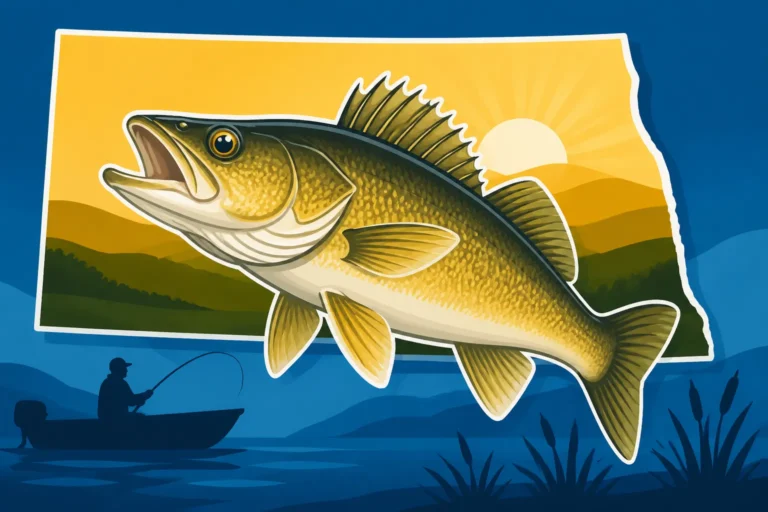
It's incredibly frustrating to be out on the water, excited about your catch, only to pull up a fish that looks just like what you're targeting, but with subtle differences that make you second-guess yourself. This is especially true when you're trying to figure out if you've landed a walleye or a sauger in North Dakota. This guide is here to clear up that confusion once and for all, helping you confidently identify your catch and stay within the regulations.
Why Distinguishing Walleye and Sauger Matters for North Dakota Anglers
For many anglers, especially those new to the beautiful waters of North Dakota, a walleye and a sauger might seem almost interchangeable at first glance. They're both elongated, toothy, delicious fish, and they often inhabit similar areas. However, for those of us who spend our time on the lakes and rivers here, knowing the precise difference isn't just a point of pride; it's a practical necessity that can impact your fishing success and even keep you out of trouble with the game warden.
Legal Implications and Bag Limits
Let's face it, nobody wants to get a citation, especially when you're just out trying to enjoy a peaceful day of fishing. The North Dakota Game and Fish Department has specific regulations for both walleye and sauger, and these often include different daily limits, possession limits, and sometimes even size restrictions. Imagine you're having an incredible day, reeling in fish after fish, and you think you're well within your walleye limit, only to discover later that half your cooler is full of sauger, pushing you over the limit for one or both species. That's a costly mistake that can be easily avoided with a little knowledge.
For instance, certain bodies of water might have a combined limit for "walleye and sauger," while others might differentiate. It's crucial to check the current North Dakota Fishing Regulations Explained before heading out. If you accidentally keep too many of one species because you mistook it for the other, you could face penalties. This isn't just about being a stickler for rules; it's about responsible resource management. Accurate identification ensures that anglers contribute to the sustainable health of our fisheries by respecting these carefully set limits.
Fishing Techniques and Habitat Preferences
Beyond the legal stuff, understanding the difference between walleye and sauger can significantly improve your actual fishing success. While they share many characteristics, their preferred habitats and behaviors aren't always identical. Walleye, for example, often relate more to structure like reefs, points, and weed lines in clearer water, and they can be found in a wide range of depths depending on the season and time of day. Knowing this might lead you to Jigging for Walleye on Lake Sakakawea or targeting specific submerged structures.
Sauger, on the other hand, tend to prefer more turbid (murkier) water and often hold tighter to the bottom, especially in areas with current. Think about the Missouri River or deeper sections of large reservoirs. If you're fishing a specific area and only catching sauger, but you really want a walleye, understanding their preferences will tell you that you might need to adjust your depth, bait, or even move to a different type of structure or water body. This knowledge lets you tailor your approach, making your time on the water more productive and enjoyable, whether you're chasing North Dakota Walleye Fishing Techniques or hoping to land a nice sauger.
Key Physical Characteristics to Identify Walleye
When you've got a fish in your hand, the fastest way to tell if it's a walleye or a sauger is to look for a few tell-tale physical features. These aren't subtle nuances, but rather distinct markings that, once you know what to look for, become quite obvious. It’s like learning the secret handshake of the fishing world – once you know it, you can spot it a mile away.
Dorsal Fin Appearance and Tail Coloration
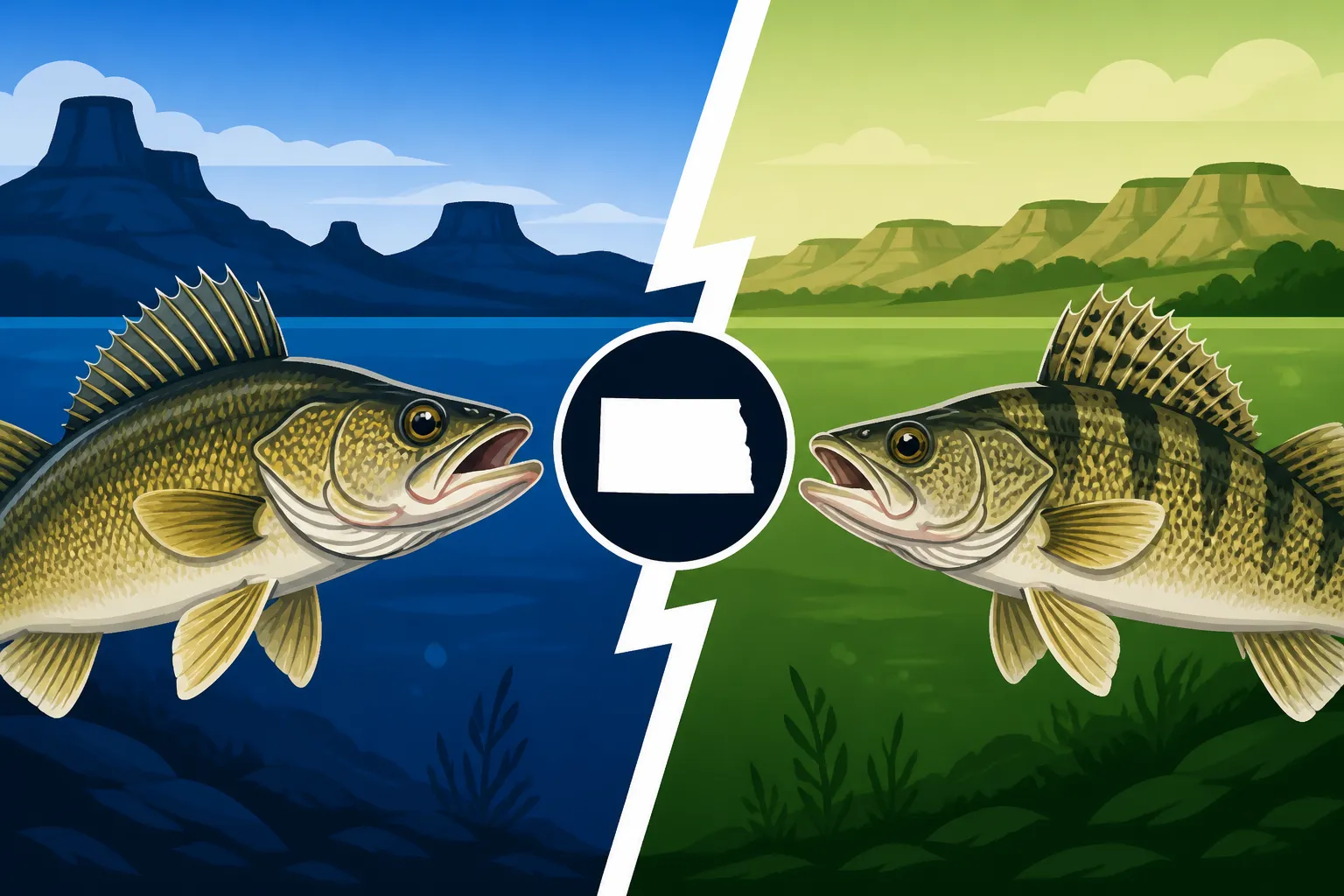
One of the most reliable indicators of a walleye is its dorsal fin. Walleye have two dorsal fins, the first of which is spiny. This spiny dorsal fin will be mostly clear or translucent, often with some dark mottling, but critically, it will not have distinct rows of black spots. Instead, the very bottom of the spiny dorsal fin, where it meets the body, might have a faint dark blotch, but no widespread spotting. This difference is stark when compared to a sauger, and it’s usually the first thing seasoned anglers look for.
Equally important, if not more so, is the walleye's tail fin, also known as the caudal fin. Look closely at the very tip of the lower lobe of the tail. A true walleye will have a distinct, often bright, white tip on this lower lobe. It’s a clean, noticeable mark that stands out. Imagine a perfectly painted white highlight on the bottom corner of the tail – that’s your walleye. If you're uncertain about your catch, checking for this specific marking can be a definitive way to confirm its identity. This white tip is a classic walleye signature and a feature How to Tell a Walleye From a Sauger frequently highlights.
Body Shape, Color, and Eye Placement
Walleye typically have a more streamlined, elongated body shape compared to a sauger, though this can be subtle. Their overall coloration can vary widely depending on the water clarity and bottom composition of where they're caught. Generally, walleye will have a golden-olive to brown back, fading to a lighter, often yellowish, belly. They'll usually have several dark vertical bars or blotches along their sides, but these are often less distinct and more mottled than the prominent patterns seen on sauger.
Another key feature, and the origin of their name, are their eyes. Walleye have large, glassy, somewhat opaque eyes that are highly reflective. This "glassy" appearance is due to a reflective layer called the tapetum lucidum, which helps them see in low light conditions – a big reason they are often caught during dawn, dusk, or even at night. While sauger also have large eyes, the walleye's are typically more pronounced in their "glassiness." If you're looking for gear, you can find various fishing guides and identification charts on Amazon that clearly illustrate these eye characteristics, helping you compare them side-by-side.
Key Physical Characteristics to Identify Sauger
Now that we’ve covered the walleye, let's flip the coin and talk about the sauger. These fantastic fish, while similar in many ways, have their own set of unique markings that make them identifiable. Getting to know these distinct characteristics will ensure you never confuse the two again, especially when you're trying to figure out if you've landed a North Dakota Sauger State Record.
Dorsal Fin Pattern and Lack of White Tail Tip
The sauger's spiny dorsal fin is perhaps its most striking and reliable identifier. Unlike the walleye's mostly clear dorsal fin, the sauger's first dorsal fin will have distinct, well-defined rows of small, dark spots. These spots create a patterned appearance, almost like tiny polka dots marching across the fin. It’s a consistent characteristic that stands out immediately. If you see those clear rows of spots, you're looking at a sauger, plain and simple.
Just as important as the dorsal fin, or perhaps even more so, is the tail fin. Remember that bright white tip on the lower lobe of a walleye's tail? Well, the sauger lacks this distinctive white tip. Their tail fin will be uniformly colored, often with some dark mottling or bands, but no prominent white patch on the bottom. This absence of the white tip, coupled with the spotted dorsal fin, forms a powerful one-two punch for positive identification. If you're out on the Missouri River Fishing Below Garrison Dam in North Dakota, where both species are common, these two features will be your best friends.
Scales, Body Markings, and Cheek Smoothness
Sauger generally have a slightly more robust or chunky body shape than walleye, though this can be subtle. Their coloration tends to be darker, often a mottled brown, bronze, or grayish, with very distinct, irregular dark blotches or saddle-like markings along their sides. These blotches are usually much more pronounced and well-defined than the subtler bars on a walleye, often extending down onto their lighter belly. It's a "tiger stripe" sort of pattern that really sets them apart.
When you run your hand along a sauger, you might also notice a slightly rougher texture compared to a walleye. This is due to their scales, which can be a bit more prominent. Another key identifier, often overlooked, is the sauger's cheek. Their cheeks are typically fully scaled, meaning the area between their eye and gill plate is covered in rough scales. In contrast, walleye often have a partially or completely scaleless cheek, feeling much smoother in that area. This difference, though subtle, is a consistent anatomical trait that can help solidify your identification, especially if you're trying to discern between a walleye and a sauger after looking at Sauger Identification vs Walleye guides.
Habitat and Behavioral Differences in North Dakota
It's not just about what these fish look like; it's also about where you're likely to find them and what they're doing. Understanding their preferred environments and behaviors in North Dakota can give you a significant edge, helping you target the species you want or simply appreciate the nuances of our local fisheries. Knowing these preferences helps you pick the right spots and the right approach, whether you're exploring Lake Oahe Fishing Guide or the quieter stretches of a smaller river.
Preferred Water Conditions and Depth
Walleye generally prefer clearer, cooler waters. They can be found in a variety of environments, from the vast open waters of Lake Sakakawea Fishing Guide for North Dakota Anglers to the shallower bays and points of Devils Lake Fishing Guide for North Dakota Anglers. While they will use deeper water, especially during bright sunny days or in the summer, they often relate to structure that might be in moderate depths, such as humps, rock piles, or transition areas between shallow and deep. They are adept at using low light conditions to their advantage, often moving shallower to feed at dawn, dusk, or on cloudy days.
Sauger, on the other hand, are often referred to as the "river walleye" because of their strong preference for turbid (murky) water and current. You'll find them in abundance in the Missouri River system, particularly below dams and in deeper, faster-moving sections. They hug the bottom more consistently than walleye, using the current to their advantage to ambush prey. Because they are more tolerant of poor water clarity, they can thrive in conditions where walleye might struggle. If you’re fishing a deep, muddy river with strong current, chances are you’re in prime sauger territory.
Feeding Habits and Diurnal Activity
Both walleye and sauger are predatory fish, primarily feeding on smaller baitfish. However, their specific habits can differ slightly. Walleye are highly visual predators, using their excellent low-light vision to hunt. They often feed actively during twilight hours (dawn and dusk) and at night, which is why many anglers have fantastic success with Night Fishing Techniques for Catfish that can also attract walleye. They can be caught during the day, especially on cloudy days or in deeper water, but their prime feeding windows are often low-light dependent. They're opportunistic feeders, hitting a wide variety of baits and lures, from minnows and leeches to crankbaits and jigs.
Sauger, while also visual, are perhaps even more attuned to vibrations and scent in their murkier environments. They're often caught in deeper, slower-moving sections of rivers where they can hold close to the bottom and dart out to intercept passing bait. Their feeding activity can be a bit more consistent throughout the day, especially in heavily overcast conditions or in their preferred turbid water, where light penetration is always low. Bottom-bouncing rigs, jigs, and live bait presented right on the riverbed are often incredibly effective for sauger. If you're using a Best Fish Finder for Deep Water Structure you might notice sauger marking very close to the bottom.
Hybrid Walleye/Sauger (Saugeye) Considerations
Just when you think you've got it all figured out, nature throws a curveball: the saugeye. These fascinating fish are a hybrid cross between a female walleye and a male sauger. They are common in some states where they're intentionally stocked, but even in North Dakota, where they're not widely stocked, you might encounter them, especially in river systems where both walleye and sauger coexist and spawn. Identifying a saugeye can sometimes feel like solving a riddle, as they often exhibit a mix of characteristics from both parent species.
Identifying Saugeye Hybrids
Identifying a saugeye can be tricky because they often display a mosaic of features from both walleye and sauger. They might have some of the distinct spots on their dorsal fin, but perhaps not as uniformly patterned or dark as a pure sauger. Conversely, they might have a hint of a white tip on their caudal fin, but it might not be as pronounced or crisp as a pure walleye's. Their body coloration might be a blend, often appearing more mottled than a walleye but less distinctly blotched than a sauger. It's like looking at a child who has features of both parents – you see similarities to each, but they are clearly their own unique individual.
One of the best ways to lean towards identifying a saugeye is to look at a combination of these key features. If you see some spotting on the dorsal fin and a faint white tip on the tail, you've likely got a saugeye. Their cheeks might be partially scaled, falling somewhere in between the fully scaled sauger and the often scaleless walleye. When in doubt, it’s often safer to assume the more restrictive regulation applies, but becoming familiar with these blended traits can help you make a more confident assessment. You can find detailed illustrations and comparison charts for Difference Between Walleye and Sauger and saugeye online, or even in field guides available on Amazon.
Regulations for Hybrids in North Dakota
In North Dakota, the general rule of thumb for saugeye is that they are typically managed and regulated as walleye. This means that if you catch a saugeye, it will count towards your walleye limit and any specific walleye size restrictions in place for that particular body of water. This approach simplifies things for anglers and ensures that the hybrid population is managed under the umbrella of the more prominent game fish.
It's always, always a good idea to consult the most current North Dakota Fishing Proclamation. Regulations can and do change, and specific rules for certain lakes or rivers might have nuances. While it's relatively rare to specifically target saugeye in North Dakota, knowing how to identify them and how they're legally classified is crucial for responsible angling. When in doubt, take a clear photo, try to identify the key features, and then refer back to your regulations.
| Feature | Walleye | Sauger | Saugeye (Hybrid) |
|---|---|---|---|
| Spiny Dorsal Fin | Mostly clear, no distinct spots, sometimes a dark blotch at base | Distinct rows of dark spots | Mix of both, some spots but less defined |
| Caudal Fin (Tail) | Distinct white tip on lower lobe | No white tip, uniformly colored | Faint or irregular white tip on lower lobe |
| Body Markings | Subtle vertical bars/blotches, often gold/olive | Pronounced, irregular dark blotches/saddles, brown/bronze | Blended, more mottled than walleye, less distinct than sauger |
| Cheeks | Often scaleless or partially scaled | Fully scaled and rough | Partially scaled, intermediate roughness |
| Habitat Pref. | Clearer, cooler water; structures, varied depths | Turbid water, strong current, deeper bottom areas | Varied, often in areas where parents coexist |
| Regulation (ND) | Walleye limits apply | Sauger limits apply | Generally Walleye limits apply |
It's clear that understanding the differences between a walleye and a sauger is more than just a fun fact; it's essential for any angler navigating the waters of North Dakota. From adhering to bag limits to optimizing your fishing strategies, accurate identification enriches your entire experience. So next time you feel that tug on your line, take a moment to really look at your catch. Those subtle distinctions in fin patterns, tail tips, and body markings will not only tell you what you've caught but also connect you more deeply to the incredible biodiversity of North Dakota's fisheries. Keep learning, keep exploring, and most importantly, keep enjoying your time on the water!
Disclaimer
This article is for general informational purposes only and does not constitute professional advice. Laws, prices and regulations vary by location and change over time. Consult a qualified professional for guidance on your specific situation.